Elevator Safety Gear Systems for Overspeed Protection
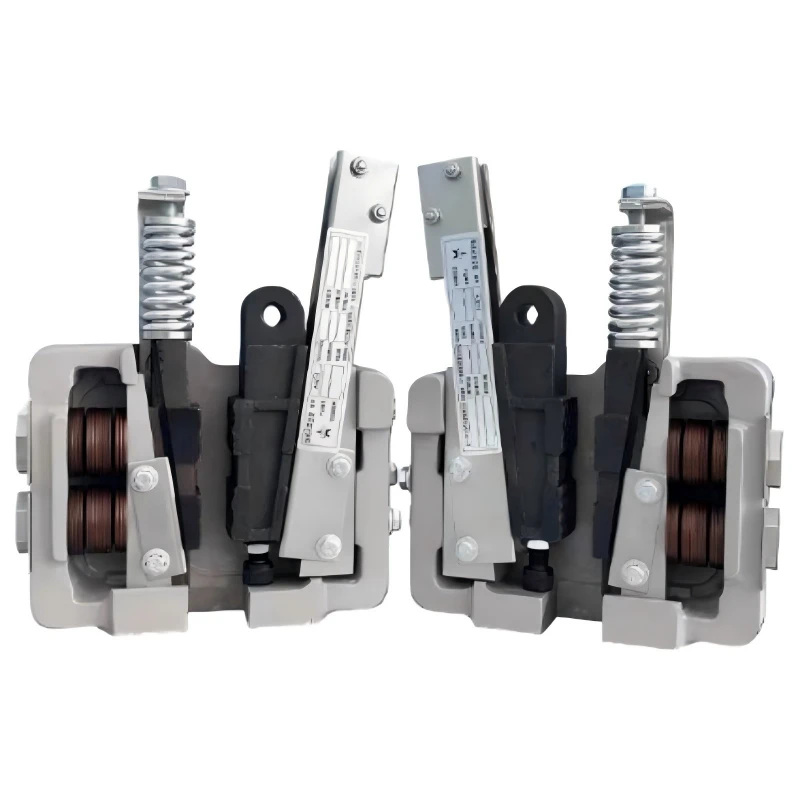
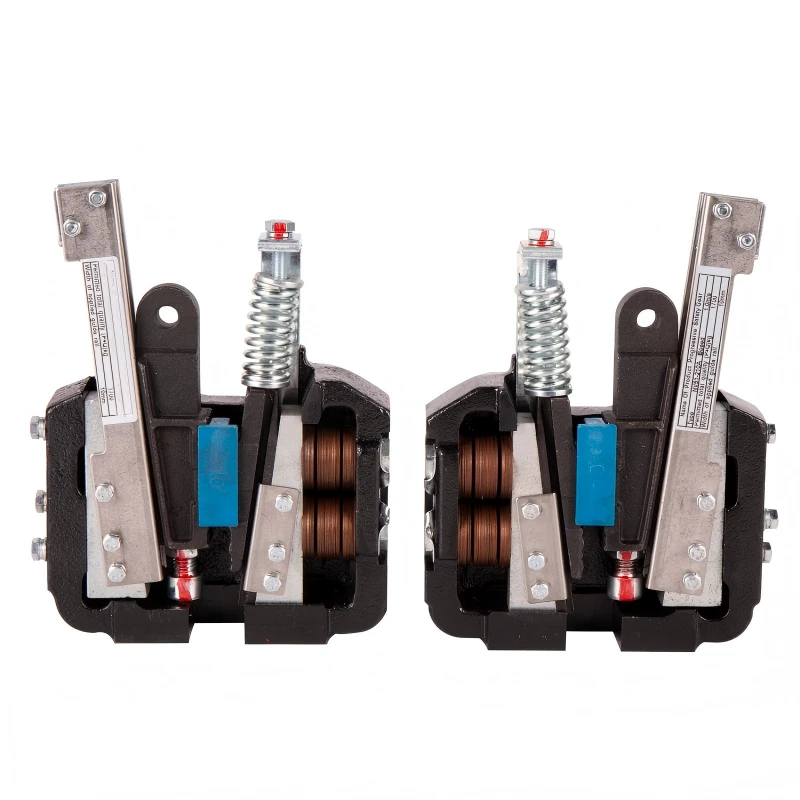
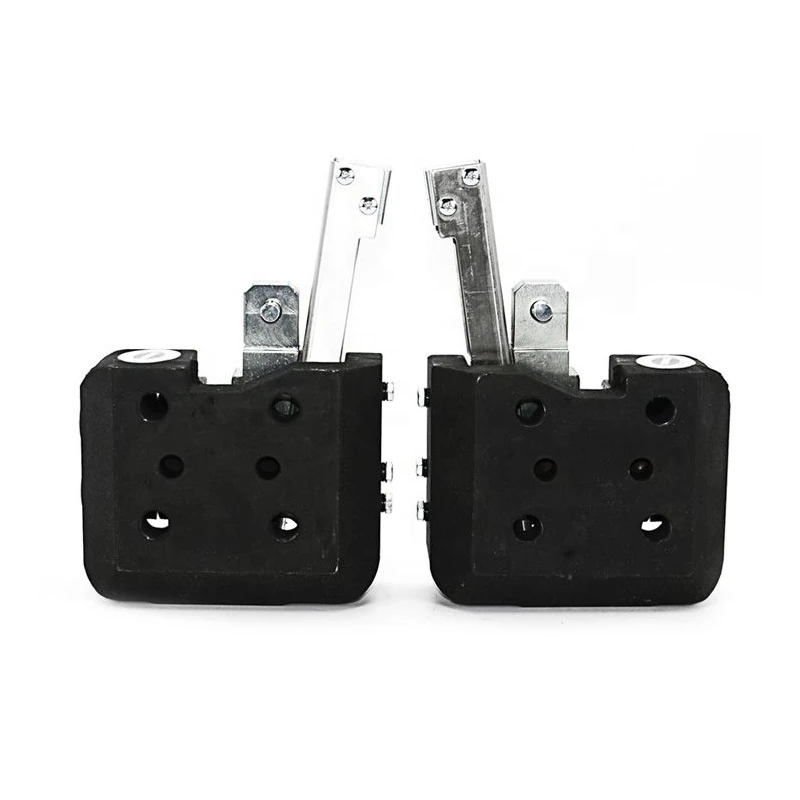
Elevator safety gear works together with the overspeed governor to provide emergency mechanical stopping during abnormal elevator operation.
When elevator speed exceeds the preset tripping threshold, the governor system activates the safety gear mechanism through the governor rope and linkage assembly. The safety gear then grips the guide rails to stop the elevator car in a controlled or instantaneous braking process depending on the system configuration.
This protection principle is widely used across modern traction elevator systems and remains one of the most important independent elevator safety mechanisms.
EKCNE supports elevator safety gear systems for:
Instantaneous Safety Gear
Instantaneous safety gear is commonly used in lower-speed elevator systems where rapid stopping action is required.
This mechanism typically operates through wedge-type or cam-type gripping action. Once activated by the overspeed governor, the gripping mechanism quickly engages the guide rail surface and stops the elevator car within a short distance.
Instantaneous safety gear systems are commonly applied in:
EKCNE supports multiple instantaneous safety gear configurations with matching guide rail compatibility and governor coordination options.
Wedge-Type Safety Gear
Wedge-type safety gear uses a movable wedge mechanism that is drawn into the gap between the guide rail and braking block during activation.
This structure creates strong mechanical locking force and rapid rail gripping action during overspeed conditions.
Cam-Type Safety Gear
Cam-type safety gear uses rotating cam components with serrated surfaces that engage the guide rail during governor triggering.
This mechanism is widely used in compact elevator safety systems requiring reliable engagement consistency and simplified structural integration.
Progressive Safety Gear
Progressive safety gear is designed for controlled deceleration during elevator overspeed protection.
Unlike instantaneous systems that stop the elevator abruptly, progressive safety gear applies controlled friction force to absorb kinetic energy gradually. This helps reduce guide rail damage, improve stopping stability, and lower impact force during emergency braking.
Progressive safety gear is commonly used in:
The progressive braking principle allows smoother emergency stopping performance while maintaining stable force distribution across the guide rail surfaces.
EKCNE supports progressive safety gear systems with coordinated braking force adjustment and guide rail matching for different elevator configurations.
Safety Gear and Governor Coordination
Elevator safety gear systems operate together with the overspeed governor as part of a complete elevator safety protection chain.
The governor acts as the speed sensing device. When elevator speed exceeds the preset tripping speed, the governor stops rope movement and activates the safety gear mechanism through the linkage system.
Proper coordination between the governor and safety gear is critical for:
- Activation consistency
- Controlled stopping performance
- Rail gripping stability
- Braking force balance
- Emergency response reliability
EKCNE supports coordinated component matching for safety gear, governors, guide rails, and traction systems to improve overall elevator safety system compatibility.
Guide Rail Matching and Braking Stability
Elevator safety gear performance depends heavily on proper guide rail interaction.
Important technical factors include:
- Guide rail dimensions
- Rail surface condition
- Gripping force distribution
- Braking surface alignment
- Spring block consistency
- Activation synchronization
Poor rail matching may lead to uneven braking force, unstable engagement, or excessive rail wear during emergency stopping conditions.
EKCNE supports safety gear selection based on guide rail specifications and operating requirements to improve long-term system reliability.
Elevator Safety Standards and Technical Requirements
Elevator safety gear systems are designed according to elevator safety standards and operating requirements related to:
- Rated elevator speed
- Stopping force
- Retardation rate
- Maximum load conditions
- Governor tripping speed
- Emergency braking performance
Progressive safety gear systems are commonly recommended for higher-speed elevator applications due to their controlled deceleration characteristics and reduced rail impact.
EKCNE supports elevator safety gear manufacturing and system coordination for projects requiring stable safety performance and long-term operational reliability.
Applications of Elevator Safety Gear
Elevator safety gear systems are widely used across different building and transportation environments.
Typical applications include:
Commercial Buildings
Used in passenger elevators operating under continuous traffic conditions requiring stable overspeed protection.
Residential Elevators
Supports safe emergency stopping for low-rise and mid-rise residential elevator systems.
Freight Elevators
Provides braking protection for heavy-load lifting systems operating under industrial or warehouse conditions.
Elevator Modernization
Supports replacement and upgrading of existing elevator safety systems during modernization projects.
Elevator Safety Gear Supplier Supporting Integrated Elevator Systems
EKCNE supplies elevator safety gear systems used together with overspeed governors, guide rails, traction systems, and elevator braking assemblies across residential, commercial, and modernization elevator projects.
Our product range supports multiple elevator safety gear configurations for different rated speeds, braking requirements, and guide rail systems.
Rather than focusing only on the braking mechanism itself, EKCNE supports coordinated elevator safety system integration based on activation consistency, component compatibility, and long-term operational stability.
With experience across elevator mechanical systems and coordinated component manufacturing, EKCNE supports stable supply and technical matching for global elevator projects.
FAQ
What is elevator safety gear?
Elevator safety gear is a mechanical braking device used to stop the elevator car or counterweight during overspeed or uncontrolled movement conditions. It works together with the overspeed governor to grip the guide rails and provide emergency stopping protection.
What is the difference between instantaneous and progressive safety gear?
Instantaneous safety gear stops the elevator rapidly using wedge or cam locking action and is commonly used in low-speed elevators. Progressive safety gear applies controlled braking force gradually, making it more suitable for medium-speed and high-speed elevator systems.
How does an overspeed governor activate safety gear?
The overspeed governor monitors elevator speed continuously. When the speed exceeds the preset limit, the governor stops rope movement and triggers the safety gear linkage mechanism, causing the braking components to engage the guide rails.
Why is guide rail compatibility important for safety gear?
Safety gear performance depends on proper guide rail matching. Rail dimensions, surface condition, and force distribution directly affect braking stability, activation consistency, and long-term wear during emergency stopping operations.
Where is elevator safety gear commonly used?
Elevator safety gear is widely used in passenger elevators, freight elevators, commercial buildings, residential projects, and modernization systems requiring emergency overspeed protection and controlled stopping performance.