Loading efficiency in many warehouses is constrained long before forklift capacity becomes the actual limitation.
In facilities without permanent dock systems, cargo transfer often depends on temporary alignment between truck height, forklift movement, and available loading space. Once shipment volume increases, even small interruptions during truck loading can begin affecting outbound scheduling, forklift idle cycles, and warehouse throughput continuity.
Mobile Loading Ramp Systems for Dockless Loading Operations
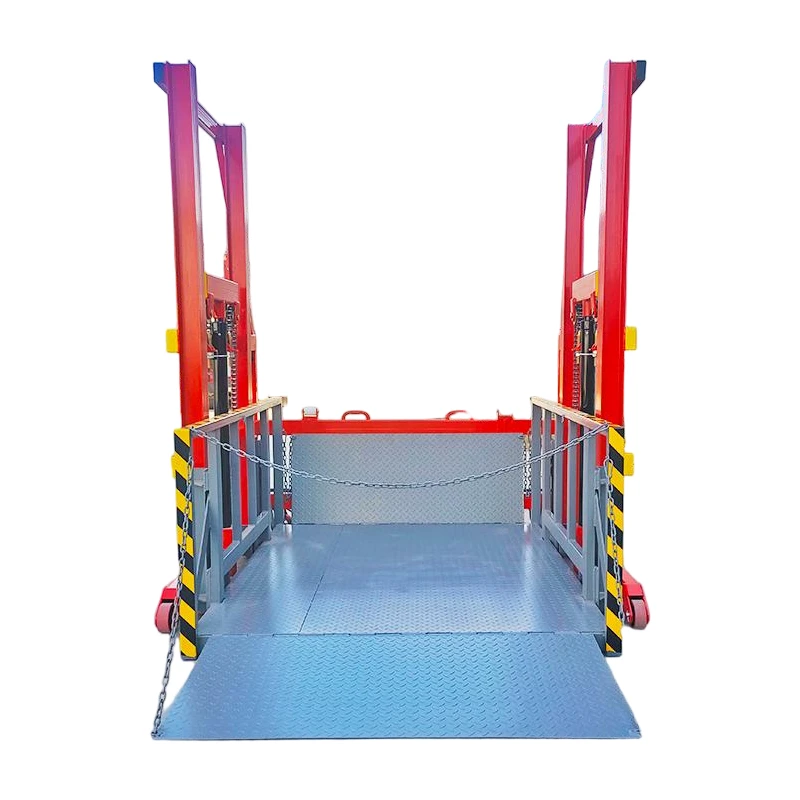
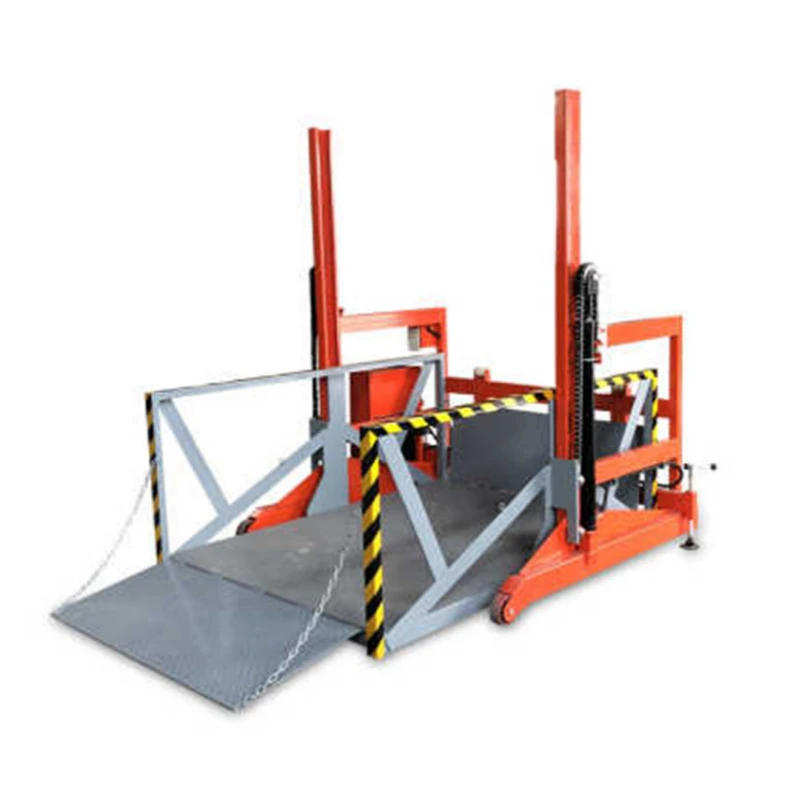
A Mobile Loading Ramp creates a movable loading bridge that allows forklifts to directly access truck compartments for cargo loading and unloading operations.
In many older warehouse buildings, dedicated loading docks were never included in the original facility layout. As logistics demand grows, operators often discover that truck loading delays are caused less by labor shortage and more by building infrastructure limitations.
Without a proper loading transition system, forklift operators may encounter:
- Unstable climbing angles
- Repeated alignment adjustments
- Delayed pallet transfer cycles
- Increased manual cargo handling
- Truck waiting congestion
- Interrupted outbound loading schedules
These problems become more noticeable during peak shipment periods when multiple vehicles arrive within limited loading windows.
A hydraulic Mobile Loading Ramp helps reduce these operational interruptions by improving forklift movement continuity between warehouse floors and transport vehicles.
Why Mobile Loading Ramps Are Common in Flexible Logistics Environments
Permanent loading docks are not always suitable for every logistics operation.
Some warehouses operate in leased facilities where structural dock modification is restricted. Others manage seasonal overflow cargo in temporary yards or outdoor transfer zones where permanent dock construction would significantly increase infrastructure cost without improving long-term operational flexibility.
In these environments, portable loading ramps often become a more practical deployment solution.
This is particularly common in:
- Regional distribution centers
- Outdoor freight yards
- Temporary warehouse expansion projects
- Manufacturing transfer zones
- Multi-vehicle loading operations
- Container loading areas
- Cross-docking overflow environments
Some operators initially deploy Mobile Yard Ramp systems as temporary loading support equipment, then continue using them long term because loading patterns and truck allocation schedules change more frequently than expected.
Mobile Loading Ramp Features
EKCNE Mobile Loading Ramp systems are engineered around real forklift loading behavior rather than simplified lifting platform concepts.
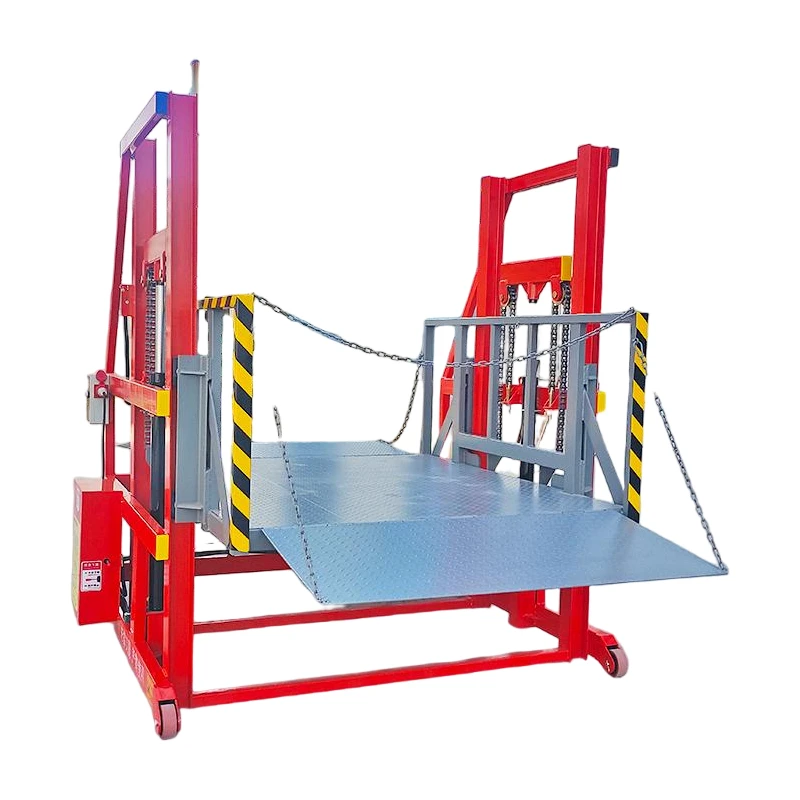
Hydraulic Height Adjustment
Hydraulic lifting allows the platform to align with varying truck compartment heights.
In mixed vehicle fleets, truck bed height inconsistency alone can significantly reduce loading efficiency if forklift approach angles become unstable during cargo transfer operations.
Mobile Wheel Configuration
The platform uses polyurethane universal wheels combined with front casters to improve movement flexibility across warehouse and yard environments.
The wheel system supports:
- 360-degree steering movement
- Easier relocation positioning
- Reduced floor surface impact
- Improved maneuverability in limited loading areas
In outdoor freight yards, mobility flexibility often becomes more important than fixed-position loading efficiency because loading locations may shift throughout the day depending on truck scheduling.
Forklift-Compatible Cargo Transfer Design
The loading platform allows forklifts to directly enter truck compartments without requiring repeated cargo staging or secondary manual transfer.
In higher-volume loading operations, reducing even small interruptions between forklift cycles can improve overall outbound loading continuity over time.
Side-Mounted Hydraulic and Electrical Systems
The hydraulic station and electrical control system are positioned on the side of the equipment for easier maintenance accessibility.
This arrangement also helps reduce accidental collision risk during reverse loading operations where forklift maneuvering space is limited.
Multi-Voltage Electrical Compatibility
Both 220V and 380V configurations are available depending on project deployment requirements.
This improves compatibility for export-oriented warehouse projects and international industrial operations where electrical infrastructure standards differ between regions.
Mobile Loading Ramp Technical Parameters
EKCNE supports multiple Mobile Loading Ramp configurations for different cargo transfer environments and forklift loading requirements.
| Model | LCQ2-17 | LCQ15-17 | LCA1-17 |
|---|
| Maximum Load Capacity | 2000 kg | 1500 kg | 1000 kg |
| Platform Minimum Lifting Height | 1700 mm | 1700 mm | 1700 mm |
| Platform Maximum Width | 1500 mm | 1500 mm | 1500 mm |
| Effective Platform Length | 2000 mm | 2000 mm | 2000 mm |
| Overall Vehicle Length | 2900 mm | 2900 mm | 2900 mm |
| Overall Vehicle Width | 2100 mm | 2100 mm | 2100 mm |
| Minimum Turning Radius | 2850 mm | 2850 mm | 2850 mm |
| Motor Configuration | 220V/50Hz or 380V/50Hz | 220V/50Hz or 380V/50Hz | 220V/50Hz or 380V/50Hz |
| Full Lifting Cycle Time | 12s | 12s | 12s |
| Self Weight | 1500 kg | 1350 kg | 1200 kg |
Custom configurations are available for platform dimensions, electrical systems, cargo capacity, and project-specific loading requirements.
Mobile Loading Ramp vs Fixed Dock Systems
The most suitable loading solution depends on building conditions, loading frequency, truck scheduling behavior, and long-term operational planning.
When Mobile Loading Ramps Provide Better Operational Flexibility
Mobile loading ramps are often more practical for:
- Facilities without permanent loading docks
- Outdoor loading environments
- Expanding warehouse operations
- Temporary logistics deployment
- Multi-location loading operations
- Lower infrastructure investment projects
In some projects, avoiding permanent dock construction allows operators to preserve future warehouse layout flexibility as cargo movement patterns evolve.
When Fixed Dock Systems Become More Suitable
Permanent dock systems may support higher continuous throughput in large-scale logistics hubs with predictable loading schedules and stable truck allocation patterns.
However, fixed dock infrastructure also introduces:
- Civil construction requirements
- Permanent layout dependency
- Higher infrastructure investment
- Longer deployment timelines
- Reduced operational relocation flexibility
For operations experiencing changing shipment volume or evolving warehouse layouts, mobile loading systems often provide greater deployment adaptability.
Common Mobile Loading Ramp Application Scenarios
Warehouse Transfer Operations
Forklift transfer interruptions frequently occur when warehouses lack dedicated dock infrastructure. Mobile loading ramps help improve loading continuity between storage zones and transport vehicles.
Outdoor Freight Yards
Outdoor loading conditions rarely remain perfectly consistent. Ground surface variation, weather exposure, and temporary truck positioning can all affect forklift approach stability during loading operations.
Manufacturing Logistics
Factories often use hydraulic loading ramps to support outbound pallet transfer between production areas and transport vehicles without requiring permanent dock reconstruction.
Temporary Distribution Expansion
During seasonal shipment increases, some logistics operators deploy portable loading dock systems to create additional loading capacity without expanding permanent infrastructure.
Mixed Truck Height Operations
Facilities handling different vehicle types may experience significant loading delays if ramp adjustment flexibility is insufficient.
Mobile Loading Ramp Engineering Considerations
Selecting a Mobile Loading Ramp involves more than evaluating load capacity alone.
Project planning should also consider:
- Forklift axle load distribution
- Truck height variation
- Outdoor deployment conditions
- Turning space limitations
- Daily loading frequency
- Ramp relocation requirements
- Hydraulic maintenance accessibility
- Electrical infrastructure compatibility
In some warehouse environments, operational continuity and loading flexibility ultimately have a greater long-term impact than nominal platform specifications.
Why Choose EKCNE as Your Mobile Loading Ramp Manufacturer
EKCNE focuses on project-oriented loading and mobility solutions designed around real operational environments.
Our engineering approach emphasizes:
- Forklift loading continuity
- Flexible deployment capability
- Hydraulic loading stability
- Maintenance accessibility
- Building and yard compatibility
- Export-oriented project coordination
- Long-term operational adaptability
With experience in vertical transportation systems and industrial loading equipment integration, EKCNE supports distributors, warehouse operators, contractors, and industrial procurement teams requiring scalable Mobile Loading Ramp solutions for evolving logistics operations.
FAQ