

Elevator Guide Rails

Elevator Parts

Escalator Parts

All Elevators

Please enable JavaScript in your browser to complete this form.

Overview

Elevator guide rails are critical components in the elevator guiding system. They control the travel direction of the elevator car and counterweight, helping maintain stable vertical movement while limiting horizontal sway, vibration, and operational deviation inside the shaft.

EKCNE supplies elevator guide rails, lift guide rails, T-type guide rails, hollow guide rails, guide rail brackets, rail clips, fishplates, and related rail installation components for passenger elevators, freight elevators, hospital elevators, panoramic elevators, industrial elevators, and modernization projects.

Unlike general steel profiles, elevator guide rails operate as part of a complete rail guidance system involving guide shoes, safety gear, rail brackets, and shaft alignment structures. Rail processing accuracy, installation consistency, and long-term structural stability directly influence elevator ride quality and operational reliability.


Why Work with Us

EKCNE supplies elevator guide rail systems with attention to structural consistency, installation compatibility, machining precision, and long-term operational stability.

We support passenger elevator, freight elevator, hospital elevator, panoramic elevator, and modernization projects with coordinated rail system manufacturing and component integration.

Our experience across elevator structural systems helps support:

  • Stable rail alignment
  • Guide shoe compatibility
  • Reduced vibration transfer
  • Coordinated rail installation
  • Long-travel operational stability

This supports smoother elevator travel and more reliable long-term system operation across different building conditions.

Modern Injection Workshop
66,000 m² Facility

Large-scale manufacturing base

Dedicated Support Team
Certified & Patented

Full certifications & patents

Mold Design
Advanced Equipment

Modern production machinery

Strict Testing
Quality Assurance

Rigorous quality control process

High-Speed Production
High Production Capacity

Efficient and stable output

Smart Warehousing
Smart Warehousing

Optimized storage and logistics

Production License of Special Equipment

Production License of Special Equipment

Intellectual Property Management System Certificate

Intellectual Property Management System Certificate

CR_VC_HS250388

CR_VC_HS250388

Occupational Health & Safety Management System Certificate

Occupational Health & Safety Management System Certificate

Environmental Management System Certificate

Environmental Management System Certificate

×

We are a manufacturer of home elevators and commercial elevators, delivering complete solutions from pre-sales technical consultation through to final commissioning. Our capabilities extend to OEM and semi-CKD cooperation for partners who require manufacturing support under their own brand — but first and foremost, we build elevators.

Pre-Sales Engineering Support

We provide complete pre-sales engineering assistance before production begins, including shaft layout drawings, site condition evaluation, and dimension planning. Whether the project is still in the design stage or facing complex installation limitations, our engineering team develops practical elevator solutions based on actual structural conditions and usage requirements.

Commercial Elevator Solutions

We manufacture commercial elevator systems for office buildings, hotels, retail centers, warehouses, and other commercial projects. From compact shaft optimization to large-capacity custom configurations, every solution is engineered around load requirements, space efficiency, electrical standards, and long-term maintenance convenience.

Home Elevator Solutions

We deliver complete home elevator solutions for villas, duplex houses, and residential retrofit projects, with or without an existing shaft. Our systems support compact installation spaces, customized interior finishes, low-noise operation, and flexible structural solutions tailored to residential environments.

Quality Control & Testing

Every elevator and component undergoes strict quality inspection and functional testing before shipment. We provide complete testing documentation, type test reports, and detailed verification procedures to ensure stable performance, installation accuracy, and compliance with international project requirements.

OEM & Semi-CKD Manufacturing

We support OEM and semi-CKD cooperation for distributors, project contractors, and private-label elevator brands worldwide. From customized branding and packaging to technical documentation and production coordination, we provide flexible manufacturing solutions adapted to different market and assembly requirements.

Elevator Components Supply

We supply a wide range of elevator components and spare parts covering most mainstream elevator systems and models. Backed by manufacturing experience and a mature supply chain, we support consolidated purchasing, compatibility guidance, and fast dispatch for both standard and urgent requirements.

Export Packaging & Logistics

All elevators and components are protected with export-standard packaging designed for long-distance transportation and sea freight handling. Reinforced wooden crates, steel-edged protection, and secure internal packaging help minimize transport risk and maintain product condition during international delivery.

Partner Support Services

We provide long-term technical and market support for distributors, installers, and exclusive regional partners. Services include installation guidance, remote commissioning assistance, troubleshooting support, localized branding consultation, and marketing coordination to help partners grow sustainably in their local markets.

Get Our Product Catalog

Comprehensive catalog for elevators and components.

Please enable JavaScript in your browser to complete this form.

Elevator Guide Rail System and Guiding Function

The elevator guide system limits the movement freedom of the car and counterweight so they can travel only along the designed vertical path inside the shaft.

Guide rails mainly provide:

  • Directional guidance during elevator travel
  • Horizontal movement limitation
  • Vibration and sway reduction
  • Stable guide shoe contact
  • Support during safety gear operation
  • Long-travel alignment stability

Guide rails are not primarily load-bearing structures. Their function is to maintain controlled movement and directional stability while coordinating with the elevator safety system and guide shoe assembly.

This is especially important in medium-speed and high-speed elevator systems where rail alignment directly affects running smoothness and passenger comfort.

Main Types of Elevator Guide Rails

T-Type Elevator Guide Rails

T-type elevator guide rails are the most widely used rail structure in passenger and freight elevator systems.

Compared with other rail structures, T-type rails provide:

  • Higher rigidity
  • Better straightness
  • Improved surface precision
  • Stronger resistance to deformation
  • Stable guide shoe contact
  • Better compatibility with safety gear systems

T-type lift guide rails are commonly used in:

For projects requiring higher travel speed and long-term running stability, precision-machined T-type guide rails are usually preferred.

Hollow Elevator Guide Rails

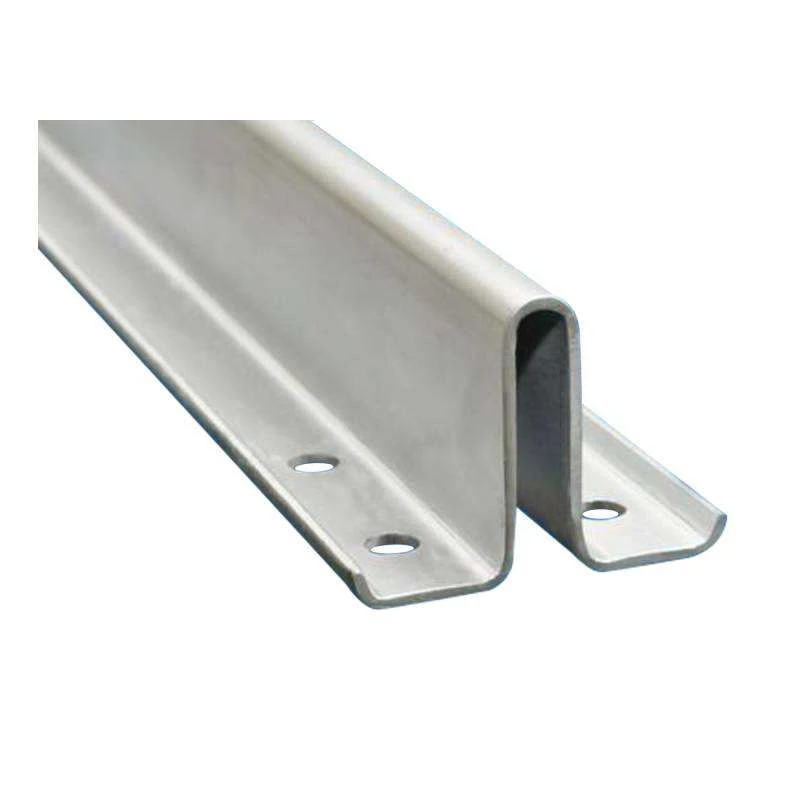
Hollow guide rails are formed from folded steel plates and provide a lighter structural solution compared with solid T-type rails.

These rails are commonly used in:

  • Counterweight systems
  • Medium-speed elevators
  • Certain low-load applications
  • Cost-sensitive modernization projects

Although hollow rails provide acceptable guiding performance for some applications, their rigidity and safety load capability are lower than precision T-type rails.

L-Type Guide Rails

L-type guide rails are generally used in specific low-load or auxiliary guiding applications.

Compared with T-type rails, they provide:

  • Lower rigidity
  • Lower machining precision
  • Reduced surface finish quality
  • Lower structural cost

They are typically unsuitable for high-speed passenger elevator systems requiring higher operational precision.

Elevator Guide Rails and Guide Shoes Working Together

Guide rails and elevator guide shoes work as an integrated movement control system.

The guide shoe travels along the rail surface and helps maintain car stability during operation. Rail straightness, surface finish, and joint consistency directly affect guide shoe wear, running vibration, and operational smoothness.

Different elevator systems may use:

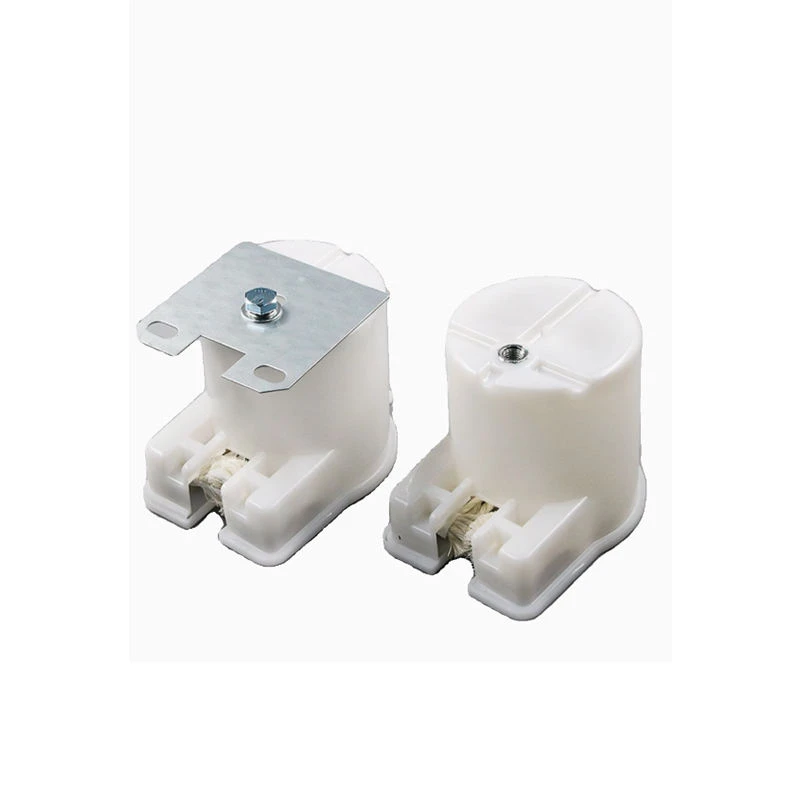
  • Fixed sliding guide shoes
  • Spring guide shoes
  • Rolling guide shoes

Rolling guide shoes reduce friction and operational noise and are commonly used in higher-speed elevator systems.

Spring guide shoes help absorb vibration and compensate for small rail alignment deviation during operation.

This coordinated relationship between rail precision and guide shoe structure is one of the key factors affecting elevator ride quality.

Elevator Guide Rail Brackets and Rail Support Structure

Guide rail brackets support and fix the rail system to the shaft wall or steel structure.

A complete elevator guide rail installation normally includes:

  • Rail brackets
  • Guide rail clips
  • Pressure plates
  • Fishplates
  • Connection hardware
  • Alignment accessories

Guide rail brackets must maintain stable positioning while allowing installation adjustment to compensate for shaft construction deviation and long-term building settlement.

Improper bracket spacing or weak structural fixation may cause:

  • Rail vibration
  • Joint misalignment
  • Increased guide shoe wear
  • Operational instability
  • Higher maintenance frequency

Elevator Guide Rail Installation Methods

Different elevator projects use different rail fixing methods depending on shaft structure and installation conditions.

Common installation methods include:

Embedded Installation

Rail brackets are fixed to pre-installed embedded parts inside the shaft structure.

This method is common in new elevator shaft construction projects.

Welded Rail Bracket Installation

Rail brackets are welded directly to steel shaft structures.

This method is frequently used in steel-structure elevator shafts and industrial elevator applications.

Expansion Bolt Installation

Expansion bolt installation is widely used in modernization and retrofit projects because it provides more flexible positioning adjustment during installation.

Guide Rail Clips and Pressure Plate Connection

Elevator guide rails are typically connected using guide rail clips and pressure plates rather than direct welding.

This design helps:

  • Reduce installation stress
  • Prevent rail deformation
  • Allow vertical adjustment
  • Compensate for thermal expansion
  • Improve long-term alignment consistency

For long-travel elevator systems, this structural flexibility becomes increasingly important because installation deviation may accumulate across building height.

Elevator Guide Rail Alignment and Running Accuracy

Rail alignment accuracy directly affects elevator running performance.

Important factors include:

  • Rail straightness
  • Rail joint consistency
  • Surface precision
  • Bracket positioning
  • Vertical deviation control

Poor rail alignment may create:

  • Passenger vibration sensation
  • Increased operational noise
  • Guide shoe abnormal wear
  • Door leveling instability
  • Long-term maintenance issues

For high-speed elevator systems, rail machining precision and installation consistency become even more critical.

Car Guide Rails vs Counterweight Guide Rails

Elevator systems normally use separate rail systems for:

  • Elevator car guidance
  • Counterweight guidance

Car guide rails usually require:

  • Higher precision
  • Better surface finish
  • Stronger rigidity
  • Better vibration control

Counterweight guide rails may use different rail structures depending on elevator speed, load, and safety requirements.

This separation helps optimize system stability and operational efficiency.

Elevator Guide Rails for Modernization Projects

In modernization projects, existing rails are often evaluated together with:

  • Guide shoes
  • Safety gear
  • Rail brackets
  • Counterweight systems
  • Car frame structures
  • Shaft alignment conditions

Older rail systems may require replacement due to:

  • Wear
  • Corrosion
  • Rail deformation
  • Joint inconsistency
  • Alignment deviation

Modernization projects also require compatibility evaluation between new elevator components and existing shaft structures.

FAQ

What is the function of elevator guide rails?

Elevator guide rails guide the movement of the elevator car and counterweight inside the shaft. They help maintain directional stability, reduce horizontal sway, and support safe elevator operation together with the guide shoe and safety gear system.

What is the difference between T-type and hollow guide rails?

T-type guide rails provide higher rigidity, better surface precision, and stronger load capability. Hollow guide rails are lighter and more economical but are generally used in lower-load or specific counterweight applications.

Why is guide rail alignment important?

Poor rail alignment can increase vibration, operational noise, guide shoe wear, and ride instability. Accurate rail installation improves running smoothness, leveling accuracy, and long-term elevator reliability.

Are elevator guide rails welded directly to brackets?

Normally no. Elevator guide rails are usually fixed using guide rail clips and pressure plates rather than direct welding. This helps reduce installation stress and allows alignment adjustment during installation.

How do guide rails affect elevator ride quality?

Guide rail straightness, joint consistency, and surface precision directly affect elevator vibration, noise level, and operational smoothness. High-quality rail systems help improve passenger comfort and reduce maintenance issues.







