Designed for Continuous Elevator Movement
Traveling cables are fixed at one end to the elevator car and connected at the other end near the machine room or control system location.
During elevator operation, the cable forms a suspended loop that continuously bends and flexes as the car moves.
Cable structure design directly affects:
- Motion stability
- Signal transmission reliability
- Cable lifespan
- High-rise operational safety
- Elevator control consistency
Proper cable flexibility is essential to prevent conductor damage during repeated movement cycles.
Flat Elevator Traveling Cable and Round Traveling Cable
Two major traveling cable constructions are commonly used in elevator systems.
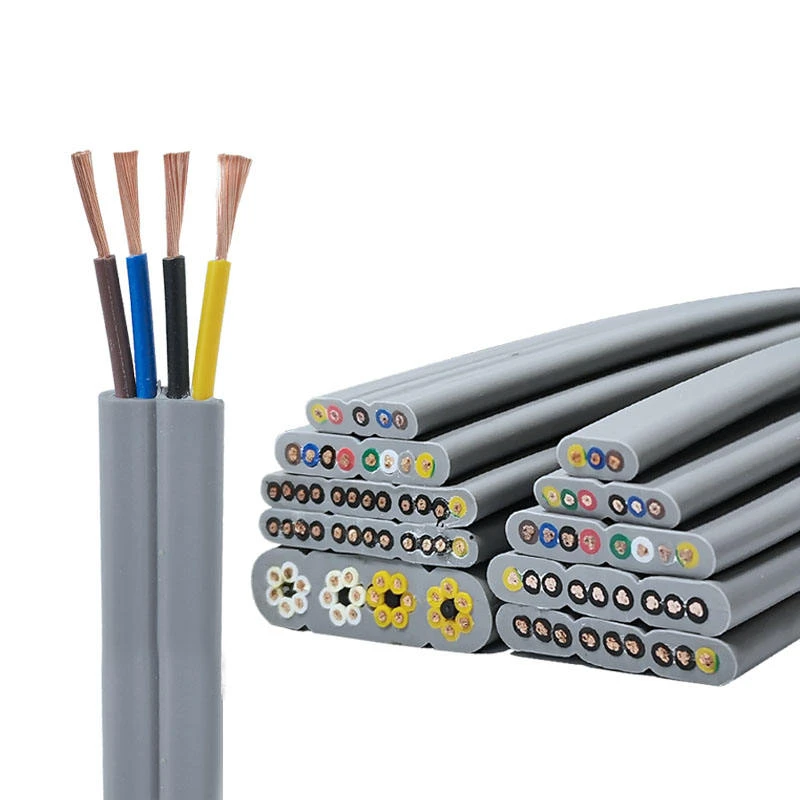
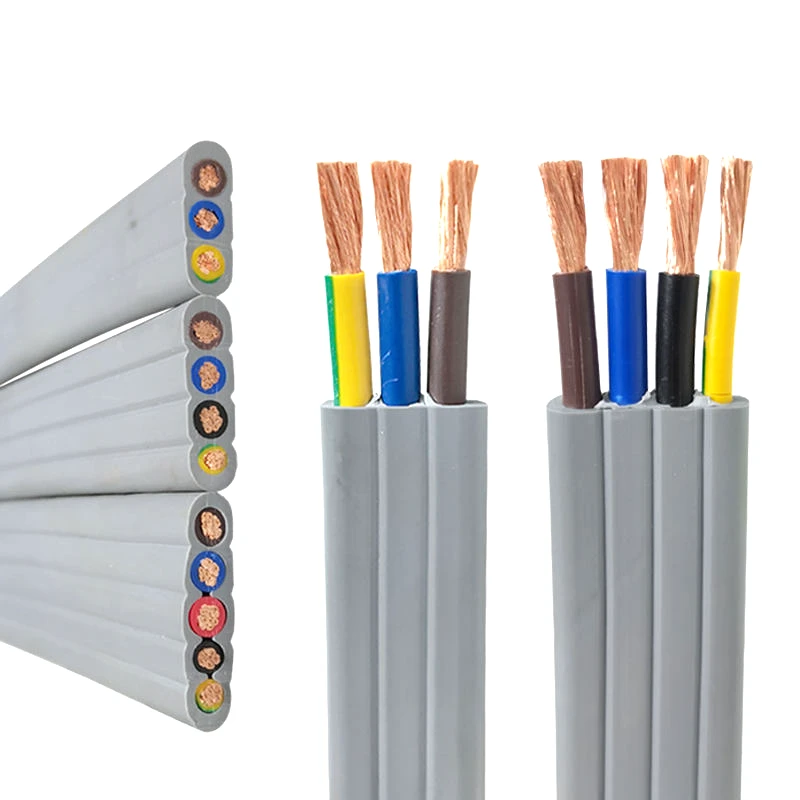
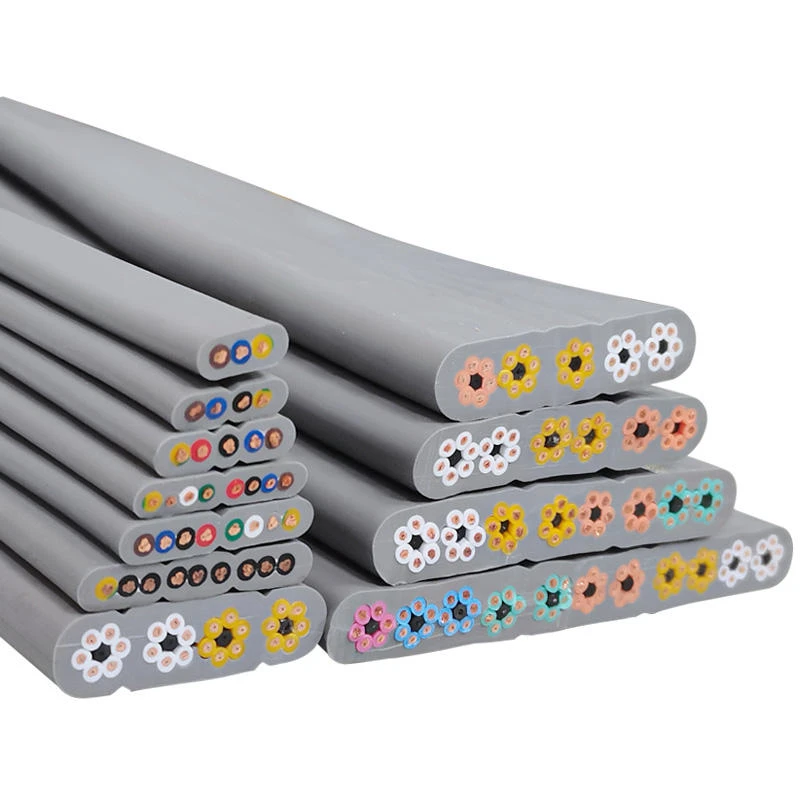
Flat Elevator Traveling Cable
Flat traveling cables are widely used in low-rise and mid-rise elevators.
Their flat structure helps:
- Reduce twisting during movement
- Improve cable arrangement
- Maintain bending stability
- Simplify hoistway cable management
Flat elevator cables are commonly used in:
Round Elevator Traveling Cable
Round traveling cables are more common in high-rise elevator systems.
Many round cables include integrated steel wire support structures that help carry suspended cable weight during long vertical travel.
This helps prevent excessive mechanical load from transferring directly to the copper conductors inside the cable.
Round traveling cables are often used in:
- High-rise elevators
- Heavy-duty elevator systems
- Long-travel applications
- High-load dynamic cable systems
Elevator Traveling Cable Functions
Traveling cables support multiple elevator electrical functions simultaneously.
Depending on the elevator configuration, the cable may carry:
- Elevator control signals
- Door operator communication
- Lighting power supply
- Fan power supply
- Intercom systems
- Monitoring systems
- Safety circuit signals
- PLC communication signals
- Encoder and inverter feedback signals
Modern elevator systems rely heavily on stable cable communication between moving and fixed equipment.
Cable Flexibility and Bending Performance
One of the most important requirements for elevator traveling cables is continuous bending durability.
As the elevator moves, the cable repeatedly changes shape while maintaining stable electrical transmission.
Poor cable flexibility may lead to:
- Conductor fatigue
- Signal instability
- Internal wire breakage
- Communication interruption
- Elevator operational faults
Proper traveling cable design helps maintain stable operation during long-term movement cycles.
Traveling Cable Support and Clamping Systems
Traveling cables require proper clamping and suspension support inside the shaft.
Cable clamps help:
- Stabilize cable movement
- Control bending behavior
- Reduce vibration
- Prevent excessive conductor stress
In high-rise applications, steel support wire structures are commonly used to carry cable load and reduce tension on internal conductors.
Proper cable loop management is important for maintaining safe cable movement throughout the full elevator travel distance.
Elevator Traveling Cable Compatibility
Elevator traveling cables must maintain compatibility with different elevator systems and electrical architectures.
This may include integration with:
- PLC control systems
- VVVF drive systems
- Elevator control cabinets
- Door operator systems
- Safety circuits
- Elevator communication systems
Stable signal transmission becomes increasingly important in modern intelligent elevator systems with higher communication density and control precision requirements.
Elevator Traveling Cable Solutions for Modernization Projects
Older elevator systems may experience cable aging caused by:
- Long-term bending fatigue
- Mechanical wear
- Environmental exposure
- Signal instability
- Internal conductor damage
Traveling cable replacement is common during elevator modernization and control system upgrades.
Modern cable systems can help improve:
- Signal reliability
- Motion stability
- Communication performance
- Elevator operational consistency
Elevator Traveling Cable Manufacturing and Inspection
Elevator traveling cable performance depends on conductor quality, insulation stability, bending resistance, and structural consistency.
EKCNE supplies elevator traveling cables for different elevator configurations and project requirements, including flat and round cable solutions.
Cable production and inspection focus on:
- Continuous flexing durability
- Stable electrical transmission
- Structural consistency
- Mechanical movement reliability
- Elevator system compatibility
Our understanding of elevator motion systems helps support traveling cable applications beyond basic electrical supply requirements.
Elevator Traveling Cable Supplier for Global Elevator Projects
EKCNE supports elevator companies, modernization contractors, elevator manufacturers, and engineering teams with elevator cable supply solutions for different project environments.
We support:
- Passenger elevator projects
- Freight elevator systems
- High-rise elevator applications
- Elevator modernization projects
- Commercial building systems
- Residential elevator installations
Our experience across elevator systems and components helps support more reliable cable integration for moving elevator applications.
FAQ
What is an elevator traveling cable?
An elevator traveling cable is a flexible cable system used to connect the moving elevator car to the fixed control system. It transmits power, control signals, communication data, and operational feedback during elevator movement.
What is the difference between flat and round traveling cables?
Flat traveling cables are commonly used in low-rise and mid-rise elevators because they reduce twisting and improve bending stability. Round traveling cables are often used in high-rise elevators and may include steel support wire structures.
Why do elevator traveling cables need high flexibility?
Traveling cables continuously bend and move during elevator operation. High flexibility helps reduce conductor fatigue, prevent internal wire damage, and maintain stable signal transmission during repeated movement cycles.
Why do some elevator traveling cables include steel wire?
Steel support wire helps carry the suspended cable load in high-rise elevator systems. This reduces mechanical stress on the internal copper conductors and improves long-travel cable stability.
Can aging traveling cables affect elevator performance?
Yes. Aging traveling cables may cause unstable communication, signal interruption, operational faults, or control system errors due to conductor fatigue and long-term bending wear.