
Outdoor Elevators
Elevator Parts
Escalator Parts
All Elevators
Commercial Elevators
Home Elevators
Escalators & Moving Walkways
Industrial Lifts
Elevator Shafts
Overview of EKCNE Outdoor Elevators
Outdoor elevators solve a building integration problem before they solve a transportation problem.
In many projects, the issue is not simply moving people between floors.
The real challenge is how to add vertical transportation without heavily rebuilding the interior structure, reducing usable floor area, or interrupting the building’s existing circulation layout.
This is why outdoor elevator systems are widely used in:
- retrofit residential projects
- villas without reserved shafts
- exterior accessibility upgrades
- split-level buildings
- country houses
- low-rise commercial properties
- exterior building extensions
Compared with indoor elevators, outdoor elevator systems operate under exposed environmental conditions while also interacting directly with the building façade, structural anchoring system, drainage conditions, and exterior traffic flow.
As a result, outdoor elevators require different engineering priorities in:
- shaft planning
- weather protection
- wind-load stability
- maintenance accessibility
- structural coordination
- lifecycle durability
- outdoor electrical protection
EKCNE develops outdoor elevator systems with a project-oriented engineering approach focused on exterior building compatibility, operational stability, and long-term maintenance continuity.
Why Work with EKCNE

Large-scale manufacturing base

Full certifications & patents

Modern production machinery

Rigorous quality control process

Efficient and stable output

Optimized storage and logistics

Production License of Special Equipment

Intellectual Property Management System Certificate

CR_VC_HS250388

Occupational Health & Safety Management System Certificate

Environmental Management System Certificate
We are a manufacturer of home elevators and commercial elevators, delivering complete solutions from pre-sales technical consultation through to final commissioning. Our capabilities extend to OEM and semi-CKD cooperation for partners who require manufacturing support under their own brand — but first and foremost, we build elevators.
Pre-Sales Engineering Support
We provide complete pre-sales engineering assistance before production begins, including shaft layout drawings, site condition evaluation, and dimension planning. Whether the project is still in the design stage or facing complex installation limitations, our engineering team develops practical elevator solutions based on actual structural conditions and usage requirements.
Commercial Elevator Solutions
We manufacture commercial elevator systems for office buildings, hotels, retail centers, warehouses, and other commercial projects. From compact shaft optimization to large-capacity custom configurations, every solution is engineered around load requirements, space efficiency, electrical standards, and long-term maintenance convenience.
Home Elevator Solutions
We deliver complete home elevator solutions for villas, duplex houses, and residential retrofit projects, with or without an existing shaft. Our systems support compact installation spaces, customized interior finishes, low-noise operation, and flexible structural solutions tailored to residential environments.
Quality Control & Testing
Every elevator and component undergoes strict quality inspection and functional testing before shipment. We provide complete testing documentation, type test reports, and detailed verification procedures to ensure stable performance, installation accuracy, and compliance with international project requirements.
OEM & Semi-CKD Manufacturing
We support OEM and semi-CKD cooperation for distributors, project contractors, and private-label elevator brands worldwide. From customized branding and packaging to technical documentation and production coordination, we provide flexible manufacturing solutions adapted to different market and assembly requirements.
Elevator Components Supply
We supply a wide range of elevator components and spare parts covering most mainstream elevator systems and models. Backed by manufacturing experience and a mature supply chain, we support consolidated purchasing, compatibility guidance, and fast dispatch for both standard and urgent requirements.
Export Packaging & Logistics
All elevators and components are protected with export-standard packaging designed for long-distance transportation and sea freight handling. Reinforced wooden crates, steel-edged protection, and secure internal packaging help minimize transport risk and maintain product condition during international delivery.
Partner Support Services
We provide long-term technical and market support for distributors, installers, and exclusive regional partners. Services include installation guidance, remote commissioning assistance, troubleshooting support, localized branding consultation, and marketing coordination to help partners grow sustainably in their local markets.
Get Our Product Catalog
Comprehensive catalog for elevators and components.
Why Buildings Choose Outdoor Elevator Systems
Many buildings were never designed for future elevator installation.
This is especially common in:
- older residential buildings
- villas
- townhouses
- country houses
- exterior-access properties
- low-rise retrofit projects
In these situations, inserting an indoor shaft may create multiple operational problems:
- loss of usable interior space
- stairway reconstruction
- structural demolition
- circulation interruption
- difficult utility relocation
- long construction schedules
An exterior elevator system often reduces these constraints.
Instead of restructuring interior movement paths, the building can maintain its original layout while adding independent vertical transportation outside the primary structure.
For many retrofit projects, the elevator becomes part of the building mobility strategy rather than simply another mechanical device.
This is particularly important for:
- aging-in-place residential upgrades
- accessibility modernization
- multi-generational housing
- hillside buildings
- exterior circulation optimization
- low-disruption building upgrades
Outdoor Elevator Engineering Is Different From Indoor Elevator Planning
Outdoor elevator systems operate in partially exposed environments.
The engineering challenge is not limited to elevator operation itself.
The system must remain stable while exposed to changing environmental conditions over long operational cycles.
Compared with indoor elevators, outdoor systems face additional pressure from:
- wind exposure
- rainwater intrusion
- humidity
- dust accumulation
- ultraviolet exposure
- outdoor temperature fluctuation
- exterior structural vibration
These conditions influence not only the elevator equipment, but also long-term maintenance behavior, component aging, and operational consistency.
Because of this, outdoor elevator planning requires stronger coordination between:
- structural engineering
- shaft integration
- electrical protection
- drainage strategy
- maintenance access
- exterior architectural compatibility
Wind Load and Outdoor Operational Stability
Wind is one of the most important operational variables in outdoor elevator engineering.
In exposed shaft environments, wind pressure directly affects:
- guide rails
- suspension ropes
- traveling cables
- cabin stability
- shaft vibration behavior
- exposed electrical systems
As wind speed increases, additional lateral force may affect rope movement and cable stability inside the shaft.
Under strong gust conditions, uncontrolled cable swing may interfere with nearby shaft structures if shaft spacing and cable routing are not properly designed.
For this reason, outdoor elevator systems often require:
- guided cable management
- reinforced shaft fixation
- protected cable routing
- wind-resistant structural layouts
- environmental monitoring logic
Some projects also integrate wind-speed monitoring systems connected to elevator operational control.
When wind conditions exceed configured thresholds, the system may automatically return the elevator to the designated floor and suspend operation until the shaft environment is confirmed safe again.
This type of operational strategy becomes increasingly important for:
- exposed villa projects
- coastal buildings
- hillside structures
- panoramic outdoor elevators
- open-environment installations
Outdoor Electrical Protection and IP-Rated Components
Outdoor elevators require higher protection standards for exposed electrical systems.
Unlike indoor environments, exterior shaft systems must manage long-term exposure to:
- rainwater
- humidity
- airborne particles
- condensation
- seasonal temperature variation
These conditions may influence:
- door motors
- limit switches
- emergency stop devices
- electrical connectors
- outdoor junction boxes
- exposed cable systems
Outdoor elevator reliability depends heavily on selecting suitable protection configurations according to the actual installation environment rather than using identical configurations across all projects.
EKCNE supports outdoor elevator systems using IP-rated electrical components including:
- IP55 outdoor electrical protection
- IP65 door motors and emergency switches
- IP67 waterproof connectors and limit switches
depending on project exposure conditions.
In coastal or high-humidity regions, additional corrosion-control strategies may also be required to maintain long-term operational stability.
Outdoor Elevator Systems for Residential and Villa Projects
Low-rise outdoor elevator systems are commonly used where the building requires vertical transportation without major structural reconstruction.
These projects prioritize:
- installation flexibility
- compact shaft planning
- shallow pit requirements
- exterior integration
- low-disruption construction
- long-term maintenance accessibility
Typical applications include:
- exterior villa elevators
- detached residential buildings
- duplex homes
- courtyard-connected houses
- split-level properties
- country house mobility upgrades
Unlike large commercial passenger elevators, these systems are often designed around actual building limitations rather than maximum transportation capacity.
In many residential projects, the primary engineering objective is maintaining stable daily operation within highly constrained installation conditions.
Outdoor Villa Elevator Integration
Villa elevator projects require more architectural coordination than standard passenger elevator systems.
The elevator often becomes a visible exterior structural element connected directly to:
- façades
- balconies
- exterior corridors
- steel structures
- glass shafts
- courtyard circulation areas
As a result, the project must balance:
- transportation functionality
- architectural compatibility
- environmental durability
- maintenance accessibility
- exterior visual integration
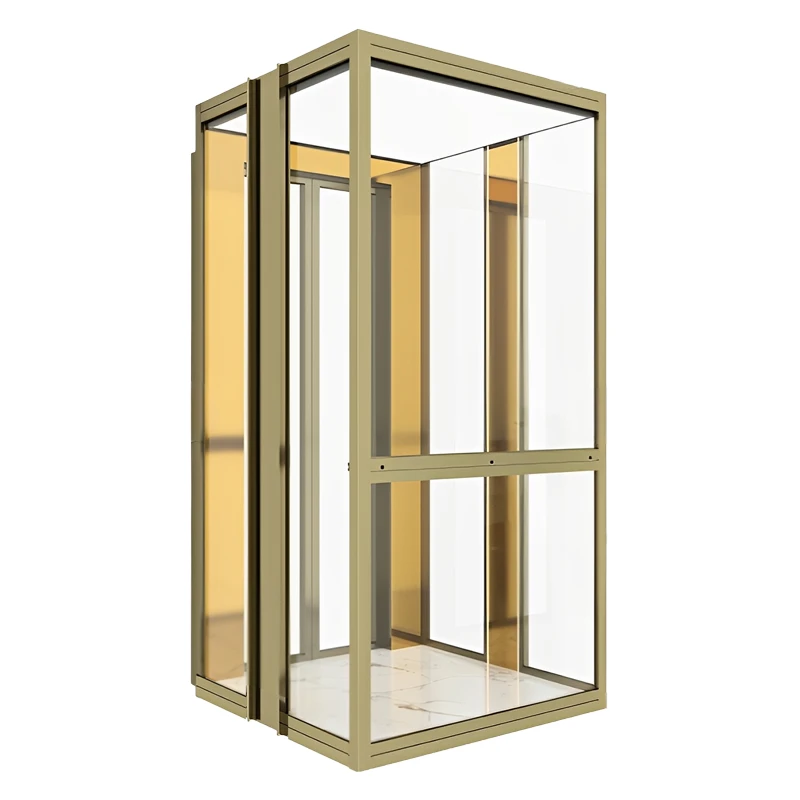
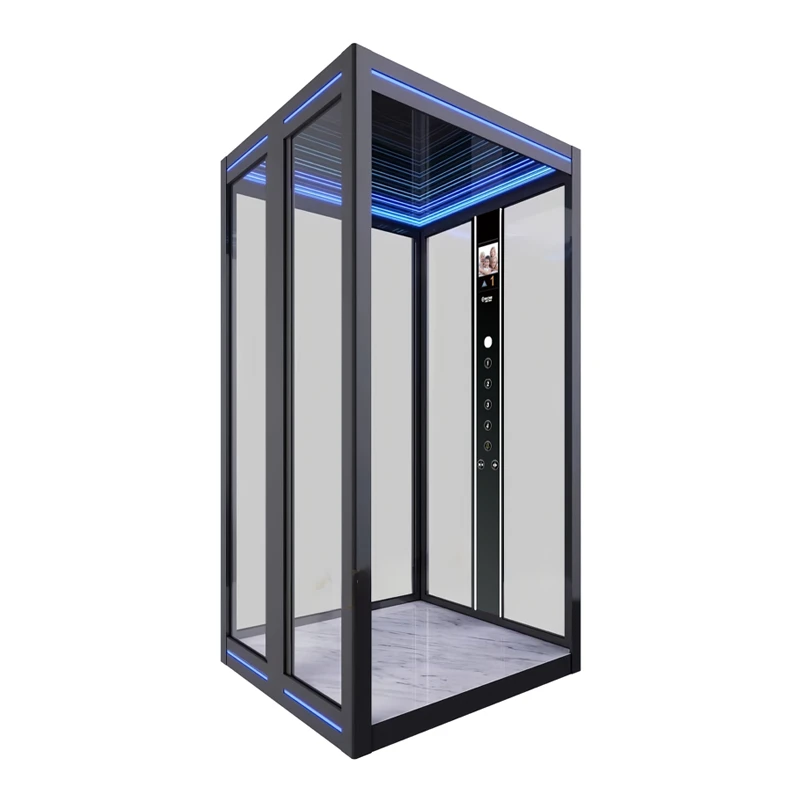
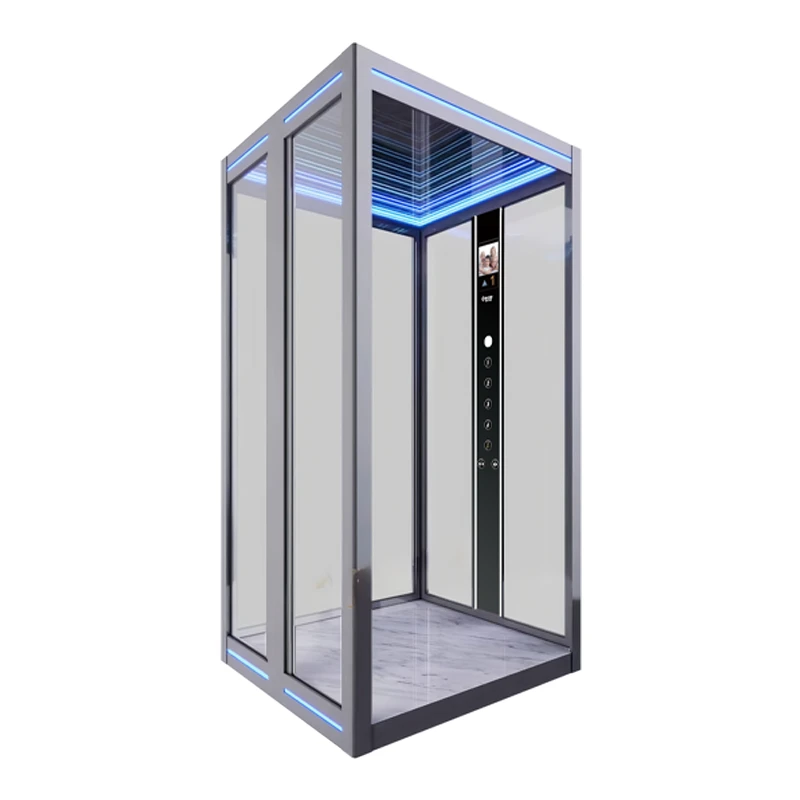
EKCNE supports outdoor villa elevator configurations including:
- stainless steel frame structures
- panoramic glass shaft systems
- custom cabin layouts
- weather-resistant exterior finishes
- compact shaft integration
- exterior steel structure support
These projects are frequently customized according to actual building geometry rather than standardized shaft templates.
Outdoor Elevator Retrofit Planning
Retrofit projects involve different engineering priorities from new building installations.
In many existing buildings, the elevator system must adapt to:
- limited shaft space
- existing structural conditions
- restricted pit depth
- difficult installation access
- occupied building environments
- existing circulation patterns
This changes both installation strategy and equipment selection logic.
For example, shallow pit outdoor elevator systems may significantly reduce civil construction requirements in buildings where excavation conditions are limited.
Similarly, exterior steel structure shafts may reduce disruption to existing interior layouts while simplifying installation coordination.
Successful retrofit planning depends less on elevator specifications alone and more on how the elevator integrates into the building’s existing operational structure.
Outdoor Traction Elevators vs Hydraulic Outdoor Lifts
System selection depends on building conditions, travel height, traffic behavior, and long-term operational priorities.
Outdoor Traction Elevators
Traction outdoor elevators are generally more suitable for:
- multi-floor residential projects
- villa transportation systems
- higher daily usage frequency
- smoother passenger transportation
- projects requiring better energy efficiency
Advantages include:
- smoother travel operation
- improved multi-floor efficiency
- reduced long-term energy consumption
- stable VVVF control performance
However, traction systems usually require more coordinated shaft planning and structural alignment.
Hydraulic Outdoor Lifts
Hydraulic outdoor lifts are often selected for:
- lower-rise applications
- simplified accessibility systems
- projects with restricted overhead conditions
- lower traffic environments
Hydraulic systems may simplify some installation conditions, but they also introduce different maintenance considerations related to hydraulic components, oil temperature behavior, and long-term servicing requirements.
No outdoor elevator configuration is universally ideal.
System selection should depend on actual project conditions, lifecycle expectations, and building compatibility.
Outdoor Elevator Product Configurations
EKCNE supports customized outdoor elevator systems for low-rise exterior transportation projects.
Outdoor Elevator
| Item | Specification |
|---|---|
| Rated Speed | 0.4 m/s |
| Load Capacity | 260–400 kg |
| Floors | 2 Floors |
| Drive Type | Traction Drive |
| Cabin Type | Closed Cabin |
| Control Mode | VVVF |
| Door Type | Center Opening |
Suitable for:
- exterior residential access
- compact retrofit projects
- low-rise outdoor mobility systems
Outdoor Residential Elevator
| Item | Specification |
|---|---|
| Rated Speed | 0.4 m/s |
| Load Capacity | 260–400 kg |
| Floors | Up to 6 Floors |
| Drive Type | Traction Drive |
| Cabin Type | Enclosed Cabin |
| Features | Seismic Resistant |
Suitable for:
- country houses
- low-rise residential buildings
- exterior-added transportation systems
Outdoor Villa Elevator
| Item | Specification |
|---|---|
| Rated Speed | 0.4 m/s |
| Load Capacity | 260–400 kg |
| Floors | Up to 4 Floors |
| Structure | Stainless Steel Frame |
| Features | Waterproof and Shockproof |
| Control Mode | VVVF |
Suitable for:
- private villas
- panoramic exterior shafts
- architectural integration projects
Outdoor Elevator Manufacturing and Project Coordination
EKCNE develops outdoor elevator systems with attention to long-term operational coordination rather than isolated equipment production.
The company operates a 66,000-square-meter manufacturing facility supporting:
- customized elevator manufacturing
- outdoor shaft integration
- steel structure coordination
- elevator component production
- project-oriented OEM supply
- long-term spare parts continuity
With annual production capacity exceeding 10,000 units, EKCNE supports outdoor elevator projects across residential, commercial, and retrofit environments where building compatibility and lifecycle stability remain critical project requirements.
Our engineering support includes:
- outdoor shaft evaluation
- building compatibility analysis
- exterior installation coordination
- customization planning
- modernization support
- component continuity planning
rather than only standard product supply.
Discuss Outdoor Elevator Project Requirements
Outdoor elevator projects involve environmental exposure, structural integration, operational planning, and long-term maintenance considerations.
Project suitability depends on more than cabin size or travel height alone.
If you’re evaluating an outdoor elevator project, EKCNE can help review:
- exterior building compatibility
- retrofit feasibility
- outdoor shaft configurations
- traction vs hydraulic suitability
- weather-resistant configurations
- customization requirements
- steel structure integration
- project deployment planning