
Why Aluminum Elevator Shafts Are Becoming a Preferred Choice
Aluminum elevator shaft systems combine a lightweight structural frame with prefabricated construction, corrosion resistance, and architectural flexibility. These characteristics can be useful when an elevator needs to be added to an existing building, installed externally, or integrated into a visually exposed architectural design.
The value of an aluminum shaft does not come from the material alone. Its suitability depends on how its weight, structural capacity, fabrication method, environmental resistance, fire performance, and maintenance requirements interact with the elevator system and building.
For retrofit projects, external elevators, panoramic installations, villas, and selected machine-room-less elevator applications, aluminum can provide an alternative to conventional steel or reinforced concrete shafts. It is not appropriate for every project, particularly where structural loads, fire requirements, or heavy-duty operating conditions favor other materials.
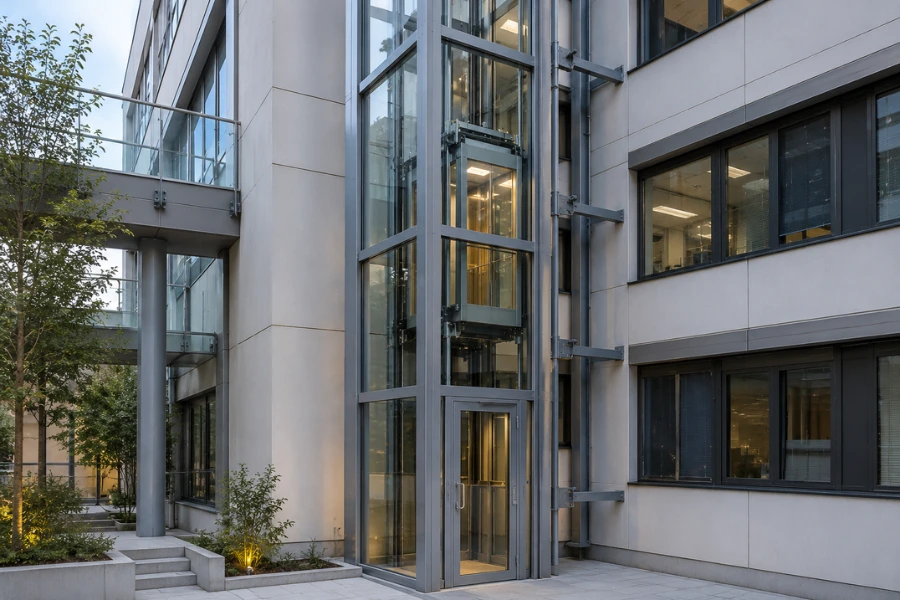
Key Advantages of Aluminum Elevator Shafts
Lightweight Structure Reduces Additional Building Load
One of the main advantages of aluminum is its lower density compared with steel and concrete.
A lighter shaft can reduce the additional structural load introduced when an elevator is added to an existing building. This can be particularly relevant where the original structure has limited spare capacity or where extensive reinforcement would increase project complexity.
Typical applications include:
-
Residential elevator retrofits
-
Villa elevators
-
Apartment modernization
-
External elevator installations
-
Older building upgrades
Lower structural weight can also simplify transportation, lifting, and onsite handling, particularly at restricted retrofit sites.
The engineering benefit is therefore not simply that aluminum weighs less. Its lower weight can provide more flexibility when the new elevator structure must be integrated into an existing building with limited structural capacity.
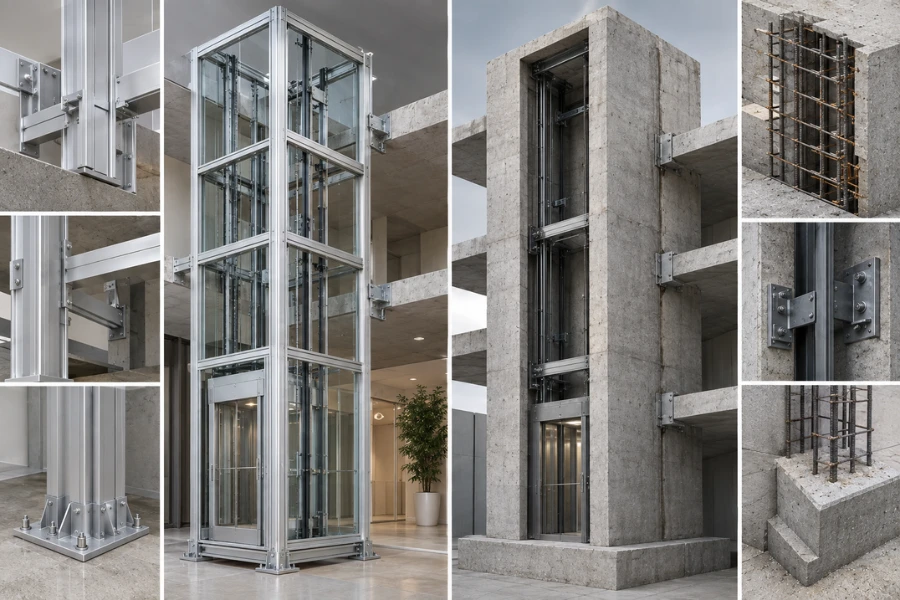
Prefabricated Construction Can Reduce Onsite Work
Aluminum elevator shafts are commonly produced as prefabricated systems rather than constructed entirely at the project site.
A conventional concrete shaft may involve:
Reinforcement → Formwork → Concrete pouring → Curing → Elevator installation
A prefabricated aluminum system follows a different sequence:
Factory fabrication → Transportation → Onsite assembly → Elevator installation → Commissioning
More fabrication can therefore be completed under controlled factory conditions before the shaft reaches the building.
This can be valuable for:
-
Occupied buildings
-
Commercial renovations
-
Hotels and public buildings
-
Projects with restricted construction windows
-
Sites where onsite wet work needs to be minimized
The benefit is not simply shorter installation. Factory fabrication can also reduce the amount of structural work that must be coordinated around residents, tenants, or ongoing building operations.
Corrosion Resistance for Outdoor Applications
External elevator shafts are exposed to rain, humidity, temperature changes, and, in coastal locations, salt-laden air.
Aluminum naturally forms a protective oxide layer that provides corrosion resistance. Surface treatments such as anodizing or powder coating can provide additional protection and help maintain the shaft’s appearance.
This makes aluminum relevant to applications such as:
-
Coastal buildings
-
Outdoor accessibility elevators
-
Scenic elevators
-
External elevator shafts
However, corrosion resistance does not eliminate environmental design requirements. Connections, fasteners, joints, drainage, surface treatments, and interfaces between different materials still need to be considered.
Space and Architectural Flexibility
Aluminum profiles can provide structural performance with relatively lightweight sections, which can help where available space is limited.
This can be relevant to:
-
Compact residential buildings
-
Retrofit projects
-
Panoramic elevators
-
Glass elevator enclosures
Aluminum also supports different surface finishes and can be combined with glass enclosure systems. This allows the shaft to function as part of the building’s architectural design rather than only as a concealed structural enclosure.
For panoramic applications, the structural frame can be designed around larger areas of transparent enclosure while maintaining the required support and connection points.
Aluminum vs. Steel vs. Concrete Elevator Shafts
No shaft material is universally better. The appropriate choice depends on structural requirements, construction conditions, environmental exposure, elevator duty, and architectural objectives.
| Project Factor | Aluminum Shaft | Steel Shaft | Concrete Shaft |
|---|---|---|---|
| Structural weight | Low | Medium | High |
| Prefabrication potential | High | High | Low |
| Onsite installation | Modular assembly | Fabricated assembly | Extensive civil work |
| Corrosion resistance | High, subject to design | Requires protection | Generally high |
| Architectural flexibility | High | Good | More limited |
| Fire strategy | Requires project-specific design | Requires project-specific design | Strong inherent fire performance |
| Retrofit suitability | High for suitable applications | High | More disruptive |
| Heavy-duty applications | More limited | Strong | Strong |
Aluminum can be attractive where lightweight construction, prefabrication, architectural integration, and reduced structural intervention are important.
Steel can be more appropriate where higher rigidity or demanding load conditions govern the design.
Concrete remains particularly relevant where the shaft is integrated into the primary structure of a new building or where its structural and fire characteristics fit the project requirements.
The comparison should therefore be based on the complete building and elevator system rather than material preference alone.
Which Projects Can Benefit From Aluminum Elevator Shafts?
Existing Building Modernization
Existing buildings are one of the clearest applications for lightweight prefabricated shafts.
Older properties may have limited structural capacity because elevator installation was not included in the original structural design. A conventional concrete shaft can require substantial reinforcement, demolition, and onsite construction.
An aluminum shaft can reduce the structural weight added by the new elevator enclosure and can be assembled with less onsite structural work.
Potential project benefits include:
-
Reduced structural modification
-
Less disruption to occupied spaces
-
Easier transportation to restricted sites
-
Compatibility with prefabricated installation
The final decision still depends on foundation conditions, elevator loads, shaft dimensions, fire requirements, and local regulations.
Villa and Low-Rise Residential Applications
Villas and private residences often require compact elevator solutions that preserve existing rooms and architectural appearance.
An aluminum shaft can support:
-
Compact external installations
-
Customized shaft dimensions
-
Home elevator integration
-
Glass enclosure options
-
Exterior architectural integration
The lightweight structure can also be useful where the existing building has limited capacity for a new shaft.
Panoramic and Glass Elevators
Panoramic elevators place greater emphasis on the relationship between the shaft structure and the enclosure.
An aluminum frame can support architectural concepts involving:
-
Larger glass surfaces
-
Reduced visual obstruction
-
Natural lighting
-
Passenger visibility
-
External architectural integration
Hotels, shopping centers, museums, office atriums, and tourism facilities may use this type of shaft where the elevator forms part of the building’s visible design.
The engineering requirement remains more than appearance. Wind loads, glass support, connections, drainage, cleaning access, and long-term maintenance need to be resolved together.
Outdoor Elevator Applications
Outdoor installations benefit from aluminum’s corrosion resistance and relatively low structural weight, particularly where the elevator is being added to an existing building.
Potential applications include:
-
Exterior accessibility elevators
-
Scenic elevators
-
Building extensions
-
Pedestrian connection systems
-
Coastal facilities
Outdoor aluminum shafts still require structural analysis for wind, appropriate drainage, connection design, and material compatibility.
Aluminum Elevator Shaft Selection Decision Matrix
The following matrix can be used as a preliminary screening tool rather than a final material specification.
| Project Scenario | Potential Shaft Solution | Primary Consideration |
|---|---|---|
| Existing apartment retrofit | Aluminum shaft | Lower structural weight and prefabricated installation |
| Villa elevator | Aluminum shaft | Compact configuration and architectural flexibility |
| Outdoor observation elevator | Aluminum shaft | Corrosion resistance and glass integration |
| Hotel panoramic elevator | Aluminum shaft | Architectural integration |
| Commercial modernization | Aluminum or steel | Structural and operational requirements |
| Industrial freight elevator | Steel shaft | Higher structural demands |
| High-rise commercial building | Concrete or steel | Primary structural integration and load requirements |
| Temporary modular building | Prefabricated aluminum shaft | Modular installation and relocation requirements |
The matrix identifies situations where aluminum may provide useful advantages. It does not establish that aluminum is automatically the correct choice.
Final selection should consider elevator type, rated load, building height, wind exposure, fire requirements, foundation conditions, installation access, and lifecycle maintenance.
Engineering Factors Before Selecting an Aluminum Elevator Shaft
Building Height and Structural Requirements
Building height affects wind exposure, shaft stability, connection loads, and guide rail support requirements.
For low- and medium-rise applications, the lightweight characteristics of aluminum can align well with the structural demands of the project.
For taller or more exposed installations, engineers need to evaluate:
-
Wind pressure
-
Shaft deflection
-
Connection strength
-
Guide rail support
-
Building movement
Where these requirements exceed the practical structural range of an aluminum system, steel or reinforced concrete may provide a more suitable structural solution.
Fire Protection
Fire performance needs to be established during shaft design rather than after construction begins.
Depending on the building and applicable requirements, the design may need to address:
-
Fire-rated materials or assemblies
-
Protective cladding
-
Certified glazing systems
-
Insulation
-
Shaft enclosure requirements
The relevant fire strategy should be coordinated with the elevator system, building code, and local approval requirements.
Acoustic and Vibration Control
The relatively lightweight nature of aluminum can make vibration and sound transmission important design considerations.
Potential measures include:
-
Vibration isolation
-
Accurate guide rail installation
-
Optimized equipment positioning
-
Suitable glazing and sealing details
-
Appropriate structural connections
The objective is to ensure that the shaft’s low structural weight does not create unacceptable vibration or acoustic performance.
Failure Risks When Choosing the Wrong Shaft Material
Ignoring Wind Loads
Selecting aluminum for an outdoor shaft without evaluating local wind conditions can result in excessive structural movement.
A simplified failure chain is:
Wind loading → Shaft deflection → Glass or enclosure movement → Guide rail or door alignment issues → Additional adjustment and maintenance
Wind analysis and structural verification should therefore be completed before the shaft material and structural dimensions are finalized.
Using Aluminum for Heavy-Duty Applications Without Evaluation
Aluminum can be suitable for many passenger, residential, panoramic, and retrofit applications, but material selection must still match elevator duty.
Industrial freight elevators with high loads or demanding operating cycles may place greater emphasis on structural rigidity and load-bearing capacity.
The correct approach is to evaluate the shaft against the elevator’s rated load, duty conditions, structural requirements, and operating environment rather than selecting aluminum solely because it is lightweight.
Comparing Materials Only by Initial Cost
Purchase price does not represent the complete project cost.
A material comparison should include:
-
Construction duration
-
Structural modification
-
Installation labor
-
Transportation and lifting
-
Maintenance requirements
-
Future modernization
-
Environmental protection
In a retrofit project, a higher material cost may be offset by reduced civil work or shorter onsite installation, while a lower-cost shaft may create additional structural or construction requirements.
Aluminum Shafts and Modern Elevator Systems
Integration With Machine-Room-Less Elevators
Machine-room-less elevators eliminate the need for a separate machine room and can provide greater flexibility in building planning.
Their design can emphasize:
-
Reduced building space requirements
-
More efficient floor-area use
-
Flexible architectural planning
-
Reduced construction complexity
An aluminum shaft can complement these objectives where its structural capacity and fire strategy are appropriate because the lightweight frame reduces additional structural loading.
However, the shaft still needs to accommodate the MRL elevator’s actual equipment, guide rails, clearances, and maintenance requirements.
Supporting Modular and Prefabricated Construction
Prefabricated aluminum shafts follow the broader principle of moving more construction work into a controlled manufacturing environment.
A typical process is:
Factory production → Quality inspection → Transportation → Onsite assembly → Elevator commissioning
This approach can be useful for international projects where local labor availability, onsite construction time, transportation, and installation conditions affect project execution.
The logistics plan still needs to account for module dimensions, packaging, transport routes, lifting equipment, and site access.
Architectural Integration
An aluminum shaft can support architectural applications such as:
-
Transparent glass elevators
-
External elevator additions
-
Modern residential installations
-
Commercial architectural features
The combination of aluminum framing and glass enclosure systems can reduce the visual mass of an external elevator while integrating the structure into the building design.
Lifecycle Considerations
The shaft should be evaluated across installation, operation, maintenance, and modernization rather than only at procurement.
Installation
Prefabrication can reduce:
-
Onsite structural work
-
Material handling
-
Wet construction
-
Coordination around occupied areas
This can be particularly valuable when construction duration affects building operations.
Operation and Maintenance
Aluminum’s corrosion resistance can reduce some environmental maintenance requirements, particularly when appropriate surface treatments and drainage are used.
Routine inspection remains necessary for the complete system, including:
-
Structural connections
-
Glass panels
-
Seals
-
Guide rails
-
Elevator components
-
Surface protection
Material corrosion resistance does not remove the need to inspect mechanical and structural interfaces.
Modernization
Buildings may require elevator upgrades or accessibility changes during their service life.
A modular shaft can offer opportunities to modify or replace individual components more easily than some permanent construction methods, although the actual feasibility depends on the original shaft design and connection system.
Future requirements may include:
-
Elevator upgrades
-
Accessibility improvements
-
Building extensions
-
Changes to architectural finishes
These possibilities are best considered before the shaft configuration is finalized.
Procurement Checklist for Aluminum Elevator Shaft Projects
Before selecting an aluminum elevator shaft, project teams should confirm:
| Checklist Item | Key Question |
|---|---|
| Building type | Is the project new construction or retrofit? |
| Elevator application | Is it residential, passenger, panoramic, accessibility, or freight use? |
| Shaft location | Is the elevator indoors or externally exposed? |
| Structural condition | Can the building and foundation accommodate the required loads? |
| Environmental exposure | Will the shaft face coastal air, rain, humidity, or other exposure? |
| Architectural requirements | Is transparency or visual integration important? |
| Fire requirements | Does the proposed shaft assembly satisfy applicable requirements? |
| Installation access | Can prefabricated components reach and be assembled at the site? |
| Future upgrades | Will elevator modernization or building changes be required later? |
This checklist provides a screening framework before detailed structural design and procurement.
How EKCNE Supports Customized Aluminum Elevator Shaft Projects
An aluminum elevator shaft should be selected as part of an integrated elevator and building solution rather than as an isolated product.
EKCNE supports project-specific configurations based on:
-
Shaft dimensions and building conditions
-
Passenger, panoramic, MRL, home, and accessibility elevator applications
-
Structural and installation requirements
-
Coordination between shaft and elevator components
-
Manufacturing and quality control
-
International logistics and project coordination
For retrofit, outdoor, panoramic, and customized elevator projects, early coordination can identify dimensional, structural, environmental, and installation constraints before manufacturing begins.
Conclusion
The main aluminum elevator shaft advantages come from the combination of lightweight construction, prefabricated installation, corrosion resistance, architectural flexibility, and potential lifecycle benefits.
These characteristics can make aluminum particularly relevant to retrofit buildings, villas, panoramic elevators, outdoor installations, and other projects where structural intervention and onsite construction need to be controlled.
Aluminum is not a universal replacement for steel or concrete. Building height, wind exposure, elevator duty, fire requirements, foundation conditions, installation access, and maintenance requirements can all change the appropriate shaft solution.
The most useful material-selection decision is therefore not simply whether aluminum is lighter or easier to install. It is whether its structural, environmental, construction, and lifecycle characteristics match the actual requirements of the elevator and building.












