
Elevator door failures can originate from mechanical resistance, the door operator, position feedback, entrance-protection devices, or the landing-door interlock. Because several faults can produce the same symptom, a door that keeps reopening does not automatically indicate a faulty light curtain, just as a slow door does not necessarily mean the motor is failing.
A useful diagnosis starts with three observations: where the fault occurs, when it occurs in the door cycle, and whether it is constant or intermittent. These observations help distinguish a landing-specific mechanical problem from a fault affecting shared operator, feedback, or safety systems.
How an Elevator Door System Works
An elevator entrance normally includes a car door that travels with the elevator and a landing door installed at each floor. The two assemblies must coordinate mechanically and electrically before the elevator can complete a normal operating cycle.
Car Door and Door Operator
The door operator drives the car door through a motor and transmission mechanism. Depending on the design, it may include a belt, drive components, controller, encoder, or other position-feedback elements.
The operator must control more than basic movement. It needs to establish the door position and follow the intended opening and closing sequence while responding to safety inputs.
When the car reaches a landing, a coupling mechanism allows the powered car door to engage the landing door. Wear in the rollers, guide system, belt, or coupling components can therefore affect both movement and the interaction between the car and landing doors.
Landing Door and Interlock
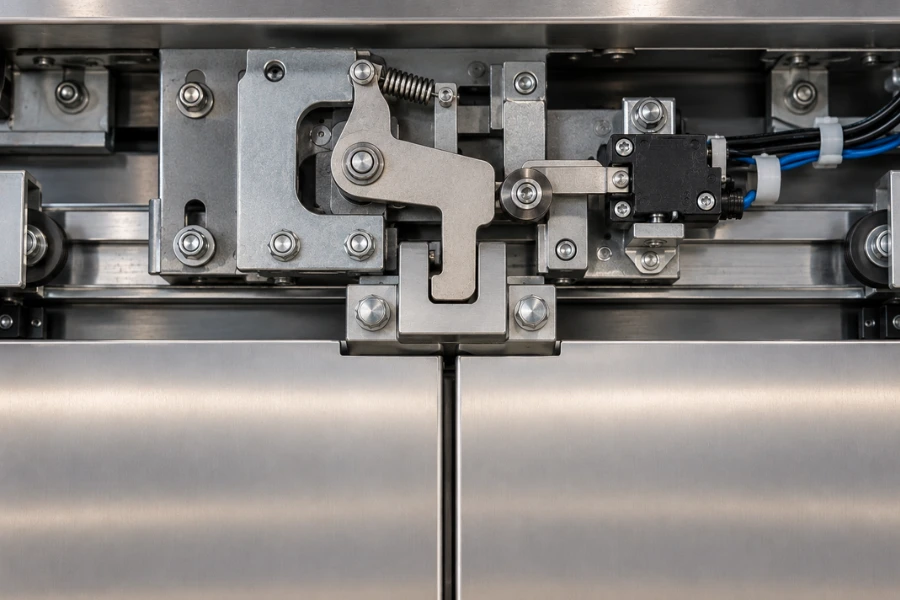
Landing doors are mechanically locked when the elevator car is not in the required landing position. The interlock also provides an electrical safety condition that the control system uses to verify the required door state before elevator movement.
This means a door panel can appear closed without the elevator receiving the required confirmation. A fault in the lock contacts, alignment, wiring, or interlock mechanism can therefore prevent the elevator from running even when the door appears fully shut.
Common Elevator Door Failure Symptoms
| Symptom | Likely Fault Area | Diagnostic Direction |
|---|---|---|
| Door won’t close | Sill, track, protection device, operator | Check obstruction, resistance, and protection input |
| Door keeps reopening | Protection device, resistance, feedback | Determine when reversal occurs |
| Door won’t open | Operator, coupling mechanism, landing door | Separate car-door movement from landing-door response |
| Door moves slowly or sticks | Rollers, track, belt, operator | Check mechanical resistance before assuming motor failure |
| Door vibrates or moves unevenly | Rollers, alignment, belt, guide system | Identify where vibration occurs during travel |
| Door makes unusual noise | Rollers, track, panels, coupling mechanism | Relate the noise to door position and movement |
| Door closes but elevator won’t run | Interlock, lock contact, safety circuit | Verify locking and electrical confirmation |
| Landing door unlocks abnormally | Interlock or locking mechanism | Remove the elevator from normal service for professional inspection |
These symptoms indicate diagnostic directions rather than specific failed components. Several components can produce similar behavior, so replacement should follow fault isolation rather than the symptom alone.
Elevator Door Won’t Close
A door that will not close can result from a physical obstruction, excessive mechanical resistance, a protection-device signal, or a door operator problem.
Common causes include:
- Debris or foreign objects in the sill groove
- Worn door rollers or sliding components
- Deformed, loose, or misaligned guide rails
- Loose or worn operator belts
- Light curtain or safety-edge activation
- Door operator or controller faults
- Incomplete door-blade or landing-door engagement
The location of the problem provides a useful diagnostic clue. A failure consistently associated with one landing shifts attention toward that landing’s sill, track, rollers, interlock, or coupling alignment. When similar closing problems occur across multiple floors, shared car-side systems become more relevant.
A door that cannot close because of mechanical resistance should not automatically be treated as an operator failure. If the operator is working against increased resistance from the track or rollers, the resulting slow or incomplete movement may be a consequence of the mechanical condition.
Elevator Door Keeps Reopening
Repeated reopening is often associated with an entrance-protection device, but the protection system is only one possible cause.
An actual object in the doorway can interrupt the light curtain or safety edge. A faulty sensor, unstable signal, damaged cable, or related electrical problem can produce a similar obstruction input when the entrance is clear.
The timing of the reversal provides additional information. A door that reverses immediately after closing begins presents a different diagnostic pattern from one that travels most of the way before reversing.
Position feedback and door-state signals may also need to be investigated. For example, an encoder or its associated position-sensing system may provide unreliable door-position information, while a controller may respond to an abnormal signal by interrupting or reversing the closing sequence.
Reopening should therefore be treated as a symptom rather than a diagnosis.
Elevator Door Won’t Open
When an elevator arrives at a floor but the doors do not open, first determine whether the car door itself fails to move or whether the car door moves without correctly operating the landing door.
If the car door does not move, possible areas include:
- Door operator motor or drive mechanism
- Belt or transmission components
- Operator controller
- Electrical supply or control command
- Encoder or other position feedback
If the car door moves but the landing door does not follow correctly, attention shifts toward the coupling mechanism, door vane, landing-door hardware, alignment, or local obstruction.
The same floor-pattern check can help distinguish a local landing-door problem from a fault affecting shared operator-side equipment.
Door Moves Slowly or Sticks
Slow door movement does not automatically indicate a weak or failing motor.
Dirty or damaged tracks, worn rollers, sliding components, misalignment, or sill contamination can increase mechanical resistance. The operator then has to overcome a greater load, so reduced speed may be a consequence of mechanical deterioration rather than a motor fault.
Operator-side problems can also cause slow or inconsistent movement. These include belt deterioration, motor or drive problems, unstable position feedback, controller faults, or inappropriate operating parameters.
The diagnostic sequence should therefore consider mechanical resistance and operator performance together before a motor or controller is replaced.
Door Vibration, Uneven Movement, or Unusual Noise
Door vibration and abnormal noise often indicate a change in the mechanical condition of the door system. Worn rollers, loose components, misaligned guide rails, uneven belt wear, panel rubbing, or poor coupling engagement can all affect movement.
The point at which the symptom occurs provides useful information.
Noise or vibration throughout the full travel may indicate a guidance or drive problem that remains present across the movement. A sound concentrated near full opening or closing can instead point toward alignment, clearance, end-of-travel behavior, or component engagement.
If the noise appears specifically when the landing door is engaged, the coupling mechanism and landing-door hardware deserve particular attention.
Door Interlock and Safety Circuit Failures
Door interlocks are different from ordinary movement components because their condition affects whether the elevator is permitted to run.
Doors Look Closed but the Elevator Won’t Run
A visually closed door does not necessarily mean the landing-door lock and associated electrical safety condition have been verified.
Possible causes include:
- Incomplete mechanical lock engagement
- Worn or unreliable lock contacts
- Door or interlock misalignment
- Damaged wiring or connections
- An interruption in the relevant safety circuit
A door-lock contact that cannot reliably open or close as required can produce an intermittent safety-circuit fault. A damaged connection can produce similar symptoms that are difficult to reproduce during a brief inspection.
Repeatedly forcing the door closed or resetting the elevator does not address the underlying condition.
Landing Door Can Open Abnormally
A landing door that can open when the elevator car is not in the permitted position represents a serious safety condition rather than an ordinary door adjustment issue.
The elevator should not remain in normal passenger service until the condition has been assessed by qualified elevator personnel. Door interlocks and their electrical safety functions should never be bypassed to restore operation.
How to Narrow Down an Elevator Door Fault
A systematic diagnosis can reduce unnecessary adjustments and parts replacement. Four observations are especially useful before component-level testing begins.
Does the Problem Occur at One Floor or Multiple Floors?
A fault isolated to one floor increases the likelihood of a landing-specific issue, such as local sill contamination, landing-door rollers, guide alignment, interlock condition, or coupling interaction.
When the same symptom occurs across multiple floors, technicians should give greater attention to shared equipment such as the car door, door operator, protection devices, controller, or position feedback.
This is a diagnostic direction rather than a definitive rule. A shared system can still produce a fault that appears only under particular landing conditions.
Does It Happen During Opening or Closing?
Opening problems tend to direct attention toward the operator, drive mechanism, coupling, and mechanical resistance.
Closing problems add entrance-protection signals and the final locking sequence to the diagnostic path. If the door closes physically but the elevator does not receive the required lock confirmation, the fault moves from door movement into the interlock and safety circuit.
At What Point Does the Door Fail?
A door that reverses immediately after closing begins presents a different diagnostic pattern from one that stalls midway.
If the door travels almost completely closed but the elevator still cannot depart, the final locking and safety-confirmation sequence becomes more important.
This timing also helps distinguish a movement problem from a state-confirmation problem: the former prevents the door from reaching its expected position, while the latter can prevent operation after the door appears to have reached it.
Is the Fault Constant or Intermittent?
Constant mechanical resistance is often easier to reproduce. Intermittent faults may require closer investigation of contacts, wiring, sensor signals, feedback stability, vibration-related connections, or changing mechanical conditions.
Controller fault logs can help establish a pattern, but fault codes should be interpreted together with physical inspection and the specific elevator control system. A code by itself does not always identify the failed component.
What Building Staff Can Check Safely
Building staff can provide useful diagnostic information without performing elevator repairs.
They can:
- Record which floor or floors are affected
- Note whether the problem occurs during opening or closing
- Observe whether the door reverses, stalls, vibrates, or makes unusual noise
- Check for an obvious visible obstruction in accessible sill areas
- Record displayed fault information
- Note whether the problem is constant or intermittent
- Report the observations to the elevator service provider
The most useful information is usually the combination of location, timing, repetition, and visible symptoms, rather than simply reporting that “the elevator door is broken.”
What Requires a Qualified Elevator Technician
Component adjustment and electrical diagnosis should be left to qualified elevator personnel.
This includes:
- Door interlock adjustment or replacement
- Safety circuit diagnosis
- Door encoder or position-feedback adjustment
- Controller parameter changes
- Motor and drive testing
- Electrical measurements
- Access to hoistway equipment
- Adjustment of coupling or locking mechanisms
Safety devices, interlocks, and safety circuits should not be bypassed as a temporary way to return an elevator to service.
How Preventive Maintenance Reduces Door Failures
Preventive maintenance is more useful when each inspection task is linked to a specific failure mechanism.
| Maintenance Action | Failure Mechanism Addressed |
|---|---|
| Clean door sills | Reduces obstruction-related closure problems |
| Inspect rollers and tracks | Identifies wear, alignment issues, and increasing resistance |
| Inspect belts and operator components | Identifies transmission deterioration |
| Test light curtains and safety edges | Verifies entrance-protection response |
| Inspect door interlocks | Helps maintain reliable mechanical and electrical locking |
| Review recurring fault history | Identifies repeated failures and problem locations |
Building conditions should also influence maintenance planning. Construction or renovation can introduce additional dust and debris around elevator entrances, increasing the likelihood of sill contamination and mechanical interference.
Fault history is particularly useful when the same landing or door system repeatedly develops problems. A recurring pattern may indicate an underlying alignment, compatibility, or equipment-condition issue rather than a series of unrelated component failures.
When Repeated Door Failures May Point to Modernization
Not every elevator door problem justifies modernization. A worn roller, contaminated sill, or damaged belt is normally a component-level maintenance issue.
The decision changes when an aging door system develops recurring operator faults, unreliable feedback, repeated interlock problems, obsolete control electronics, or replacement components that are increasingly difficult to source. At that point, continued isolated repairs should be compared with a broader door-system or elevator modernization strategy.
The evaluation should consider equipment age, fault history, component availability, system compatibility, downtime, maintenance requirements, and expected future service life rather than relying on a single failure.
Managing Elevator Door Failures
Effective elevator door troubleshooting depends on separating mechanical, operator and feedback, entrance-protection, and interlock faults before individual components are adjusted or replaced.
For new elevator projects and modernization work, EKCNE approaches door-system configuration as part of the wider vertical transportation system, considering building conditions, project-specific configuration, system compatibility, installation requirements, and long-term maintenance needs. This supports a door solution that can be evaluated as part of the complete elevator system rather than as an isolated component.












