
Choosing a mobile scissor lift starts with the jobsite, not the maximum height on a specification sheet. The right machine must reach the work area, carry the required personnel and materials, move through the site, and operate within the actual floor and environmental conditions.
Working height, platform capacity, machine dimensions, terrain, power source, mobility, and usage frequency should therefore be evaluated together. A lift that works efficiently on a smooth warehouse floor may be poorly suited to an outdoor construction area, even when both applications require the same working height.
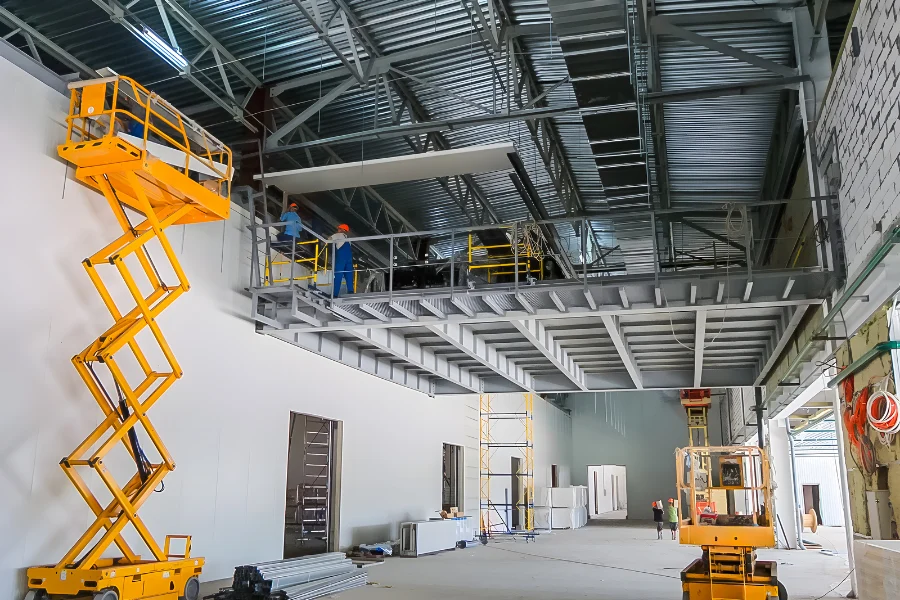
Start With the Job Requirements
Before comparing mobile scissor lift models, define how and where the equipment will operate.
A basic job requirement profile should answer:
-
What is the highest work point?
-
How many people will use the platform?
-
What tools and materials will they carry?
-
Will the lift operate indoors, outdoors, or both?
-
Is the supporting surface smooth, sloped, or uneven?
-
How narrow are the doors, aisles, and access routes?
-
How far will the lift travel between work positions?
-
Will it operate occasionally or several times every day?
A machine can meet the required lifting height and still be unsuitable because it is too wide, too heavy, difficult to maneuver, or poorly matched to the operating surface.
Choose the Right Type of Mobile Scissor Lift
The first configuration decision is how the machine will move and how frequently it needs to change position.
| Type | Movement | Suitable Applications | Main Consideration |
|---|---|---|---|
| Manual push electric | Manually moved, powered lifting | Occasional factory, shop, and warehouse maintenance | Lower cost and compact dimensions |
| Semi-electric | Manually moved, electrically lifted | Light industrial and warehouse work | Balance between cost and operating effort |
| Self-propelled electric | Powered travel and lifting | Factories, warehouses, facility maintenance, rental fleets | Mobility and productivity |
Manual-push models can be practical when travel distances are short and floors are smooth. Self-propelled scissor lifts become more useful as the site expands and repositioning becomes frequent.
Purchase price should not be the only consideration. Repeated manual repositioning across a large facility can consume enough labor time to justify a more mobile configuration.
Determine the Required Working Height
Height is usually the first specification buyers compare, but platform height and working height are different measurements.
Platform height describes the maximum elevation of the platform floor. Working height estimates the height an operator can reach while standing on the platform.
For ceiling systems, lighting, ducts, equipment installation, or maintenance, selection should start with the actual work point rather than the tallest machine available.
Extra reach can provide flexibility, but unnecessary oversizing can increase machine dimensions, weight, turning requirements, and cost.
Identify the highest regular work point and confirm how the manufacturer defines platform height and working height for the specific model.
Calculate the Required Platform Capacity
Rated capacity must cover more than operator weight.
Calculate the expected platform load as:
Workers + tools + materials + equipment carried onto the platform
A two-person maintenance team carrying power tools, replacement components, cable, or installation materials can require substantially more capacity than the workers alone.
Maximum personnel limits should also be checked independently of rated load. If the lift has an extension deck, verify its permitted capacity and loading requirements rather than assuming every section of the platform supports the same load.
Check Platform Size and Site Access
Platform dimensions affect how efficiently workers can perform the task. Multiple workers, long components, or numerous tools may justify a larger deck or platform extension.
The trade-off is that a larger platform can increase the machine’s overall width or length.
Review the complete access route before selecting a lift:
Entry point → Doorway → Corridor → Turning area → Work zone
Check machine width, overall length, stowed height, turning requirements, and weight where relevant. These constraints are particularly important in warehouses, factories, and commercial buildings.
The lift must not only be able to perform the work at the destination. It must also be physically capable of reaching that destination.
Match the Lift to the Operating Environment
Indoor and outdoor conditions influence power requirements, tires, emissions, noise, traction, and weather resistance.
Indoor Work
Electric scissor lifts are commonly used indoors because battery-powered operation avoids local exhaust emissions and can keep operating noise relatively low. Non-marking tires may also be useful on finished floors.
Indoor projects should consider:
-
Machine width
-
Turning space
-
Door and overhead clearance
-
Tire requirements
-
Charging access
Outdoor Work
Outdoor applications may require greater weather resistance, traction, and more robust tire configurations. Diesel-powered and rough-terrain machines are commonly considered where outdoor conditions are more demanding.
The distinction is not simply electric versus diesel. Electric machines can also be suitable for some outdoor applications when permitted by the manufacturer and when site and weather conditions are appropriate.
Evaluate Ground Conditions Separately
The supporting surface should be evaluated independently from the general operating environment.
Smooth warehouse concrete, paved areas, compacted ground, gravel, slopes, and uneven construction surfaces place different demands on tires, traction, ground clearance, and drive configuration.
Gradeability vs. Elevated Operation
Gradeability describes a machine’s ability to travel on a slope under specified conditions. It should not be treated as permission to elevate the platform on a slope of the same grade.
Travel capability and permitted conditions for elevated operation are separate requirements. Always check the manufacturer’s operating limits for the specific model.
Floor Loading
Floor loading also deserves attention indoors. Machine weight, occupants, materials, and wheel loads can matter when the lift operates on suspended floors or other structures with loading limitations.
Match Power and Battery Configuration to the Duty Cycle
Power selection should reflect both the operating environment and how intensively the equipment will be used.
Electric mobile scissor lifts fit many warehouses, factories, commercial buildings, and indoor maintenance applications. Diesel and rough-terrain configurations are more commonly used where outdoor conditions demand greater traction and mobility.
For electric machines, battery technology can affect daily availability.
| Battery Type | Initial Cost | Maintenance | Typical Selection Logic |
|---|---|---|---|
| Flooded lead-acid | Lower | Regular maintenance | Cost-sensitive routine use |
| Maintenance-free lead-acid | Medium | Lower | Facilities seeking simpler battery care |
| Lithium | Higher | Low | Frequent operation or shorter charging windows |
Battery requirements should be assessed against the actual duty cycle. Repeated lifting, frequent driving, load, temperature, and charging opportunities can all influence usable operating time.
For high-utilization facilities, charging downtime can become a productivity issue rather than simply a battery specification.
Evaluate Maneuverability as a Productivity Factor
Mobility matters more as the work area expands.
A lift that remains at one maintenance point for most of the day does not need the same travel performance as access equipment that moves repeatedly across a logistics center.
For self-propelled models, consider:
-
Stowed travel speed
-
Turning radius
-
Steering configuration
-
Narrow-aisle maneuverability
-
Travel restrictions when elevated
-
Braking performance
Travel speed is normally restricted when the platform is elevated. In large warehouses and factories, however, repeated repositioning while stowed can make mobility an important part of labor productivity.
Buy or Rent Based on Actual Utilization
Rental can make sense for short projects, occasional maintenance, or applications where height and equipment requirements change between jobs.
Purchasing becomes more relevant when the machine supports routine factory, warehouse, facility, or industrial operations. Ownership can provide greater control over availability, maintenance planning, operator familiarity, and equipment configuration.
The decision should be based on expected utilization and lifecycle requirements rather than purchase price alone.
Review Safety Configuration Before Purchase
Safety features should be evaluated during equipment selection rather than after delivery.
Depending on the machine and destination market, relevant features may include:
-
Guardrails and platform gates
-
Emergency stop controls
-
Emergency lowering
-
Tilt protection or warning systems
-
Overload protection
-
Braking systems
-
Platform and ground controls
-
Travel and lifting interlocks
-
Audible or visual warnings where required
Applicable requirements depend on equipment classification, operating region, and jobsite conditions. Buyers should verify that the selected machine and its documentation meet the standards and regulatory requirements applicable to the destination market.
Safety systems also do not compensate for unsuitable terrain, excessive loading, or operation outside the manufacturer’s approved conditions.
Mobile Scissor Lift Selection by Application
The same specification can have different importance depending on where the equipment operates.
| Application | Typical Configuration | Main Selection Priority |
|---|---|---|
| Factory maintenance | Manual push or self-propelled electric | Working height and access |
| Warehouse operations | Self-propelled electric | Mobility and maneuverability |
| Narrow indoor areas | Compact electric | Machine dimensions |
| Outdoor construction | Rough-terrain configuration | Ground conditions and traction |
| Frequent industrial use | Self-propelled | Duty cycle and productivity |
These configurations are starting points rather than fixed rules. Final selection should follow site measurements, operating conditions, required load, and the manufacturer’s approved application.
In extremely narrow or specialized areas, a scissor lift may not be the appropriate type of mobile elevating work platform. Identifying that limitation before procurement is preferable to forcing unsuitable equipment into the application.
Common Mobile Scissor Lift Selection Mistakes
Choosing by Height Alone
Adequate reach does not solve excessive width, insufficient capacity, or unsuitable terrain capability.
Ignoring the Access Route
Doorways, corridors, turning areas, and other restrictions should be measured before purchase.
Underestimating Platform Load
The rated load calculation should include workers, tools, materials, and equipment rather than operator weight alone.
Using the Wrong Machine for the Surface
A slab-type electric scissor lift should not be treated as a rough-terrain machine simply because it can travel outdoors.
Oversizing the Lift
Extra height, platform space, and terrain capability can increase dimensions, weight, and cost without improving the task.
Ignoring the Battery Duty Cycle
Charging time and available battery capacity can reduce equipment availability in high-frequency applications.
Confusing Gradeability With Elevated Operation
The ability to drive on a slope does not mean the platform can be elevated there.
Mobile Scissor Lift Selection Checklist
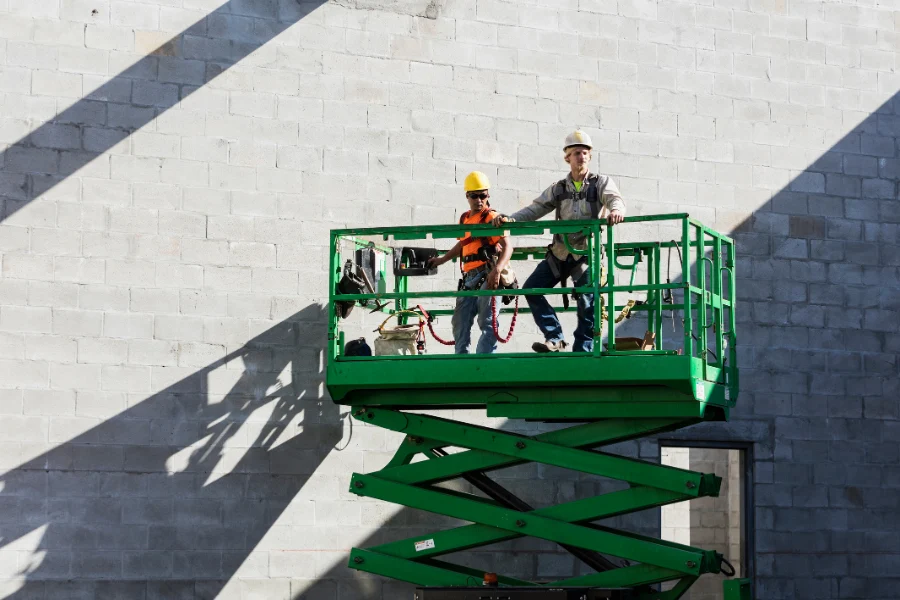
Before requesting a quotation, define:
-
Required working and platform height
-
Number of operators
-
Expected platform load
-
Platform and extension deck requirements
-
Maximum acceptable machine dimensions
-
Doorway, aisle, and turning restrictions
-
Floor condition and loading limitations
-
Outdoor terrain and slope conditions
-
Tire and traction requirements
-
Power configuration
-
Battery and charging requirements
-
Travel frequency and distance
-
Required safety configuration
-
Expected utilization
-
Maintenance and spare-parts requirements
Providing these details makes supplier quotations easier to compare and reduces the risk of selecting equipment around one headline specification while overlooking an important site constraint.
Choose the Lift Around the Worksite
Choosing a mobile scissor lift is ultimately about matching equipment to operating conditions. Working height and capacity establish the basic requirements, while access, ground conditions, power, mobility, duty cycle, and safety configuration determine whether the machine is suitable for efficient operation at the site.
For projects with specific lifting and access requirements, EKCNE can help evaluate working height, platform capacity, operating environment, mobility, and equipment configuration. Defining these requirements before procurement helps reduce specification mismatches and supports more practical long-term operation.












