
Scissor lift safety depends on more than guardrails, warning labels, and operator training. Safe operation requires the machine, operator, platform load, supporting surface, and surrounding environment to remain within acceptable operating limits.
A mechanically sound lift can still become unsafe when positioned on unstable ground, overloaded, exposed to overhead hazards, or operated outside the manufacturer’s limits. This scissor lift safety guide explains the major hazards, pre-use inspection points, operating practices, and conditions that should trigger a stop-work decision.
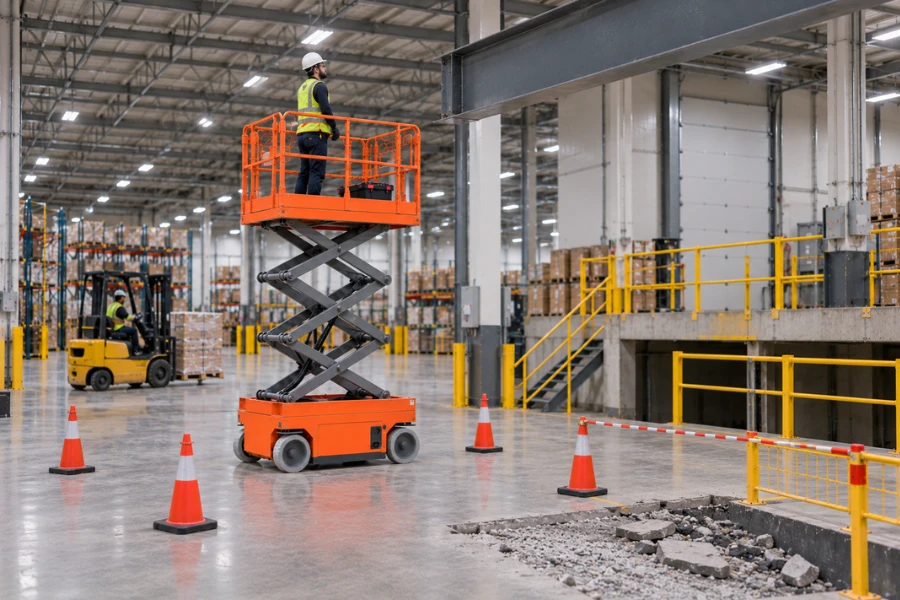
What Makes a Scissor Lift Safe to Operate?
A scissor lift raises a work platform vertically through a crossed support structure. Depending on its design, it may be used for construction, facility maintenance, warehouse operations, installation work, or other tasks requiring elevated access.
Safe operation depends on five connected factors:
- Machine condition
- Operator competence
- Ground and supporting surface
- Platform load
- Work environment
These factors shouldn’t be evaluated independently. As the platform rises, unsuitable ground, excessive loading, restricted clearance, or changing environmental conditions can have greater consequences.
The first safety decision should therefore happen before the platform leaves the ground.
Scissor Lift Hazards You Should Assess Before Work
Falls, tip-overs, crushing, electrical exposure, falling objects, and worksite collisions are major hazards to consider. OSHA guidance for U.S. workplaces places particular emphasis on fall protection, stabilization, and positioning when scissor lifts are used.
Falls From the Platform
Guardrails provide an important layer of fall protection. OSHA requires scissor lifts covered by its applicable standards to have guardrails and advises workers to remain on the work platform rather than stand on the rails.
Workers shouldn’t use ladders, boxes, or other improvised devices on the platform to gain extra reach or lean excessively outside the protected area. If a task can’t be reached safely, reposition the machine or select equipment better suited to the work.
Requirements for additional personal fall protection depend on the applicable regulations, manufacturer instructions, employer requirements, equipment configuration, and worksite risk assessment. They shouldn’t be assumed to be identical across every project or jurisdiction.
Tip-Over and Stability Hazards
Scissor lift stability becomes more sensitive to operating conditions as the platform rises. Ground condition, slope, platform height, load distribution, machine movement, and environmental forces can interact.
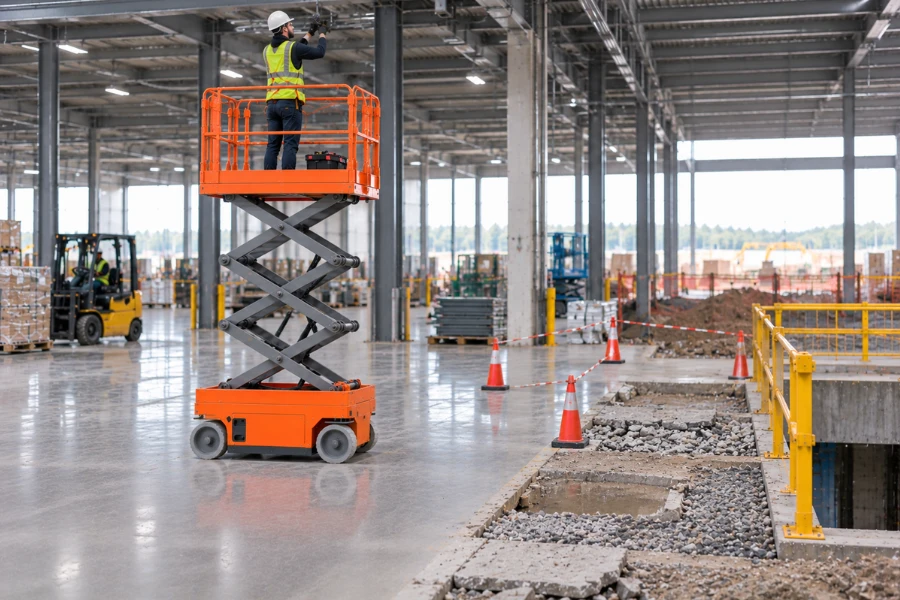
Potential stability hazards include:
- Holes and drop-offs
- Excessive slopes
- Soft or weak surfaces
- Bumps and abrupt surface changes
- Construction debris
- Excessive platform loading
- Uneven load distribution
- Wind and changing weather
OSHA advises selecting firm, level work surfaces away from hazards such as slopes, holes, drop-offs, bumps, and debris. It also states that the platform load shouldn’t exceed the manufacturer’s load rating.
The supporting surface must be capable of carrying the machine under its operating conditions. A floor that appears level isn’t necessarily suitable if its load-bearing capacity is uncertain.
Outdoor work adds wind and weather to the stability assessment. Although OSHA provides general guidance for outdoor-rated equipment, the machine’s specified environmental and wind limits should be checked rather than assuming one value applies to every model.
Crushing and Entrapment Hazards
Overhead clearance can change continuously while the platform is rising or traveling.
Beams, ceilings, pipes, door frames, ducts, structural members, and nearby machinery can trap or crush platform occupants. OSHA specifically identifies situations involving fixed objects, nearby moving vehicles, and travel beneath structures such as door frames or support beams as positioning hazards.
Operators should therefore consider the entire path of the platform, not just its final working position. This is especially important inside warehouses, industrial plants, construction interiors, and other congested work areas.
Electrical Hazards
Scissor lifts operating near energized electrical systems may expose occupants to electrocution, arc flash, and thermal burn hazards. Electrical contact isn’t always necessary because electricity may arc between an energized source and a worker or machine.
For U.S. workplaces, OSHA’s scissor lift guidance recommends selecting work locations that remain at least 10 feet from electrical power sources such as power lines and transformers. Applicable OSHA standards contain more specific clearance requirements based on factors including line voltage and insulation, so the correct distance must be determined for the actual electrical condition.
Projects outside the United States should follow the electrical safety requirements applicable in their jurisdiction. If electrical exposure can’t be adequately controlled, work should stop until suitable protective measures are established.
Falling Objects and Worksite Traffic
Tools and materials affect both platform loading and falling-object risk. They should be controlled so they don’t interfere with occupants, controls, guardrails, or safe working space.
Traffic around the lift also matters. OSHA recommends isolating scissor lifts or using traffic controls to reduce the risk of contact with other equipment. Depending on the site, barriers, controlled work zones, or ground guides may be appropriate.
Scissor Lift Pre-Use Safety Inspection
A pre-use inspection should answer two questions.
Is the machine ready to operate?
Is the work area suitable for operating it?
Both need an acceptable answer before the platform is raised.
Machine Inspection
The exact procedure should follow the manufacturer’s instructions. OSHA guidance specifically addresses checking controls and components before use, maintaining guardrail systems, and verifying that the brakes can hold the machine in position.
Typical inspection points include:
- Guardrails and platform entry gate
- Tires and wheels
- Scissor mechanism and structural components
- Hydraulic components and visible leaks
- Electrical components and wiring
- Fasteners, pins, and retaining devices
- Platform and ground controls
- Emergency stop and emergency lowering functions
- Steering and braking systems
- Alarms and warning devices
- Operating labels and warning decals
Look for cracks, deformation, leaks, abnormal wear, and loose or missing components. A previous inspection doesn’t replace the current pre-use check because machine condition can change through operation, transportation, impact, or maintenance.
Work Area Inspection
A machine can pass its mechanical inspection and still be unsuitable for the planned location.
Evaluate the supporting surface, slopes, holes, drop-offs, overhead clearance, electrical hazards, nearby traffic, weather conditions, restricted areas, and access for emergency response.
The operational decision is straightforward:
Machine inspection + site inspection = go or no-go decision.
How to Operate a Scissor Lift Safely
Safe operation should follow the actual sequence of work rather than a disconnected list of safety rules.
Before Raising the Platform
Confirm that the machine is correctly positioned and the task falls within its operating limits. Check platform loading, secure materials where necessary, close the entry gate, and verify the guardrail system.
Operators should also understand normal and emergency controls before work begins.
While Raising and Working
Platform occupants should maintain a stable working position inside the protected area. Don’t use guardrails, ladders, boxes, planks, or other improvised devices to gain additional height.
Continue monitoring overhead clearance as the platform rises. Added personnel, tools, or materials should also be considered because they change total platform weight and may affect load distribution.
Moving With the Platform Elevated
Whether elevated travel is permitted depends on the specific machine and its operating instructions.
OSHA advises following the manufacturer’s instructions for safe movement and notes that these instructions commonly restrict moving a scissor lift while elevated. Operators shouldn’t assume that a machine can travel at full working height simply because its drive controls remain available.
If elevated travel is permitted, reassess the route before moving. Slopes, holes, surface irregularities, obstacles, surrounding traffic, and restricted clearance can have greater consequences when the platform is raised.
A route that is acceptable with the platform lowered isn’t automatically suitable for elevated travel.
Lowering and Exiting the Platform
Check below and around the machine for people, equipment, materials, or structural obstructions before lowering.
Use the designated platform access point when entering or leaving. Climbing over guardrails or using an unintended exit route introduces unnecessary fall risk.
When Should You Stop Operating a Scissor Lift?
Knowing when to stop is a fundamental part of scissor lift safety.
Stop work and reassess whenever a condition affecting stability, control, or worker protection can’t be verified. Examples include:
- Damaged or incomplete guardrails
- Unexpected movement or abnormal control response
- Hydraulic leaks or visible structural damage
- Brake or steering problems
- Safety device malfunction
- Warning or alarm conditions
- Unstable or deteriorating ground
- New overhead obstructions
- Unsafe vehicle or equipment traffic
- Significant weather changes
- Collision or impact
- Platform loading that can’t be confirmed
Working more cautiously doesn’t make a known unsafe condition acceptable.
If a defect could affect safe operation, remove the equipment from service and have it evaluated according to the manufacturer’s requirements and applicable workplace procedures.
Scissor Lift Training and Responsibilities
Safe operation involves employers, supervisors, operators, and maintenance personnel, not only the person using the platform controls.
For U.S. construction workplaces covered by the relevant OSHA requirements, employers must provide training on scissor lift hazards and safe work practices. OSHA identifies manufacturer operating instructions, material handling and weight limits, worksite hazards, and reporting equipment defects or maintenance needs among the training topics.
Employer and supervisory responsibilities may include:
- Selecting equipment suitable for the task
- Identifying and controlling worksite hazards
- Providing required operator training
- Ensuring inspection and maintenance requirements are followed
- Establishing procedures for defects and emergencies
Operators should understand the controls, operating limits, rated capacity, warnings, emergency procedures, and hazards associated with the equipment they use.
OSHA requirements apply within the U.S. regulatory context. Projects elsewhere should follow their applicable national and local regulations, relevant standards, manufacturer instructions, and site safety procedures.
Scissor Lift Maintenance and Safety
Inspection identifies developing problems. Preventive maintenance helps keep those problems from becoming operational failures.
OSHA requires employers covered by its applicable standards to maintain scissor lifts so they remain safe to use. Manufacturer instructions remain important for determining the inspection procedures, maintenance tasks, and intervals appropriate to a specific machine.
Maintenance may cover hydraulic and electrical systems, batteries or other power systems, tires, steering, brakes, structural components, pins and joints, controls, guardrails, emergency functions, and warning devices.
Safety systems shouldn’t be bypassed to keep a machine operating. Maintenance records can also help equipment owners identify recurring faults and abnormal wear throughout the equipment lifecycle.
Scissor Lift Safety Checklist
A practical scissor lift safety guide should connect inspection findings to clear operating decisions rather than treating a checklist as paperwork.
| Check Area | What to Confirm | Stop Work If |
|---|---|---|
| Ground | Surface is suitable for the machine | Ground is unstable or outside permitted limits |
| Guardrails | Rails and gate are secure | Protection is damaged or incomplete |
| Platform load | Load is within rated capacity | Total load can’t be confirmed |
| Controls | Controls respond normally | Movement or response is abnormal |
| Structure | No critical visible damage | Cracks or deformation are found |
| Overhead area | Adequate operating clearance | Crushing or entrapment hazard exists |
| Electrical area | Required clearance and controls are established | Electrical exposure can’t be controlled |
| Traffic | Work zone is controlled | Vehicles or equipment threaten safe operation |
| Weather | Conditions remain within machine limits | Conditions exceed permitted limits |
| Safety systems | Required functions operate correctly | A safety-related function is defective |
The purpose of the checklist is to identify conditions that change whether work can proceed safely.
How Equipment Selection Affects Scissor Lift Safety
Some safety problems begin before the equipment reaches the worksite.
Working height, rated capacity, platform dimensions, indoor or outdoor use, mobility requirements, ground conditions, access limitations, and maintenance support should be evaluated during equipment selection.
A larger or higher-capacity machine isn’t automatically safer. Additional weight or dimensions may create floor-loading, access, maneuverability, transportation, or positioning constraints.
For project teams and equipment buyers, the better approach is to match the lifting system to actual operating conditions. EKCNE supports industrial lifting and vertical transportation projects with equipment configuration and project compatibility considerations based on application requirements.
Final Safety Considerations
Effective scissor lift safety comes from controlling the interaction between the machine, operator, ground, load, and environment.
A pre-use inspection establishes whether the equipment is functional, while a site assessment determines whether it is suitable for the intended location. During operation, stability, fall protection, overhead clearance, platform loading, and changing site conditions require continued attention.
For project and procurement teams, safety should begin during equipment selection. Matching working height, rated capacity, mobility, site conditions, and maintenance requirements to the application can reduce avoidable operational compromises throughout the equipment lifecycle.












