
Accessibility lifts have become an essential part of barrier-free building design, helping wheelchair users, elderly individuals, and people with limited mobility move safely between different levels. They are widely installed in residential properties, schools, hospitals, office buildings, shopping centers, transportation facilities, and public infrastructure where reliable accessibility is both a regulatory requirement and a practical necessity.
When discussing accessibility lift safety, many articles simply list features such as emergency stop buttons, battery backup, or door sensors. While these components are important, they do not explain how a modern accessibility lift actually protects passengers. Safe operation is achieved through multiple independent protection layers that continuously monitor lift conditions, prevent unsafe movement, and respond automatically when abnormal situations occur.
For project owners, architects, contractors, and procurement teams, understanding this complete safety architecture is far more valuable than comparing individual product specifications. Selecting an accessibility lift should involve evaluating how safety systems support the building’s operating environment, maintenance strategy, and long-term reliability rather than focusing only on visible functions.
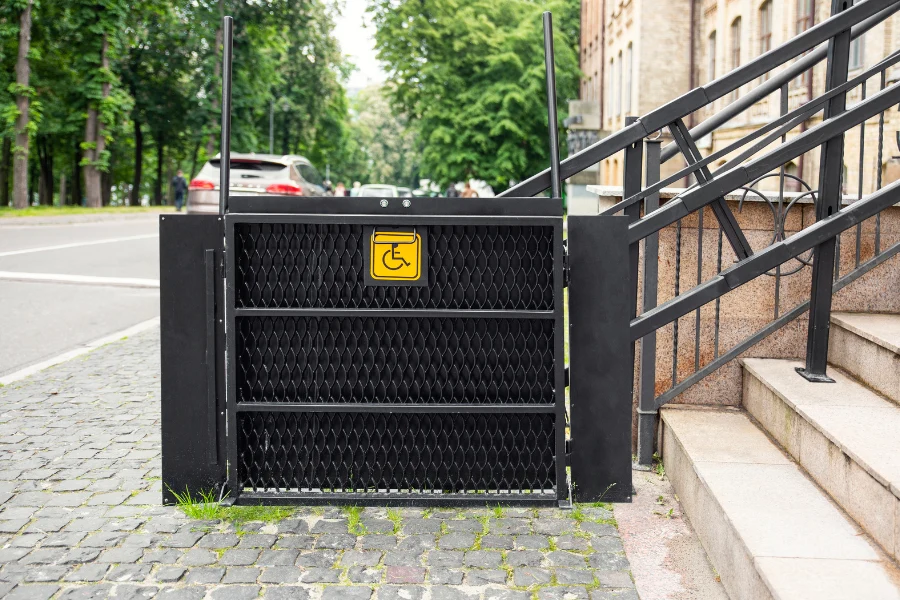
Understanding the Multi-Layer Safety System in Accessibility Lifts
Modern accessibility lifts are engineered according to the principle of layered protection. Instead of relying on a single emergency device, every critical operating stage is monitored by independent mechanical and electrical systems that work together to reduce risk.
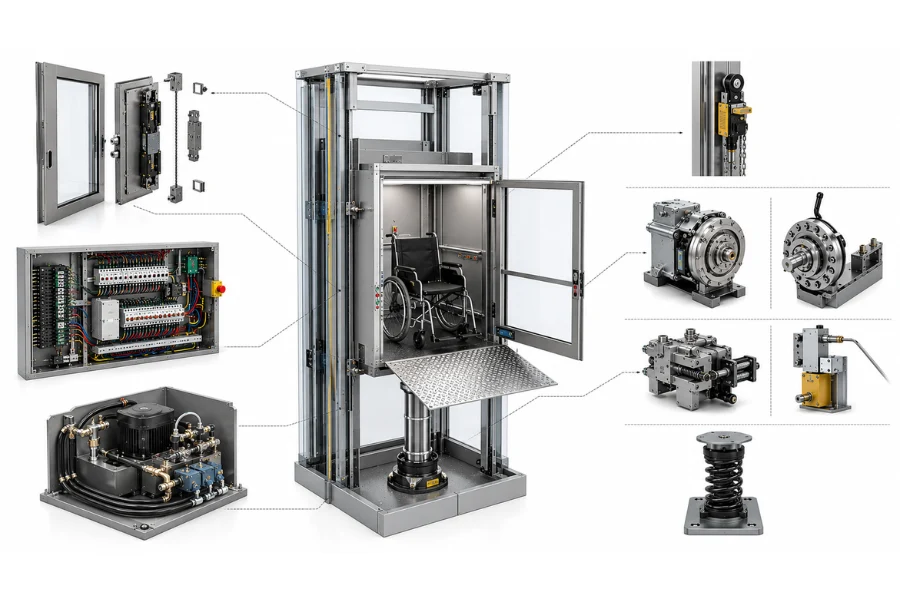
A simplified safety coordination sequence can be understood as follows:
Door Lock → Electrical Safety Circuit → Controller → Service Brake → Overspeed Governor → Safety Gear → Buffer → Emergency Rescue
Each component performs a different task within the overall protection strategy.
The door lock prevents movement before safe boarding conditions are confirmed. The electrical safety circuit continuously verifies that every monitored component is operating normally. The controller supervises operating commands and system status. If an abnormal condition develops, the service brake attempts to stop the platform under controlled conditions. Only if additional protection becomes necessary do the overspeed governor and mechanical safety gear intervene. Buffers provide the final level of protection in the extremely unlikely event that travel continues beyond its designed stopping position.
This coordination philosophy explains why modern accessibility lifts rarely depend on a single “emergency feature.” Instead, each protection layer assumes that another component could potentially fail and provides an additional independent safeguard.
For engineers and procurement teams, evaluating safety therefore means understanding how these systems interact rather than simply counting individual safety devices listed in a product brochure.
Passenger Safety Features You Interact With Every Day
Although sophisticated protection systems operate in the background, passengers primarily interact with visible safety features during everyday use. These components improve confidence while preventing the most common operational hazards.
Emergency Stop Button
The emergency stop button allows passengers to immediately interrupt lift movement whenever unsafe conditions are suspected.
Unlike a normal stop command, activating the emergency stop opens the electrical safety circuit, immediately removing motor power and preventing additional travel until the lift has been inspected or reset according to the manufacturer’s procedures.
Because emergency stopping interrupts the drive system through the safety circuit instead of relying solely on the motor brake, passengers receive faster and more reliable protection during unexpected situations.
Obstruction Detection Sensors
Accessibility lifts frequently operate in busy environments where people, wheelchairs, walking aids, shopping carts, or personal belongings may enter the travel area.
Pressure-sensitive edges, infrared sensors, and platform safety sensors continuously monitor these zones. When an obstruction is detected, the controller immediately stops platform movement before excessive contact force can develop.
In hospitals or nursing homes where caregivers often accompany passengers, obstruction detection becomes particularly important because additional equipment may temporarily extend beyond the platform boundary during boarding.
Non-Slip Platforms and Automatic Access Ramps
Passenger safety begins before the lift starts moving.
Non-slip platform surfaces reduce the likelihood of slipping under wet or dusty conditions, while automatic access ramps create a smooth transition between the landing and the platform.
Once boarding is complete, the ramp automatically retracts or locks into its travel position, creating a protective barrier that helps prevent wheelchair roll-off during movement.
For outdoor installations, anti-slip materials, drainage design, and weather-resistant finishes become equally important because rain, snow, or fallen leaves can significantly reduce surface traction if not properly managed.
Emergency Alarm and Communication
If passengers become temporarily stranded because of a power interruption or equipment fault, emergency communication systems provide reassurance while enabling assistance to arrive quickly.
Depending on building requirements, accessibility lifts may include audible alarms, emergency lighting powered by backup batteries, or two-way communication systems connected to building management personnel.
Hospitals, airports, transportation terminals, and other public facilities often place greater emphasis on communication systems because rapid assistance may be required for vulnerable passengers.
Battery Backup and Emergency Lowering
One of the most misunderstood accessibility lift safety features is the emergency battery system.
Many people assume backup batteries simply keep the lift operating during a power outage. In reality, their primary safety purpose is to support controlled emergency lowering.
Instead of leaving passengers stranded between landings until maintenance personnel arrive, the battery supplies enough electrical power for the controller to slowly move the platform to the nearest safe landing before opening the door.
This approach is considerably safer than manual rescue because passengers remain inside a fully controlled system throughout the evacuation process. Manual rescue should generally be reserved for situations where automatic emergency lowering cannot be completed successfully.
Platform Barriers and Protective Panels
Platform barriers help maintain passenger stability throughout the journey while preventing accidental contact with moving equipment.
Protective side panels, fascia boards, and enclosed guide mechanisms also minimize pinch and shear hazards between the moving platform and surrounding building structure.
These seemingly simple components become increasingly valuable in schools, shopping centers, and public buildings where children or first-time users may not fully understand how accessibility lifts operate.
Mechanical Safety Features That Protect the Lift During Abnormal Conditions
Passenger-operated safety features reduce everyday risks, but they cannot protect against every possible equipment failure. Modern accessibility lifts therefore incorporate independent mechanical protection systems that continue monitoring lift movement even if an electrical fault or drive malfunction occurs.
Unlike service components used during normal operation, these safety devices remain on standby and intervene only when abnormal conditions are detected. This layered engineering philosophy ensures that no single component is solely responsible for passenger safety.
Overspeed Governor
The overspeed governor continuously monitors lift speed throughout operation. Under normal conditions, it remains inactive while the controller regulates travel speed through the drive system. If the platform begins moving faster than its designed operating limit because of mechanical failure, braking problems, or uncontrolled descent, the governor initiates the emergency protection sequence.
An important engineering principle is that electrical protection always acts before mechanical intervention whenever possible.
When excessive speed is detected, the controller first removes motor torque by opening the electrical safety circuit. Eliminating driving force reduces dynamic loads throughout the transmission system and minimizes impact forces before mechanical devices begin stopping the platform.
Only if uncontrolled movement continues does the governor activate the mechanical safety system. This sequence significantly reduces stress on guide components while allowing emergency braking devices to engage under more controlled conditions.
Rather than functioning as independent devices, the controller, governor, and braking system operate as one coordinated protection strategy.
Safety Gear
Safety gear is the final mechanical device responsible for stopping uncontrolled platform movement.
Unlike the service brake that performs thousands of routine stops during normal operation, safety gear is intended solely for emergency situations. Once activated, it grips the guide rails or designated braking surfaces using mechanical force that does not depend on normal drive operation.
Many people assume the safety gear is responsible for stopping overspeed movement by itself. In reality, its effectiveness depends on proper coordination with the overspeed governor, guide rail alignment, suspension system, and controller logic.
Correct sequencing produces smoother deceleration while reducing unnecessary impact loads on both passengers and structural components.
Dual Braking Systems
Most modern accessibility lifts incorporate two independent braking functions.
The service brake performs everyday stopping and leveling operations, ensuring comfortable passenger travel. An independent emergency braking system remains available if abnormal operating conditions occur.
Separating routine braking from emergency protection improves system redundancy. Even if one braking function experiences a mechanical or electrical fault, the secondary braking mechanism continues providing protection.
This redundancy is particularly valuable in public buildings where lifts operate continuously throughout the day.
Travel Limit Protection
Accessibility lifts are designed to operate only within predetermined travel limits.
Instead of relying on one switch at the end of the travel path, multiple protective stages supervise platform movement.
As the platform approaches a terminal landing, slowdown controls first reduce travel speed. Dedicated limit switches then prevent movement beyond the intended stopping position. Independent final limit protection remains available as the last electrical safeguard before mechanical contact with the lift structure could occur.
Using several protection stages instead of one significantly improves operational reliability while reducing wear on both mechanical and electrical components.
Buffer Systems
Buffers represent the final physical protection layer within the lift’s safety architecture.
Although passengers should never experience normal buffer engagement, these devices are designed to absorb residual kinetic energy if the platform travels beyond its intended stopping point because multiple protective systems have failed.
Hydraulic buffers are generally preferred over spring-type buffers because they dissipate impact energy progressively rather than storing it and releasing it through rebound. This produces smoother deceleration while reducing secondary impact forces that could affect passengers or structural components.
Instead of simply stopping the platform, hydraulic buffers convert kinetic energy into heat through controlled fluid flow, making them particularly effective where higher operating loads or improved ride comfort are required.
Failure Mode Analysis
One characteristic that distinguishes engineered safety systems from simple safety features is their ability to respond differently depending on the type of failure.
For example:
Door Lock Failure
If a landing door fails to achieve complete mechanical engagement, the electrical safety circuit prevents the controller from initiating lift movement. The platform simply remains stationary because safe operating conditions have not been verified.
Power Failure
Rather than stopping passengers between landings indefinitely, the emergency battery system supplies temporary power that allows the controller to perform automatic emergency lowering before opening the landing door. This controlled evacuation is considerably safer than immediate manual rescue.
Sensor Failure
Modern controllers continuously monitor the status of safety sensors. If sensor feedback becomes inconsistent or communication is lost, the lift normally enters a protected shutdown state until inspection confirms safe operation. Preventing movement under uncertain conditions is generally safer than allowing continued operation with incomplete safety information.
This fail-safe philosophy is fundamental to accessibility lift engineering. Whenever uncertainty exists, the system is designed to stop safely rather than continue operating.
Electrical Safety Features Behind Reliable Operation
Mechanical protection becomes effective only after abnormal movement begins. Electrical safety systems, by contrast, work continuously to prevent unsafe movement from occurring in the first place.
Every operating cycle begins with the controller verifying that dozens of independent safety conditions have been satisfied before authorizing platform movement.
Safety Control Circuit
The safety control circuit serves as the communication network connecting all critical protective devices.
Door interlocks, emergency stop buttons, overload sensors, travel limits, emergency lowering systems, inspection switches, and other monitored devices all report their status to the controller through this circuit.
Movement is permitted only when every required component confirms a safe operating condition.
This “permission before motion” philosophy is one of the most important engineering concepts behind modern accessibility lift safety.
Door Interlocks Use Mechanical and Electrical Verification
Many users assume that a closed door is automatically safe.
In reality, modern accessibility lifts distinguish between door closure and door locking.
The mechanical locking mechanism physically secures the landing door or platform gate, preventing it from opening during travel.
The electrical verification circuit then confirms that mechanical engagement has actually occurred before movement is authorized.
This dual verification significantly improves safety because the controller does not simply assume the lock has engaged—it receives positive confirmation from the safety circuit.
If mechanical locking cannot be verified, the lift remains safely out of service until the issue has been corrected.
Overload Protection
Every accessibility lift is engineered around a specified rated capacity that includes passengers, wheelchairs, mobility scooters, and, when necessary, accompanying caregivers.
When the total load exceeds the allowable limit, the controller prevents movement rather than attempting to compensate through increased motor output.
Besides protecting passengers, overload monitoring also reduces excessive stress on drive motors, suspension systems, braking components, and guide mechanisms, extending equipment service life.
Electrical Ground Protection and Power Monitoring
Electrical safety extends well beyond preventing electric shock.
Ground continuity, insulation integrity, phase monitoring, voltage supervision, and residual current protection all contribute to stable lift operation.
In outdoor installations, these protections become especially important because environmental factors such as humidity, condensation, temperature changes, and dust may gradually affect electrical performance if not properly managed.
Emergency Battery Systems Support Controlled Evacuation
Backup batteries are not designed to keep the lift operating indefinitely.
Their primary objective is to maintain enough electrical power for essential safety functions, including emergency lowering, controller operation, alarm systems, emergency lighting, and communication equipment.
Because passengers remain inside a controlled operating environment throughout the evacuation process, automatic emergency lowering generally presents lower risk than manual rescue procedures requiring technicians to access the lift mechanically.
This is why emergency battery systems have become one of the most valuable safety investments for accessibility lifts installed in hospitals, nursing homes, public facilities, and residential buildings where uninterrupted accessibility is particularly important.
How Safety Features Differ Across Accessibility Lift Types
Although the term accessibility lift is often used broadly, different lift systems are engineered for different building conditions and mobility requirements. As a result, the safety priorities for each type are not identical. Understanding these differences helps architects, consultants, contractors, and procurement teams select equipment that delivers appropriate protection instead of assuming every accessibility solution provides the same level of safety.
Vertical Platform Lifts
Vertical platform lifts are commonly installed where floor height differences are relatively small and a full passenger elevator is not practical. Typical applications include schools, municipal buildings, churches, restaurants, retail entrances, and residential retrofit projects.
Because passengers remain on an open or semi-enclosed platform, the primary safety focus is preventing falls and unintended platform movement.
Typical safety features include:
- Door interlocks and landing gate locks
- Emergency lowering systems
- Obstruction detection sensors
- Non-slip platform surfaces
- Platform barriers
- Battery backup
- Travel limit protection
In retrofit projects, engineers also pay close attention to platform entry direction, landing clearance, and wheelchair turning space, since limited building dimensions may influence safe boarding and exiting.
Inclined Platform Lifts
Inclined platform lifts travel along existing staircases instead of inside a vertical shaft, creating a different set of engineering challenges.
Unlike vertical systems, inclined lifts must maintain platform stability while traveling on an angled rail, making speed control and anti-rollback protection particularly important.
Their safety configuration often emphasizes:
- Overspeed monitoring
- Dual braking systems
- Rail-mounted limit switches
- Platform leveling control
- Folded platform detection
- Obstruction sensors along the rail
- Emergency stop controls
Outdoor inclined lifts may also include rail-cleaning devices and weather-resistant components to ensure reliable operation despite leaves, snow, or debris accumulating on the guide rail.
Stair Lifts
Stair lifts transport seated passengers rather than wheelchairs, so their primary safety concerns involve preventing falls during boarding, travel, and dismounting.
Standard protection typically includes:
- Adjustable seat belts
- Swivel seats with locking positions
- Foldable footrests
- Pressure-sensitive footrest sensors
- Obstruction detection
- Key-operated controls
- Battery backup
- Mechanical and electrical braking systems
One feature often underestimated is the swivel seat. At the upper landing, users face the greatest fall risk while exiting. A lockable swivel seat allows the passenger to rotate toward the landing before standing, reducing twisting movements and minimizing the possibility of losing balance.
Accessibility Elevators
Accessibility elevators generally serve taller buildings and experience higher daily passenger volumes than platform lifts.
Consequently, their safety systems are considerably more comprehensive and typically include:
- Overspeed governors
- Progressive safety gear
- Multiple travel limit devices
- Hydraulic or energy-absorbing buffers
- Door interlock monitoring
- Electrical safety circuits
- Emergency communication
- Automatic rescue operation
- Independent braking systems
These systems are intended to support continuous operation in hospitals, educational campuses, office buildings, apartment complexes, transportation terminals, and other facilities where operational reliability is essential.
Why Building Conditions Affect Accessibility Lift Safety
An accessibility lift should never be selected based solely on lifting height or platform size. The surrounding building environment directly influences which safety features deserve the highest priority.
The same lift configuration may perform exceptionally well in one project while being less suitable for another because passenger behavior, environmental conditions, maintenance access, and building usage patterns differ significantly.
Consider a Hospital Entrance
Imagine an accessibility lift installed at the main entrance of a hospital.
Unlike a residential application, this lift may operate hundreds of times each day while transporting patients in wheelchairs, hospital beds, medical equipment, and caregivers.
In this environment, safety priorities extend beyond standard passenger protection.
Project teams typically place greater emphasis on:
- Emergency battery systems that maintain evacuation capability during power interruptions.
- Reliable emergency communication so patients can immediately contact building personnel.
- High-cycle door interlocks designed for frequent operation.
- Smooth stopping performance that minimizes movement for medically vulnerable passengers.
- Maintenance accessibility that allows servicing with minimal disruption to hospital operations.
Here, operational continuity becomes just as important as mechanical safety.
During a School Retrofit Project
A school presents a different engineering challenge.
Accessibility lifts installed in educational buildings may be used by students with disabilities, teachers, maintenance personnel, and occasionally individuals unfamiliar with lift operation.
Because of this, engineers often prioritize:
- Unauthorized-use protection through key switches or controlled access.
- Obstruction detection capable of identifying backpacks, mobility devices, or objects left on the platform.
- Durable platform barriers resistant to frequent daily use.
- Clearly visible emergency controls and intuitive operating interfaces.
Safety design therefore considers user behavior as much as equipment performance.
In Outdoor Public Facilities
Outdoor installations introduce risks that indoor projects rarely encounter.
Consider a vertical platform lift serving a pedestrian bridge or railway station.
Heavy rain, snow, dust, wind-driven debris, and seasonal temperature changes all affect equipment reliability.
Instead of relying only on standard safety devices, outdoor projects frequently require:
- Corrosion-resistant structural materials.
- Weather-protected electrical enclosures.
- Drainage systems that prevent standing water beneath the platform.
- Anti-slip platform finishes.
- Heated or protected components in cold climates.
- More frequent preventive maintenance.
Environmental engineering becomes an integral part of the lift’s overall safety strategy rather than a separate maintenance concern.
Existing Building Retrofits Require Different Safety Priorities
Retrofitting accessibility lifts into older buildings often requires balancing safety with architectural limitations.
Historic buildings, apartment renovations, and commercial modernization projects may have:
- Limited shaft dimensions.
- Restricted overhead clearance.
- Shallow pits.
- Irregular structural layouts.
- Narrow entrances.
Rather than compromising safety, engineers adapt lift configurations while maintaining essential protection systems such as emergency lowering, door interlocks, obstruction detection, and maintenance access.
Successful retrofit projects demonstrate that safe accessibility is achieved through thoughtful engineering integration rather than simply fitting equipment into the available space.
Inspection and Maintenance Are Part of Every Safety System
Even the most advanced accessibility lift cannot remain safe indefinitely without proper inspection and maintenance. Safety devices are designed to operate under precise mechanical and electrical conditions, and their performance depends on regular verification throughout the equipment’s lifecycle.
Preventive maintenance should therefore be viewed as a continuation of the original safety design.
Routine inspections typically verify:
- Door interlock engagement.
- Emergency stop functionality.
- Obstruction sensor response.
- Battery condition and emergency lowering operation.
- Brake performance.
- Platform leveling accuracy.
- Limit switch positioning.
- Alarm and communication equipment.
- Controller fault history.
- Guide system condition.
Many of these components may never activate during normal daily operation. Without periodic testing, a hidden fault could remain undetected until an emergency occurs.
For outdoor accessibility lifts, inspection should also include drainage systems, corrosion protection, platform cleanliness, guide rail condition, and weatherproof electrical enclosures because environmental exposure gradually affects long-term reliability.
Comprehensive maintenance records provide another layer of operational safety. Service history helps identify recurring issues, supports future modernization planning, and demonstrates regulatory compliance where periodic inspections are required.
Procurement Checklist for Evaluating Accessibility Lift Safety
Selecting an accessibility lift should never be based solely on lifting height, appearance, or purchase price. For project owners and procurement managers, the more important question is whether the lift’s safety architecture matches the building’s operating conditions over the next 15 to 25 years.
A comprehensive evaluation should consider not only the safety devices installed today but also how the equipment will perform under real operating conditions, how easily it can be maintained, and whether future upgrades can be completed without major structural modifications.
The following checklist can help compare different accessibility lift solutions more objectively.
| Evaluation Item | Why It Matters |
|---|---|
| Door interlock system | Prevents lift movement unless doors or gates are mechanically locked and electrically verified. |
| Emergency lowering | Allows passengers to exit safely during power interruptions without waiting for manual rescue. |
| Overspeed protection | Reduces the risk of uncontrolled platform movement caused by drive system failures. |
| Independent braking system | Provides redundant stopping capability if the primary brake malfunctions. |
| Obstruction detection | Prevents crushing or pinching injuries by stopping movement when obstacles are detected. |
| Battery backup | Supports emergency lowering, alarms, lighting, and communication during power outages. |
| Maintenance accessibility | Allows technicians to inspect and replace components efficiently, reducing downtime. |
| Spare parts availability | Ensures critical safety components remain serviceable throughout the equipment’s lifecycle. |
| Applicable safety certifications | Demonstrates compliance with relevant accessibility, electrical, and lift safety standards. |
| Manufacturer engineering support | Provides assistance with installation planning, commissioning, troubleshooting, and future modernization. |
Rather than selecting the lift with the greatest number of listed features, buyers should determine whether the safety systems work together as an integrated solution that supports the building’s intended use.
For example, a residential installation may prioritize quiet operation, emergency lowering, and intuitive controls, while a transportation hub may require higher operating cycles, advanced communication systems, faster maintenance access, and stronger protection against unauthorized use.
Considering these operational differences during procurement helps reduce lifecycle costs while improving long-term reliability.
Conclusion
Common accessibility lift safety features extend far beyond emergency stop buttons or backup batteries. A modern accessibility lift protects passengers through a coordinated safety architecture in which mechanical devices, electrical controls, intelligent monitoring, and emergency systems operate together throughout every stage of lift operation.
Door interlocks verify safe boarding conditions before movement begins. Electrical safety circuits continuously supervise operating status and remove driving power when abnormal conditions are detected. Overspeed governors, independent braking systems, safety gear, travel limit protection, and buffers provide progressively higher levels of protection if additional intervention becomes necessary. Emergency lowering systems, backup power, and communication devices ensure passengers can be evacuated safely during unexpected events.
The effectiveness of these safety features also depends on building conditions. A hospital entrance, school, residential retrofit, shopping center, or outdoor public facility presents different operational challenges, requiring engineers to prioritize different aspects of passenger protection, maintenance accessibility, and system reliability.
Ultimately, the safest accessibility lift is not simply the one with the longest specification sheet. It is the one whose safety systems have been properly matched to the building, installed according to engineering requirements, regularly inspected, and supported throughout its entire service life.
At EKCNE, accessibility solutions are developed with this lifecycle perspective in mind. Rather than focusing only on individual products, we help project teams evaluate building constraints, passenger requirements, installation conditions, maintenance strategies, and long-term operational objectives to recommend accessibility lift solutions that remain safe, reliable, and compatible with future building needs.












