
Most escalators do not fail without warning. Changes in operating noise, vibration, step movement, handrail behavior, braking performance, or shutdown frequency often appear before a serious escalator malfunction develops.
The challenge is that the same symptom can come from different systems. Abnormal noise may originate from worn step rollers, contaminated tracks, poor lubrication, damaged bearings, comb plate contact, or the handrail drive system. An electrical alarm may actually begin with excessive mechanical resistance.
Effective escalator troubleshooting should therefore focus on system condition rather than isolated symptoms. Maintenance teams need to identify where the problem occurs, determine which systems are involved, verify the root cause, correct the underlying condition, and confirm stable operation before returning the equipment to service.
This guide examines common escalator problems from an engineering and lifecycle perspective, including mechanical faults, control failures, operating environment, maintenance strategy, and the decision to repair, overhaul, modernize, or replace aging equipment.
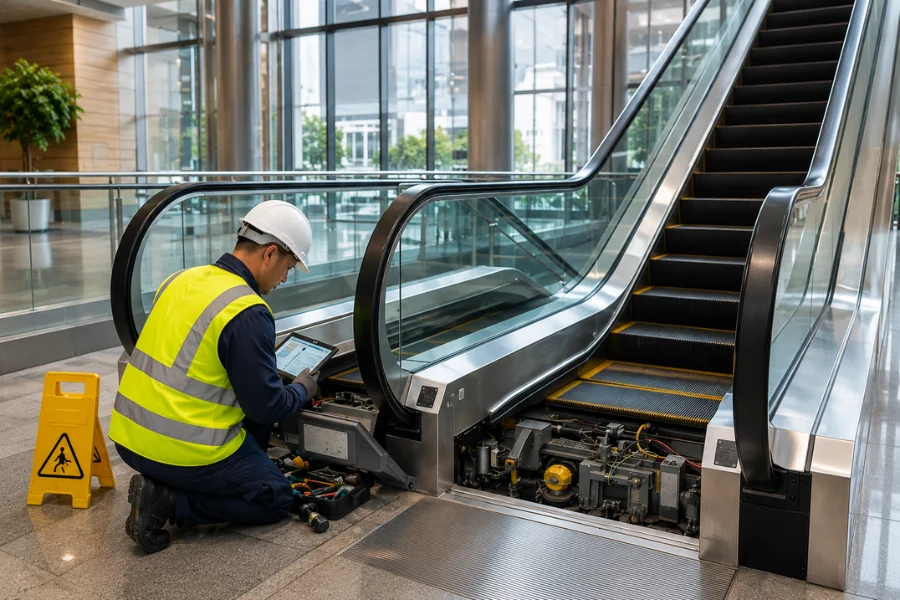
What Are the Most Common Escalator Problems?
Most escalator operational faults appear as changes in movement, sound, component alignment, stopping performance, or control system behavior.
| Escalator Problem | Likely Affected System | Common Causes | Maintenance Priority |
|---|---|---|---|
| Abnormal noise | Step, track, drive, or handrail system | Worn rollers, contamination, poor lubrication, bearing damage | Medium to High |
| Excessive vibration or jerky movement | Step chain, tracks, or drive system | Misalignment, incorrect tension, worn components | High |
| Unexpected or repeated shutdowns | Safety circuit, control, or mechanical system | Activated protection, overload, sensor faults | High |
| Step misalignment | Step system and guide tracks | Track deviation, roller wear, chain problems | High |
| Step chain deterioration | Step chain and tensioning system | Poor lubrication, heavy operation, incorrect adjustment | High |
| Handrail speed or movement problems | Handrail drive system | Incorrect tension, worn friction components, guide resistance | Medium to High |
| Comb plate interference | Landing and step interface | Foreign objects, damaged teeth, unstable step movement | High |
| Abnormal braking performance | Drive and braking system | Wear, incorrect adjustment, feedback faults | High |
| Repeated safety trips | Monitoring and control systems | Sensor faults, mechanical resistance, wiring problems | High |
These conditions are starting points for escalator failure diagnosis. A visible symptom should not be treated as proof that the nearest component is the original cause.
Escalator Troubleshooting Should Begin With Root Cause Diagnosis
One of the most common escalator repair problems is replacing a damaged component without identifying why it failed.
Consider an escalator producing repetitive noise near the inclined section. A worn step roller may be found and replaced, but if the guide track remains misaligned, the new roller continues operating under abnormal load.
The result is predictable.
Track misalignment → Uneven roller loading → Accelerated wear → Increased vibration → Step instability → Repeated component failure
The same diagnostic principle applies to electrical faults.
A controller may report motor overload, but the original condition could be poor chain lubrication, excessive chain tension, brake drag, damaged bearings, or resistance within the step circulation system.
The controller identifies the abnormal operating condition. It does not always identify the engineering cause.
A practical escalator troubleshooting process should follow this sequence:
Observe the symptom → Locate where and when it occurs → Review fault records → Isolate the affected system → Inspect connected components → Verify the root cause → Correct the condition → Test safety functions → Perform trial operation → Monitor recurrence
This system-level approach is especially important when escalator maintenance issues repeatedly return after component replacement or adjustment.
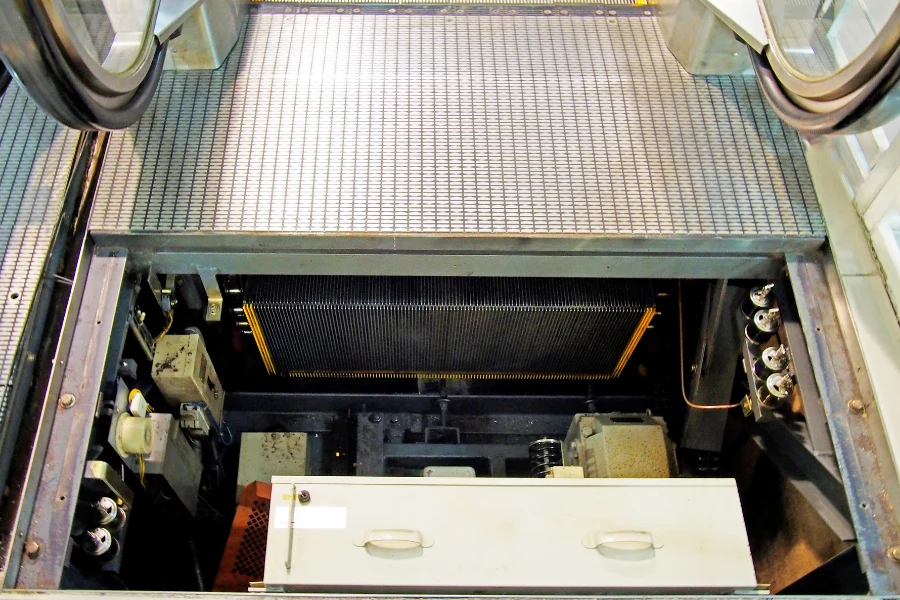
Abnormal Noise and Excessive Vibration
Noise and vibration are often early indicators of changing mechanical conditions.
Grinding or continuous friction noise may indicate insufficient lubrication, damaged bearings, guide resistance, or contact between components that should operate with controlled clearance.
Repeated thumping may result from worn step rollers, irregular track joints, foreign objects, or unstable step movement. Scraping near a landing may indicate interference between the steps and comb plate.
The location and repetition pattern of the noise are important diagnostic clues. A sound that returns at the same position during each operating cycle often indicates a localized step, roller, track, or guide problem, while continuous noise may point toward the drive, chain, bearing, or handrail system.
Excessive vibration requires the same root cause discipline.
Incorrect roller-to-track clearance, uneven chain tension, poor lubrication, overly tight tensioning devices, worn drive components, brake problems, and loose structural connections can all create unstable movement.
Operating conditions also matter. A lightly used escalator in a hotel may accumulate wear slowly, while a transit escalator operating for extended periods under sustained passenger loading can develop the same vibration symptom through significantly different load cycles and deterioration patterns.
Replacing the vibrating component without checking alignment, loading, and connected systems may only postpone the next failure.
Escalator Suddenly Stops or Repeatedly Shuts Down
Unexpected shutdowns are among the most disruptive common escalator problems because they immediately affect passenger circulation and building operations.
Possible causes include power interruption, phase problems, overcurrent, motor overload, safety switch activation, brake feedback faults, drive chain monitoring, missing step detection, handrail speed faults, overspeed protection, or unintended reversal protection.
Mechanical deterioration can also activate electrical protection.
Poor lubrication increases resistance. Excessive chain tension raises drive load. Brake drag can increase motor current. Unstable step movement may activate monitoring devices.
The shutdown is often the final event in a longer failure chain.
Why Repeated Resetting Is Not a Repair Strategy
A safety device that stops an escalator is performing a protective function.
Restarting the equipment without identifying why that device activated may allow the same abnormal condition to continue.
Maintenance teams should review fault records, identify the activated protection function, inspect the related mechanical and electrical systems, correct the root cause, test the safety device, and perform trial operation before returning the escalator to service.
Repeated shutdowns after resets are particularly important. They may indicate an unresolved escalator malfunction, intermittent sensor condition, mechanical instability, environmental problem, or compatibility issue with aging replacement components.
Step Misalignment, Uneven Movement, and Step Chain Problems
Among common escalator problems, step system faults are especially important because a local alignment error can spread abnormal loading across several connected components.
Guide track deviation, excessive clearance, uneven chain tension, worn rollers, damaged guide components, chain deterioration, and installation inaccuracies can produce uneven step movement, vibration, impact noise, abnormal gaps, and poor engagement with the comb plate.
A typical failure chain may develop as follows:
Alignment deviation → Uneven load distribution → Roller wear → Increased vibration → Step impact → Comb plate interference → Safety device activation
This is why repeated step problems should trigger inspection of the complete step circulation system rather than isolated replacement of damaged rollers or guide components.
Step Chain Tension Is a Trade-Off
A loose step chain can produce vibration, impact, unstable movement, and uneven loading.
Excessive tension increases friction, bearing load, and wear on chains, sprockets, bearings, and drive components.
More tension is not automatically better. The objective is controlled operation according to equipment design, component condition, operating intensity, and manufacturer requirements.
Step chain deterioration also develops differently across building applications.
A commercial escalator operating under moderate indoor traffic may experience gradual wear over long service periods. An airport or railway station escalator may accumulate more operating hours and luggage-related loading, while metro and heavy-duty escalators operate under sustained traffic conditions that place greater demands on chain lubrication, tension control, drive reliability, and maintenance access.
Adjustment is reasonable when wear remains within acceptable limits and the problem comes from tension imbalance or maintenance settings.
When elongation, damaged links, unstable movement, or manufacturer-defined rejection criteria indicate advanced deterioration, continued adjustment is no longer an effective lifecycle strategy.
Purchase Escalator Step Chains >>
Handrail Problems Require Balanced Mechanical Conditions
Handrail troubleshooting provides a good example of why aggressive adjustment can create new problems.
Insufficient tension may cause slippage, vibration, unstable movement, or reduced driving force.
Excessive tension can increase friction, heat generation, bearing load, and wear throughout the drive and guide system.
Correct operation depends on balanced tension, suitable pressure at the drive wheel, clean guide surfaces, aligned components, healthy bearings, and stable speed monitoring.
Common symptoms include slippage, abnormal noise, vibration, overheating, speed deviation, surface deterioration, and situations where the handrail stops while the steps continue moving.
If these conditions repeatedly return after tension adjustment, maintenance teams should inspect the complete handrail drive path. Worn friction surfaces, contaminated guides, seized bearings, damaged rollers, drive problems, and sensor faults may all produce similar symptoms.
Passenger traffic patterns also influence maintenance priorities. Handrails in high-use transit facilities accumulate more operating cycles than units in low-traffic commercial buildings, while outdoor installations may experience additional deterioration from water, dust, UV exposure, and temperature variation.
Comb Plate and Landing Problems May Begin Upstream
Damaged comb teeth, foreign objects, scraping, incorrect engagement, abnormal clearance, and comb plate safety device activation are visible at the landing.
The original cause may be elsewhere.
Repeated comb plate contact can develop from step misalignment, worn rollers, track deviation, excessive axial movement, or unstable chain behavior.
For this reason, replacing damaged comb components should be followed by inspection of step movement, track alignment, roller condition, chain behavior, and comb engagement.
Foreign object exposure also changes with building use.
Shopping malls may experience debris from retail traffic and cleaning activities. Airports and railway stations have additional exposure to luggage-related impacts and small objects carried through high-volume passenger areas.
The maintenance strategy should reflect these operating conditions rather than treating every landing fault as an isolated component problem.
Purchase Escalator Comb Plate >>
Brake Problems Require More Than a Visual Inspection
An escalator that passes a visual brake inspection may still have unstable stopping performance.
Brake wear, incorrect clearance, delayed release, brake drag, contaminated friction surfaces, feedback faults, drive load, and control conditions can all affect stopping behavior.
Consider excessive stopping distance.
Replacing brake linings may be appropriate when wear is the confirmed cause. However, abnormal drive load, incorrect adjustment, control parameters, or mechanical resistance elsewhere in the system can produce similar symptoms.
Aggressively reducing stopping distance through adjustment is also not automatically the correct solution. Braking performance must remain controlled without creating excessive mechanical shock, accelerated wear, or passenger instability.
Building use changes the maintenance context.
Braking systems in high-traffic transit applications may accumulate significantly more operating cycles than equipment installed in hotels or low-traffic commercial buildings. Public transit and heavy-duty escalators may also use additional braking systems and operate under more demanding passenger loads.
Brake condition should therefore be evaluated together with operating intensity, drive performance, equipment type, maintenance history, and applicable technical requirements.
Safety Circuit, Sensor, and Control System Faults
Some common escalator problems appear as electrical alarms even when the original cause is mechanical resistance or component deterioration.
Modern escalators use safety switches, sensors, controllers, contactors, and monitoring devices to detect abnormal operating conditions.
Typical faults include safety circuit interruptions, overcurrent, overload, voltage abnormalities, brake feedback errors, handrail speed faults, missing step detection, drive chain monitoring, overspeed protection, unintended reversal protection, and contactor problems.
An overload fault, for example, may begin with electrical problems, but it may also result from poor lubrication, excessive chain tension, seized bearings, brake drag, or abnormal resistance within the step system.
Effective escalator failure diagnosis should therefore investigate both the detected alarm and the physical condition that produced it.
Operating environment can further complicate recurring control faults.
Outdoor installations, humid equipment spaces, unstable power conditions, water ingress, dust contamination, temperature variation, and difficult maintenance access can increase fault frequency and make intermittent failures harder to diagnose.
Replacing sensors or adjusting controller parameters without investigating these conditions may restore operation temporarily while leaving the original reliability problem unresolved.
How Operating Environment Changes Escalator Failure Patterns
The frequency and severity of common escalator problems change significantly with operating intensity and environmental exposure.
Shopping Malls and Commercial Buildings
Commercial escalators often operate for long daily periods under moderate or changing traffic.
Dust, foreign objects, cleaning chemicals, spilled liquids, and irregular traffic peaks can affect tracks, landing areas, step systems, and electrical equipment.
Airports and Railway Stations
Long operating hours, high passenger turnover, luggage movement, and limited tolerance for downtime create different maintenance priorities.
A shutdown can also redirect passengers toward nearby elevators, stairs, and escalators, increasing pressure on the remaining vertical transportation system.
Metro Stations and Heavy-Duty Applications
Sustained passenger loading, frequent braking cycles, higher chain loading, demanding operating schedules, and restricted maintenance windows increase the importance of preventive inspection and component continuity.
Commercial-building maintenance assumptions should not automatically be applied to heavy-duty transit equipment.
Outdoor Escalators
Rainwater, humidity, dust, corrosion, drainage problems, and temperature variation can accelerate deterioration across mechanical, electrical, and structural systems.
Depending on the climate and installation conditions, outdoor equipment may require stronger corrosion protection, drainage systems, water monitoring, heating devices, environmental protection, and shorter inspection intervals.
Building compatibility is therefore not only a system selection issue. It directly influences failure patterns, maintenance frequency, component life, and long-term operating cost.
Why Escalator Problems Keep Coming Back After Repair
Recurring failures often indicate that maintenance activities are correcting symptoms without eliminating the conditions that created them.
Common causes include:
- Replacing damaged components without correcting alignment problems
- Adjusting chain tension without evaluating wear and loading
- Adding lubrication without identifying contamination or distribution problems
- Repeatedly resetting safety circuits without investigating the activated protection
- Using replacement components with poor system compatibility
- Applying maintenance intervals that do not match operating intensity
- Ignoring water, dust, corrosion, or temperature exposure
- Returning equipment to service without post-repair verification
Consider a step roller that repeatedly wears out.
Replacing the roller addresses the failed component. Replacing it again with another brand changes the component but not necessarily the operating condition.
If the guide track remains misaligned, repeated replacement cannot eliminate the abnormal loading.
Recurring escalator failures are therefore often maintenance strategy problems rather than isolated component failures.
Fault history, replacement frequency, operating environment, maintenance accessibility, equipment age, and connected system condition should be evaluated together.
Preventive Maintenance Priorities for Reducing Escalator Failures
Preventive maintenance should focus on detecting deterioration before it develops into repeated downtime or connected component damage.
Priority inspection areas include:
- Operating noise, vibration, and movement stability
- Steps, rollers, guide tracks, and step chain condition
- Chain lubrication, tension, and wear
- Handrail movement, drive condition, and speed behavior
- Comb plate condition and step engagement
- Brake condition and stopping performance
- Safety switches, sensors, and monitoring devices
- Drive machine and electrical control equipment
- Fault records and recurring shutdown patterns
- Drainage, contamination, corrosion, and environmental exposure
Maintenance frequency should reflect actual equipment conditions.
A lightly used indoor escalator, a high-traffic airport unit, a metro station escalator, and outdoor equipment exposed to severe weather should not automatically follow identical maintenance strategies.
Operating hours, passenger traffic, equipment age, component condition, maintenance access, environmental exposure, and fault history should influence inspection priorities.
When Should You Repair, Overhaul, Modernize, or Replace an Escalator?
Not every escalator fault requires modernization, but repeated repair is not always the lowest-cost lifecycle strategy.
| Equipment Condition | Preferred Strategy |
|---|---|
| Isolated adjustment problem with healthy surrounding systems | Adjustment, testing, and verification |
| Individual worn component with stable system condition | Component replacement and root cause inspection |
| Repeated failures across connected mechanical systems | System-level inspection and overhaul evaluation |
| Aging controls with poor spare parts availability | Modernization evaluation |
| Multiple deteriorating systems with increasing downtime | Lifecycle replacement evaluation |
| Existing equipment no longer matches traffic or building requirements | Reconfiguration or complete system replacement evaluation |
The correct decision depends on failure frequency, system condition, spare parts availability, maintenance accessibility, component compatibility, downtime cost, future passenger demand, and expected remaining service life.
The cheapest immediate repair is not always the lowest lifecycle-cost decision.
How EKCNE Supports Escalator Projects and Lifecycle Compatibility
Escalator reliability begins with project configuration and continues through installation, operation, maintenance, component replacement, and lifecycle planning.
EKCNE supports commercial, public transit, infrastructure, and heavy-duty escalator projects by evaluating passenger traffic, operating intensity, building conditions, installation environment, maintenance accessibility, and long-term component requirements.
Depending on project conditions, support may include escalator configuration, indoor or outdoor engineering adaptation, heavy-duty operating requirements, replacement component coordination, spare parts continuity, maintenance compatibility, export delivery, and integrated vertical transportation procurement.
For existing equipment, project teams should consider whether replacement parts, controls, mechanical interfaces, and future maintenance requirements remain compatible with the original installation.
For new projects, selecting equipment according to actual traffic demand and environmental conditions can reduce the risk of applying commercial-duty configurations to infrastructure projects with significantly higher lifecycle demands.
EKCNE works with contractors, distributors, developers, and project teams to evaluate system compatibility and coordinate escalator solutions around real project requirements.
Final Thoughts
Common escalator problems are rarely isolated mechanical or electrical events.
Noise, vibration, repeated shutdowns, step instability, handrail faults, braking problems, and control alarms develop through interactions between equipment condition, maintenance practices, operating intensity, installation accuracy, component compatibility, and the building environment.
Effective escalator troubleshooting begins with the visible symptom but should continue until the underlying system condition has been identified and verified.
For project owners and maintenance teams, the objective is not simply to restart equipment quickly. It is to reduce recurring failures, control downtime, maintain long-term component compatibility, and determine when adjustment, replacement, overhaul, modernization, or complete system replacement provides the most practical lifecycle outcome.
Discuss your escalator project requirements with EKCNE to evaluate system configuration, operating conditions, maintenance compatibility, component needs, and long-term vertical transportation planning.












