
Wind load becomes an important elevator shaft design factor when the shaft is outdoors, self-supporting, externally attached to an existing building, or used as part of a panoramic installation.
Unlike elevators inside a protected building core, external shafts can be exposed to changing wind pressure and environmental loads. Excessive structural movement may affect guide rail alignment, enclosure performance, elevator operation, and long-term maintenance.
Wind design should therefore address both structural stability and compatibility with the elevator system.
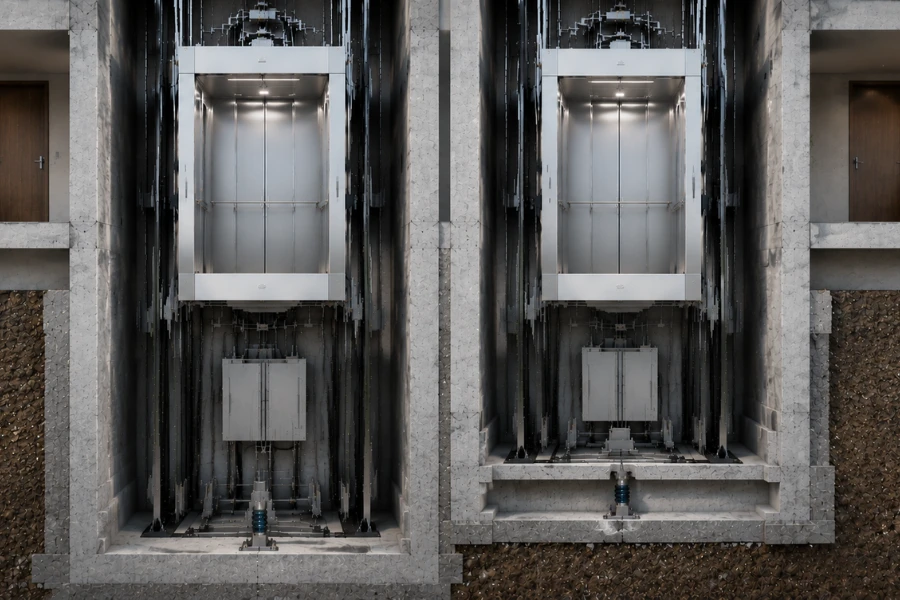
Why Wind Load Matters in Elevator Shaft Design
An elevator shaft supports components that depend on controlled geometry and alignment.
Wind-related problems can develop through the following sequence:
Wind Pressure → Shaft Deformation or Vibration → Component Alignment Changes → Elevator Performance Issues
This relationship is particularly important for exposed outdoor shafts and post-installed elevator structures.
Guide Rail Alignment
Guide rails depend on accurately positioned brackets and stable structural support.
If wind forces cause excessive shaft displacement, movement of the supporting structure can affect rail position. Potential consequences include:
Uneven guide shoe loading
Increased vibration
Reduced ride comfort
Additional alignment or maintenance work
The shaft therefore needs both adequate strength and controlled deformation.
Door Operation and Passenger Comfort
Wind exposure can also influence passenger-facing operation through pressure changes or structural movement.
Potential effects include:
Unstable door operation
Unusual operating noise
Passenger discomfort
Increased service attention
The significance of these effects depends on the shaft configuration, exposure, structural response, and elevator system.
Key Wind Load Factors Affecting Elevator Shaft Design
Wind response varies with location, height, structural arrangement, and surrounding conditions.
Local Wind Pressure and Shaft Exposure
An external elevator shaft may experience different exposure from the main building because it can extend beyond or sit outside the original building envelope.
Local wind pressure can be influenced by:
Shaft geometry
Surrounding buildings
Wind direction
Enclosure design
Installation location
This is especially relevant to post-installed shafts attached to existing buildings.
The wind environment around the shaft should therefore be evaluated rather than assumed to be identical to conditions elsewhere on the building.
Building Height and Wind Environment
Wind exposure generally becomes more important in taller or more exposed installations.
Projects requiring closer review can include:
High-rise outdoor elevators
Panoramic elevator structures
Rooftop elevator installations
Existing-building elevator additions
Coastal or open-site installations
The design needs to maintain structural stability while keeping movement compatible with elevator operating requirements.
Shaft Configuration and Load Transfer
The relationship between the shaft and main building determines how wind forces are resisted and transferred.
A building-connected shaft can receive restraint from the existing structure, but its connections need to accommodate the intended load transfer and relative movement.
A self-supporting shaft relies more heavily on its own structural system and foundation. Relevant factors include:
Structural rigidity
Foundation stability
Connection performance
Allowable deformation
Different shaft geometries can also produce different wind-pressure distributions and structural responses. The configuration should therefore be evaluated as part of the wind-load analysis rather than considering material strength alone.
How Wind Load Affects Elevator System Performance
Structural response becomes an elevator engineering issue when shaft movement affects components that depend on alignment or controlled clearance.
Guide Rails and Fixed Components
Wind-induced shaft deformation can move guide rail brackets and other components fixed to the shaft.
The relevant mechanism is:
Wind Force → Shaft Movement → Component Displacement → Alignment or Vibration Effects
This makes deformation control an important interface between structural and elevator engineering.
Ropes and Flexible Components
In taller installations, structural movement may also affect flexible elevator components such as:
Traction ropes
Compensation components
Traveling cables
Governor-related components
Large lateral movement can increase abnormal motion, contact, wear, or inspection requirements.
High-rise and highly exposed projects therefore require coordination between structural movement assumptions and elevator component behavior.
Wind Load Standards and Project Compliance
Elevator shaft projects can involve both structural load requirements and elevator safety requirements. The applicable standards depend on project location, building type, structural system, and regulatory framework.
The source material for this project identifies examples including:
ASCE 7 for structural design loads in many North American projects
IBC requirements for building structure and safety coordination
ASME A17.1 for elevator safety requirements
GB 50009 for structural load calculations in China
These references do not create one universal design method for every project. The applicable edition, local adoption, amendments, and project-specific requirements need to be confirmed for the actual jurisdiction.
Highly exposed buildings, unusual shaft configurations, and complex high-rise projects may also require engineering analysis beyond simplified standard calculations.
Wind Load Evaluation Methods
The appropriate analysis depends on shaft geometry, building height, exposure, structural system, and project complexity.
Structural Analysis and Deformation Control
Engineering evaluation can include:
Wind pressure
Shaft deformation
Internal structural forces
Connection forces
Material performance
Foundation response
Finite element analysis can be used to estimate deformation and internal forces under the defined loading conditions and identify locations requiring structural or connection changes.
The objective is not simply maximum stiffness. The shaft needs adequate strength and controlled deformation while remaining compatible with elevator alignment, installation tolerances, and movement of the surrounding building.
CFD Simulation and Wind Tunnel Testing
Standard calculations may not fully represent complex aerodynamic conditions around unusual structures.
CFD simulation or wind tunnel testing can be used to investigate:
Local wind-pressure distribution
Aerodynamic interference
Wind-direction effects
Wind-induced structural response
These methods may be relevant for high-rise buildings, unusual architectural forms, exposed outdoor shafts, and complex retrofit conditions where simplified assumptions do not adequately represent the wind environment.
Wind Risk Matrix for Elevator Shaft Projects
Wind-related risk develops from the interaction between environmental exposure, structural response, enclosure performance, and elevator operating requirements.
| Risk | Main Cause | Possible Impact | Engineering Response |
|---|---|---|---|
| Shaft deformation | Strong exposure or insufficient stiffness | Guide rail deviation and vibration | Structural analysis and deformation control |
| Local pressure damage | High pressure on enclosure surfaces | Glass or panel damage | Material and connection review |
| Connection stress | Inadequate load transfer | Local deformation or fatigue | Connection optimization |
| Flexible component movement | Building or shaft sway | Rope or cable interference | Dynamic behavior evaluation |
| Retrofit incompatibility | Existing structural limitations | Installation or operating problems | Building integration assessment |
The matrix shows why wind resistance cannot be assessed from frame material or nominal structural strength alone. Load paths, deformation, enclosure components, connections, and elevator interfaces all affect project performance.
Wind Load Considerations by Elevator Application
Different shaft applications create different combinations of exposure and operational requirements.
Outdoor Passenger Elevators
Outdoor passenger elevators require coordination between structural stability, weather exposure, elevator operation, and maintenance access.
For high-use applications, operating frequency and the consequences of service interruption may also influence the required engineering and maintenance strategy.
Panoramic Elevator Shafts
External panoramic elevators expose both the supporting structure and enclosure to wind.
Engineering review can include:
Glass panel performance
Supporting frame behavior
Glazing connections
Sealing
Drainage
Connection durability
The glazing should therefore be treated as part of the complete shaft enclosure system rather than as an independent architectural finish.
Existing-Building Elevator Retrofits
Post-installed elevator shafts must transfer loads while remaining compatible with an existing structure.
Relevant conditions include:
Connections to the existing building
External wind exposure
Available foundation conditions
Relative structural movement
Maintenance access
Older buildings may also provide limited anchoring locations or different movement characteristics. Structural assessment should therefore precede final shaft configuration.
Wind Load Considerations During Elevator Shaft Procurement
Wind-related requirements should be identified before shaft configuration and fabrication are finalized.
Project teams should confirm:
Is the shaft indoors, outdoors, or partially exposed?
Is the shaft self-supporting or connected to the building?
What are the building height and local wind conditions?
What shaft geometry and enclosure system are proposed?
Does the project use glass, steel, or aluminum components?
How will structural movement interact with guide rail alignment?
What foundation and structural connections are available?
Are inspection and maintenance access included?
Which structural and elevator requirements apply?
Does the project require additional wind-response analysis?
For international projects, drawings, shaft dimensions, structural interfaces, packaging, documentation, installation requirements, and delivery planning should also be coordinated before equipment reaches the site.
These factors allow quotations and supplier capabilities to be compared against the actual project conditions rather than equipment price alone.
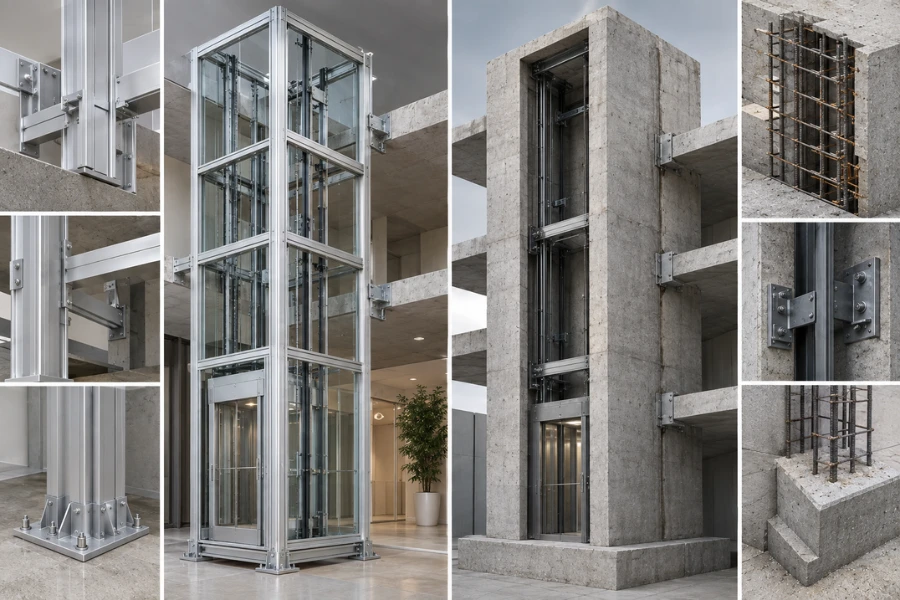
How EKCNE Supports Elevator Shaft Projects
Elevator shaft projects require coordination between building conditions, elevator configuration, shaft manufacturing, logistics, and installation.
EKCNE supports project-based vertical transportation projects through customized shaft engineering coordination, elevator system configuration, manufacturing, and international delivery.
Founded in 2009, EKCNE operates a 66,000-square-meter manufacturing facility with annual production capacity exceeding 10,000 units. The source material also identifies CE certification, ISO quality management systems, and 38 proprietary patents as part of the company’s manufacturing and quality framework.
For wind-sensitive shaft applications, project coordination can cover shaft interfaces, elevator operating requirements, manufacturing conditions, installation feasibility, and future maintenance requirements.
Conclusion
Wind load in elevator shaft design is both a structural and elevator-system consideration.
The engineering sequence is:
Wind Environment → Structural Load → Shaft Response → Elevator Interface → Operating and Maintenance Requirements
This becomes particularly important for outdoor shafts, panoramic elevators, high-rise installations, self-supporting structures, and existing-building retrofits.
Evaluating exposure, structural response, connections, applicable requirements, and elevator interfaces before fabrication provides more options for controlling wind-related risks than addressing compatibility problems during installation.












