
An effective escalator maintenance checklist should help maintenance teams do more than complete scheduled service tasks. It should identify abnormal conditions, measure deterioration, compare current findings with previous records, and support decisions about continued operation, further diagnosis, component replacement, or planned shutdowns.
Maintenance intervals should reflect operating hours, passenger traffic, escalator duty level, environmental exposure, equipment age, fault history, manufacturer instructions, and applicable regulations. A commercial escalator operating indoors under moderate traffic does not require the same maintenance priorities as an outdoor public transit escalator exposed to continuous passenger loads, rain, dust, or low temperatures.
This guide organizes escalator maintenance by inspection frequency while connecting each maintenance stage to equipment condition, building environment, and lifecycle planning.
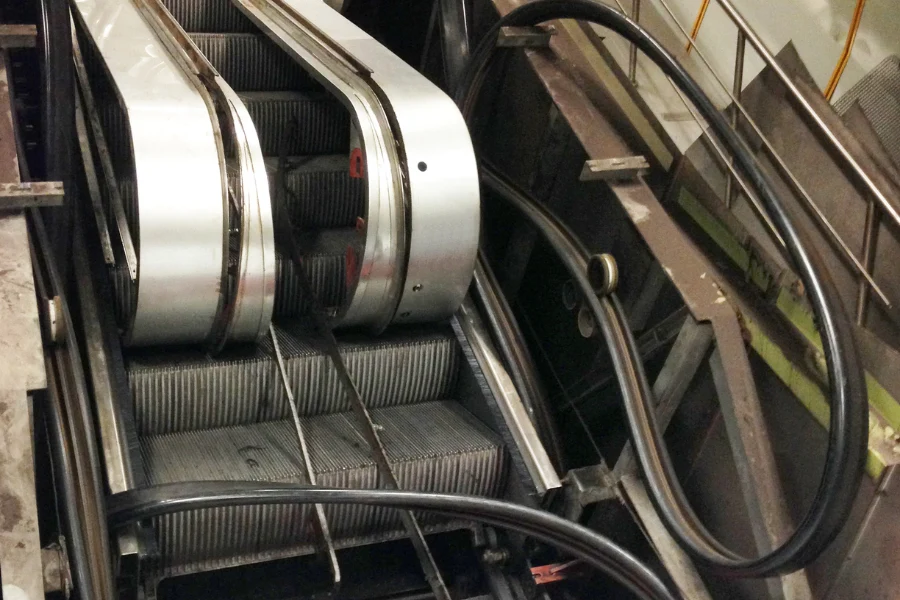
What Does an Escalator Maintenance Checklist Cover?
An escalator operates as an integrated mechanical, electrical, structural, and safety system. Wear or misalignment in one subsystem can gradually affect other components and appear as abnormal noise, vibration, braking changes, repeated safety-device activation, or unplanned shutdowns.
A complete maintenance program should cover the following systems.
| Escalator System | Main Components | Maintenance Focus | Typical Operational Risk |
|---|---|---|---|
| Support Structure | Truss, supports, structural connections | Corrosion, deformation, contamination, connection condition | Alignment problems and structural deterioration |
| Drive System | Motor, gearbox, brake, main drive chain | Lubrication, wear, mounting, braking performance | Shutdowns and abnormal movement |
| Step Running System | Steps, step chains, rollers, tracks, tensioning devices | Wear, tension, alignment, clearance, lubrication | Noise, vibration, and unstable step movement |
| Handrail System | Handrails, drive wheels, guides, rollers, tensioning devices | Speed relationship, wear, tension, tracking | Passenger instability and safety shutdowns |
| Protection System | Skirt panels, comb plates, floor plates, balustrades | Clearance, damage, obstruction, secure mounting | Entrapment and landing hazards |
| Control and Safety System | Controllers, electrical components, switches, monitoring devices | Functional tests, electrical condition, fault history | Failure to detect unsafe conditions |
| Lubrication System | Automatic systems and manual lubrication points | Oil level, delivery condition, contamination, leakage | Accelerated wear of chains and rotating components |
Maintenance should evaluate the interaction between these systems. Repeated step vibration, for example, may result from roller wear, track alignment, uneven chain tension, lubrication problems, or drive-system deterioration.
Escalator Maintenance Checklist at a Glance
The following schedule provides a practical overview.
| Maintenance Interval | Main Maintenance Focus |
|---|---|
| Daily Operational Checks | Operating condition, steps, comb plates, handrails, landing areas, visible hazards |
| Semi-Monthly Maintenance | Electrical components, drive chain, brake, gearbox lubrication, safety switches, automatic lubrication |
| Quarterly Maintenance | Handrail drive, step rollers, tracks, chain tension and lubrication, controller condition, environmental protection |
| Semiannual Maintenance | Braking performance, drive chain condition, step chain wear, additional brake, major safety protection devices |
| Annual Maintenance | Comprehensive system assessment, safety testing, structural inspection, maintenance records, recurring faults, lifecycle planning |
This escalator maintenance checklist is a planning reference rather than a universal maintenance schedule. Final intervals and procedures should follow applicable regulations, manufacturer requirements, equipment configuration, measured condition, and actual operating environment.
Daily Escalator Maintenance Checklist
Daily checks focus on operational readiness and visible passenger hazards. They should identify abnormal conditions before extended passenger operation begins.
| Inspection Item | What to Check | Warning Signs | Immediate Action |
|---|---|---|---|
| Operating Condition | Observe trial operation and step movement | Noise, vibration, hesitation, unstable movement | Stop operation when the condition may affect safety |
| Steps | Inspect visible surfaces and running position | Cracks, damage, abnormal position | Remove the escalator from service for technical inspection when necessary |
| Comb Plates | Check teeth, engagement area, and foreign objects | Broken teeth, debris, repeated contact | Clear safe-to-remove debris or arrange further inspection |
| Handrails | Observe surface condition and movement | Damage, slipping, vibration, speed difference | Inspect the handrail drive and tension system |
| Skirt Panel Area | Check for foreign objects and abnormal gaps | Debris, loose components, damaged panels | Correct hazards and inspect affected components |
| Emergency Stop Devices | Confirm accessibility and required function | Obstruction, damage, failed operation | Keep the escalator out of service until corrected |
| Landing Areas | Inspect floor plates, lighting, signs, and access areas | Loose plates, contamination, obstruction | Correct unsafe conditions before passenger use |
Trial operation should be long enough to observe abnormal sound, vibration, step behavior, handrail movement, and repeated safety-device activation.
Daily operational checks do not replace technical preventive maintenance. A clean escalator can still have developing mechanical or electrical problems.
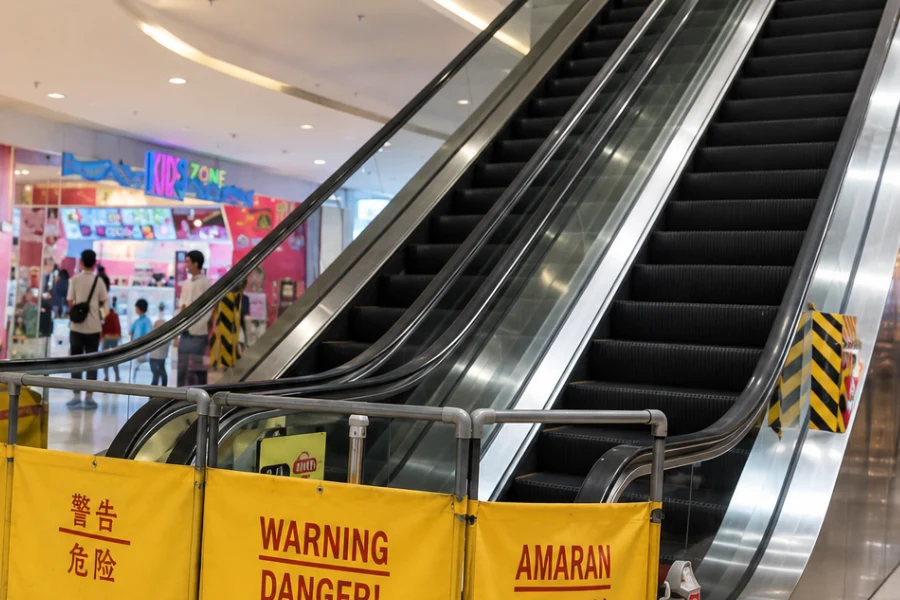
Semi-Monthly Escalator Maintenance Checklist
Semi-monthly maintenance moves from visible observation toward mechanical condition, electrical reliability, lubrication performance, and safety-device operation.
Electrical components should be cleaned and connections checked for looseness, contamination, or overheating. Fault display and recording functions should be verified because repeated alarms can reveal deterioration patterns that are easily missed when faults are reviewed individually.
The main drive chain should be inspected for lubrication condition, abnormal vibration, noise, wear, and protection-device operation. Maintenance personnel should investigate repeated tension correction or abnormal chain movement rather than continuing adjustment without determining the cause.
Brake mechanisms require inspection for cleanliness, mechanical operation, wear, abnormal noise, and release condition. Brake monitoring devices should provide consistent feedback. A recurring brake feedback fault requires investigation of both the monitoring circuit and mechanical brake condition.
Gearbox oil level, visible leakage, motor ventilation, inspection controls, and the automatic lubrication system should also be checked. Low lubricant levels should not simply be restored without checking for leakage, abnormal consumption, or delivery failure.
Safety devices requiring periodic attention may include comb plate switches, step sag protection, missing step detection, floor plate monitoring, step chain tension protection, and handrail entry protection.
The maintenance sequence should remain consistent.
Visual inspection → Functional test → Measurement when required → Comparison with previous findings → Maintenance decision.
This prevents routine servicing from becoming a sequence of repeated adjustments without equipment-condition assessment.
Quarterly Escalator Maintenance Checklist
Quarterly maintenance should focus on developing wear patterns and relationships between moving systems.
The handrail drive system should be inspected for drive capacity, tension, tracking, abnormal bearing resistance, and component wear. Handrail speed should be measured against step speed according to applicable requirements and manufacturer limits rather than judged only by visual observation.
Step rollers and tracks require close examination. Technicians should record roller wear patterns, abnormal clearance, surface damage, track contamination, and alignment conditions.
A damaged roller may be an isolated component problem. Similar wear appearing repeatedly on the same side or at the same location can indicate track misalignment, uneven chain tension, contamination, or another system-level problem.
Step chain tensioning devices, axle lubrication, and chain lubrication condition should also be reviewed. Where measurements are available, current tension, wear, and clearance findings should be compared with previous inspection records.
Controllers, relays, contactors, and accessible electrical components should be inspected for deterioration, loose connections, overheating, or repeated fault conditions.
Outdoor and semi-outdoor escalators require additional attention to drainage, water protection, contamination, and corrosion-prone areas. Seasonal inspections should be planned before periods of heavy rainfall or other predictable environmental exposure.
Purchase Escalator Step Chains >>
Semiannual Escalator Maintenance Checklist
Semiannual maintenance should rely more heavily on measurements, performance verification, and trend comparison.
Brake performance should be tested according to applicable procedures. Current stopping performance should be compared with previous results where records are available.
A gradual change in braking behavior may indicate brake lining wear, contamination, mechanical adjustment problems, abnormal drive resistance, or changes elsewhere in the system. Repeated brake adjustment without reviewing performance trends can hide progressive deterioration.
The main drive chain should be cleaned, lubricated, and inspected for wear and abnormal movement. Motor and gearbox connections should be checked for looseness or alignment problems.
Step chains require inspection for wear, tension differences, elongation, lubrication condition, and uneven deterioration. Replacement decisions should follow applicable requirements and manufacturer limits, but maintenance teams should also evaluate how quickly measured conditions are changing.
The additional brake, overspeed protection, unintended reversal protection, and other installed safety systems should be functionally tested. Repeated activation should trigger investigation of the underlying mechanical, electrical, or operating condition.
Handrail tension and drive condition should be reviewed together. Excessive tension can increase resistance and component wear, while insufficient tension may cause slipping, vibration, or speed deviation.
Cold-climate projects should verify heating and freeze-protection systems before winter. Outdoor installations should receive drainage and water-protection inspections before seasonal weather changes.
| Condition Found | Possible Cause | Maintenance Response |
|---|---|---|
| Braking performance gradually changes | Brake wear, contamination, adjustment problems, abnormal system resistance | Compare test history and inspect the complete braking system |
| Uneven step chain wear or tension | Alignment problems, lubrication differences, loading conditions | Measure both sides, inspect tracks and tensioning system, review wear trends |
| Repeated safety-device activation | Mechanical interference, sensor problems, wiring faults, developing component wear | Review fault history and investigate the affected system before resetting |
| Recurring handrail speed deviation | Drive wheel wear, incorrect tension, bearing resistance, tracking problems | Measure speed relationship and inspect the complete handrail drive system |
| Additional brake abnormality | Mechanical wear, lubrication condition, release problems, monitoring faults | Keep the system out of normal service until diagnosis and functional verification are completed |
Annual Escalator Maintenance Checklist
Annual maintenance should assess overall escalator condition rather than repeat every shorter-interval task.
The review should cover the drive machine, gearbox, braking system, drive chains, step chains, rollers, tracks, handrail system, comb plates, skirt panels, floor plates, electrical systems, safety circuits, structural areas, lubrication systems, and environmental protection equipment.
Accessible truss areas and structural connections should be checked for corrosion, contamination, deformation, or other deterioration. Outdoor escalators require additional attention to drainage, water exposure, protective systems, and corrosion-prone components.
Maintenance records should be reviewed together with equipment condition.
Increasing fault frequency, accelerated component replacement, repeated safety-device activation, declining braking performance, or longer shutdown periods may indicate that the existing maintenance strategy is no longer controlling deterioration effectively.
At this stage, project owners may need to evaluate major repair, component replacement planning, system modification, or modernization rather than continuing isolated corrective work.
How Escalator Duty Level Changes Maintenance Requirements
The same maintenance strategy should not be applied to every escalator project.
Commercial escalators in hotels, office buildings, and shopping malls generally operate under more moderate duty conditions than public transit or heavy-duty units. Even within the same shopping mall, traffic exposure can vary considerably.
Escalators connecting entrances, parking levels, food courts, cinemas, and major retail zones may carry much higher passenger volumes than units installed in quieter areas. Maintenance frequency should reflect the actual traffic distribution of each escalator rather than a single building-wide schedule.
Public transit escalators operate under longer running hours, repeated passenger cycles, luggage exposure, restricted maintenance windows, and higher consequences of unplanned shutdowns. Braking performance, step chains, safety systems, additional brakes, lubrication reliability, and critical spare parts require closer attention.
Heavy-duty escalators add sustained load exposure and stricter lifecycle demands. Maintenance planning should include wear trending, planned shutdown periods, spare parts preparation, and earlier investigation of abnormal conditions.
How Operating Environment Changes the Escalator Maintenance Checklist
An escalator maintenance checklist should respond to actual environmental exposure rather than apply the same inspection frequency to every installation.
Indoor commercial escalators often require greater attention to passenger-related contamination, cleaning practices, changing traffic patterns, handrail condition, and landing areas.
Outdoor escalators face water entry, debris, temperature variation, corrosion, drainage problems, and changing lubricant behavior. Coastal environments add salt contamination and increased corrosion exposure, while dusty locations can accelerate contamination of tracks, rollers, ventilation paths, lubrication systems, and electrical spaces.
High-humidity regions require closer inspection of condensation, electrical connections, structural corrosion, and braking components. Cold-climate projects need seasonal checks of drainage, heating equipment, freeze protection, lubrication condition, and landing areas.
Maintenance intervals should be adjusted according to the components actually exposed to accelerated deterioration.
Why Maintenance Accessibility Matters Before Escalator Installation
Long-term maintenance performance begins during project planning.
Technicians need practical access to the drive machine, brake, upper and lower machine spaces, controllers, tensioning devices, lubrication points, drainage systems, and other inspection areas.
Step removal procedures and major component replacement routes should also be evaluated. A technically reliable escalator can still generate long shutdowns and higher lifecycle costs when technicians cannot efficiently inspect components or move replacement assemblies through the building.
In project-oriented escalator planning, EKCNE evaluates installation conditions together with equipment configuration because maintenance access can influence future inspection efficiency and component replacement work.
Maintenance accessibility is therefore part of building integration, not only a service consideration.

What Project Buyers Should Review Before Selecting an Escalator Maintenance Strategy
Procurement teams, contractors, developers, and distributors should evaluate maintenance capability before finalizing escalator configuration.
Local technician capability matters because complex systems provide limited operational value when diagnostic tools, technical knowledge, or qualified service personnel are difficult to access.
Spare parts availability and component standardization also affect downtime. Project buyers should understand which critical components require manufacturer-specific replacement parts, how long-term supply will be supported, and whether essential spare parts should be stored locally.
Maintenance documentation should include equipment information, service procedures, electrical documentation, safety-device information, and replacement-part identification.
Diagnostic access, machine-space layout, step removal requirements, drainage access, and major component replacement routes should be reviewed during building coordination.
Environmental protection configuration is equally important. Outdoor, coastal, humid, dusty, and cold-climate projects may require additional drainage, corrosion protection, heating, sealing, or monitoring systems that affect future maintenance requirements.
The most suitable maintenance strategy is one that matches the equipment configuration, building environment, local service capability, spare parts continuity, and expected operating life.
When Repeated Maintenance Indicates a Deeper Escalator Problem
Recurring maintenance work often provides more engineering information than a single component failure.
| Repeated Maintenance Issue | Possible Deeper Cause | Engineering Response |
|---|---|---|
| Frequent chain tension adjustment | Chain elongation, uneven wear, alignment problems, lubrication failure | Measure wear progression and inspect the complete chain system |
| Repeated brake adjustment | Brake wear, contamination, mechanical problems, abnormal resistance | Compare braking performance and inspect related drive components |
| Recurring handrail speed deviation | Drive wheel wear, tension problems, bearing resistance, tracking errors | Inspect and measure the complete handrail drive system |
| Frequent comb plate activation | Debris, step misalignment, track problems, landing interference | Investigate step movement, tracks, and landing components |
| Repeated step vibration | Roller wear, track alignment, chain condition, drive-system problems | Compare wear patterns and inspect the complete step running system |
| Recurring safety shutdowns | Mechanical deterioration, sensor faults, wiring problems, control issues | Review fault activation frequency before repeated resetting |
Repeated adjustment should not become a substitute for root cause investigation.
When the same problem returns, technicians should compare current measurements, previous findings, fault frequency, component replacements, and operating conditions before deciding that another adjustment is sufficient.
When Should Escalator Maintenance Become Condition-Based?
Calendar-based maintenance provides the basic structure for routine servicing, but older equipment and high-duty applications often require greater attention to actual condition trends.
Useful indicators include chain wear measurements, braking performance, clearance changes, roller wear patterns, fault activation frequency, motor current, abnormal temperature, noise, vibration, lubricant consumption, and component replacement history.
A single abnormal reading may require additional inspection. A repeated or accelerating trend should trigger engineering investigation.
Scheduled inspection can then develop into condition monitoring, trend analysis, root cause investigation, and planned intervention.
Condition-based decisions are particularly useful when maintenance teams need to schedule major work during controlled shutdown periods or determine whether repeated repairs are still economically and operationally reasonable.
What Escalator Maintenance Records Should Be Kept?
A well-designed escalator maintenance checklist should define what inspection data, measurements, faults, and corrective actions must be recorded.
Useful records include inspection results, brake performance tests, clearances, chain wear measurements, safety-device tests, lubrication work, fault codes, shutdown history, corrective actions, component replacements, and return-to-service verification.
Maintenance records should also identify recurring problems and allow current results to be compared with previous inspections.
This information supports wear trending, maintenance frequency adjustment, spare parts preparation, component replacement planning, and modernization decisions.
Without consistent records, progressive deterioration may appear as a series of unrelated maintenance events.
Escalator Maintenance Decision Framework
A practical escalator maintenance checklist should lead to an engineering decision.
Normal operating condition and stable measurements generally support continued scheduled maintenance.
An abnormal condition should trigger inspection, functional testing, measurement where appropriate, and comparison with applicable requirements, manufacturer limits, and previous maintenance records.
Conditions that remain within acceptable limits may require cleaning, lubrication, adjustment, repair, closer monitoring, or a shorter inspection interval.
Conditions outside acceptable limits require further diagnosis and appropriate corrective work.
Repeated failures should trigger root cause investigation. If deterioration becomes widespread, downtime increases, spare parts availability declines, or maintenance can no longer maintain reliable operation, major repair or modernization evaluation may be necessary.
Return to service should occur only after the identified problem has been corrected and required verification confirms acceptable operation.
Planning Escalators for Long-Term Maintenance Compatibility
Escalator lifecycle performance is influenced by decisions made before installation.
Duty level, passenger traffic, environmental exposure, drive configuration, maintenance accessibility, drainage, component selection, spare parts continuity, local service capability, and project coordination all affect future maintenance requirements.
EKCNE supports project-specific escalator planning, equipment configuration, manufacturing coordination, building integration, export delivery, component supply, and long-term maintenance compatibility for commercial and infrastructure projects.
Project teams should evaluate not only whether an escalator meets initial transportation requirements, but also whether the equipment can be efficiently inspected, serviced, repaired, and supported throughout its expected operating life.
For new escalator projects or existing systems requiring lifecycle evaluation, EKCNE can help review operating conditions, installation constraints, maintenance accessibility, environmental exposure, equipment configuration, and long-term component supply requirements.












