
When planning a vertical transportation solution, one of the first questions building owners ask is whether an outdoor elevator or an indoor elevator is the better choice.
The answer is rarely as simple as comparing installation locations. In most projects, the decision is influenced by building layout, available shaft space, environmental conditions, accessibility goals, maintenance expectations, and long-term operating costs.
An outdoor elevator can provide an efficient solution for retrofit projects and buildings with limited interior space. An indoor elevator often offers better environmental protection and seamless architectural integration. Understanding the trade-offs between these two approaches helps property owners make a more informed investment.
This guide compares outdoor elevators and indoor elevators from an engineering, operational, and lifecycle perspective.
What Is an Outdoor Elevator?
An outdoor elevator, sometimes called an exterior elevator, external elevator, outdoor lift, or outdoor lift system, is installed outside the primary building envelope.
Unlike an indoor lift system, an outdoor elevator operates in an environment exposed to weather, temperature changes, moisture, airborne contaminants, and ultraviolet radiation. Because of these conditions, an outdoor elevator requires specialized materials, corrosion-resistant components, weatherproof enclosures, and additional protective design measures.
Common applications include:
- Outdoor home elevator installations
- Outdoor passenger elevator systems
- Outdoor accessibility lift projects
- Commercial retrofit projects
- Hillside homes
- Public access facilities
- Transportation infrastructure
One major advantage of an outdoor elevator installation is that it can often be added to an existing building without extensive interior reconstruction.
What Is an Indoor Elevator?
An indoor elevator, also referred to as an interior elevator, internal lift, elevator inside a building, or residential indoor elevator, is installed within the protected structure of a building.
Because an indoor elevator operates in a climate-controlled environment, it is largely protected from rain, snow, humidity, ultraviolet exposure, and airborne pollutants.
Indoor elevators are commonly used in:
- Residential properties
- Hotels
- Office buildings
- Healthcare facilities
- Shopping centers
- Mixed-use developments
For many new construction projects, an indoor elevator remains the preferred option because it can be integrated directly into the building’s architectural design.
Outdoor Elevator vs Indoor Elevator: Quick Comparison
| Factor | Outdoor Elevator | Indoor Elevator |
|---|---|---|
| Installation Location | Exterior of building | Interior of building |
| Interior Space Usage | Minimal | Requires dedicated space |
| Retrofit Suitability | Excellent | Moderate |
| Weather Exposure | High | Low |
| Corrosion Risk | Higher | Lower |
| Maintenance Frequency | Higher | Lower |
| Shaft Construction | Independent outdoor elevator shaft | Internal shaft |
| Environmental Protection | Requires weatherproof design | Naturally protected |
| Lifecycle Planning | Environment dependent | More predictable |
Installation Requirements and Construction Impact
One reason many property owners choose an outdoor elevator is installation flexibility.
An exterior elevator can often be installed using an independent outdoor elevator shaft attached to the building. Because the shaft remains outside the structure, interior demolition is typically reduced.
This approach is particularly attractive for:
- Existing buildings
- Historic properties
- Accessibility upgrades
- Buildings with limited shaft space
An indoor elevator often requires:
- Floor openings
- Structural modifications
- Utility relocation
- Dedicated shaft construction
For new construction, these requirements can be planned from the beginning. For retrofit projects, however, they can significantly increase project complexity.
Space Requirements and Building Layout
Space constraints frequently determine whether an outdoor elevator or indoor elevator is selected.
An outdoor lift system preserves valuable interior square footage. The shaft remains outside the building envelope, allowing owners to maintain existing room layouts.
This is especially beneficial for:
- Small homes
- Older buildings
- Renovation projects
- Multi-story houses
An indoor lift system occupies usable floor area and requires dedicated space on each level. While this often creates a more integrated appearance, it may not always be practical in buildings with limited interior space.
Weather Exposure Is the Biggest Difference
The most important distinction between an outdoor elevator and an indoor elevator is environmental exposure.
An indoor elevator operates in a relatively stable environment.
An outdoor elevator must withstand:
- Rain
- Snow
- Humidity
- Wind
- Ultraviolet radiation
- Salt spray
- Industrial pollution
- Temperature fluctuations
These environmental factors directly influence maintenance requirements, service life, material selection, and overall operating costs.
In many projects, environmental exposure becomes the defining factor when choosing between an outdoor elevator and an indoor elevator.
Understanding Corrosion Environments for Outdoor Elevators
One area often ignored by competing articles is corrosion classification.
Not all outdoor environments create the same corrosion risk.
International corrosion classifications commonly categorize environments from C1 to C5.
C1 Environment
Very low corrosion risk.
Examples include:
- Heated offices
- Schools
- Dry indoor environments
Most indoor elevators operate under conditions similar to C1 environments.
C2 Environment
Low corrosion risk.
Examples include:
- Rural outdoor areas
- Low-pollution regions
Outdoor home elevators in mild climates may fall into this category.
C3 Environment
Moderate corrosion risk.
Examples include:
- Urban areas
- Light industrial zones
- Coastal areas with moderate salt exposure
Many outdoor passenger elevator installations operate in C3 environments.
C4 Environment
High corrosion risk.
Examples include:
- Industrial districts
- Chemical processing areas
- High-humidity environments
Outdoor elevators in these locations require enhanced corrosion protection systems.
C5 Environment
Very high corrosion risk.
Examples include:
- Ports
- Marine facilities
- Offshore environments
- Heavy industrial complexes
A corrosion-resistant elevator becomes essential in these conditions.
Special Considerations for Coastal and Marine Environments
Coastal properties require additional evaluation when selecting an outdoor elevator.
Salt-laden air is one of the most aggressive corrosion sources affecting exterior elevator systems. Even when an outdoor elevator is not directly exposed to seawater, airborne salt particles can accelerate corrosion on structural steel, fasteners, guide rails, electrical enclosures, and exposed hardware.
In corrosion classification systems, many coastal locations fall within C4 or C5 environments, which represent high to very high corrosion risk.
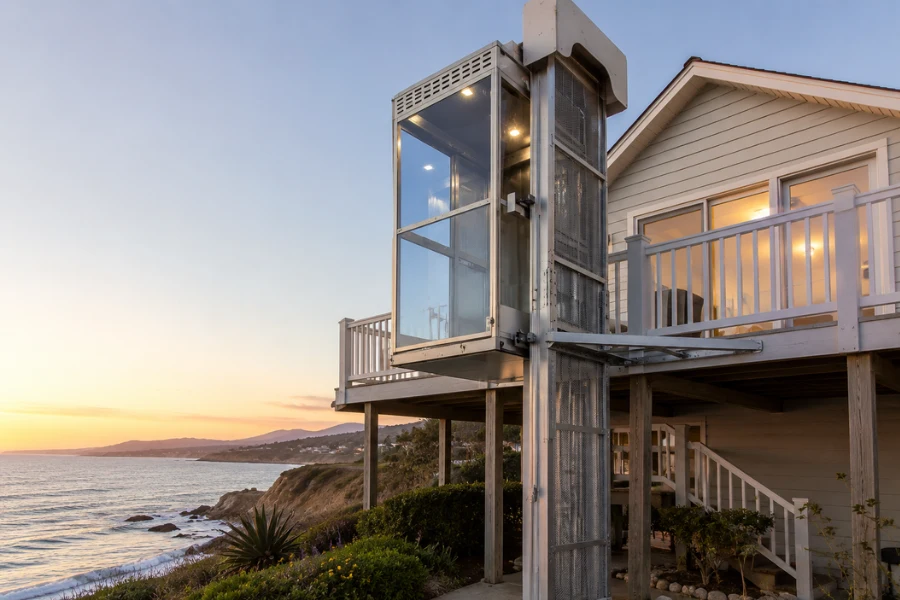
For outdoor elevator projects near oceans, ports, marinas, or offshore facilities, designers often specify:
- Stainless steel components
- Corrosion-resistant elevator hardware
- Enhanced protective coatings
- Sealed electrical enclosures
- Improved drainage systems
- Higher IP-rated control equipment
Without these measures, corrosion-related failures may occur much earlier than expected.
Indoor elevators installed within the building envelope generally avoid most of these environmental challenges.
Understanding Outdoor Elevator Corrosion Risks
Corrosion is not a single phenomenon. Different corrosion mechanisms affect outdoor elevators in different ways.
Galvanic Corrosion
Galvanic corrosion occurs when two dissimilar metals come into electrical contact in the presence of moisture.
For example, certain combinations of aluminum alloy and carbon steel may accelerate corrosion if proper isolation measures are not implemented.
This is one reason material compatibility becomes important when designing an outdoor elevator shaft.
Crevice Corrosion
Crevice corrosion commonly develops in narrow gaps where moisture becomes trapped.
Typical locations include:
- Fastener connections
- Panel joints
- Structural interfaces
- Door assemblies
Poor drainage and inadequate sealing can significantly increase crevice corrosion risk.
Pitting Corrosion
Pitting corrosion appears as localized holes or pits on metal surfaces.
This form of damage is particularly concerning because significant structural weakening can occur before visible deterioration becomes obvious.
Outdoor elevators operating in marine environments face a higher risk of pitting corrosion.
Stress Corrosion Cracking
Stress corrosion cracking occurs when mechanical stress combines with corrosive environmental conditions.
Although less common, it can affect critical structural components over long operating periods.
Proper material selection and preventive maintenance help minimize this risk.
Steel Shaft vs Aluminum Shaft for Outdoor Elevators
The choice between a steel shaft and an aluminum shaft can significantly influence the long-term performance of an outdoor elevator.
Both materials are widely used in outdoor elevator shaft construction, but each offers distinct advantages.
Steel Elevator Shafts
Steel remains the most common structural material for outdoor passenger elevators and commercial outdoor lift systems.
Advantages include:
- High structural strength
- Excellent load-bearing capability
- Suitable for taller installations
- Greater design flexibility
However, steel shafts require effective corrosion protection through galvanization, coatings, or stainless-steel construction.
Without proper protection, rust can become a long-term maintenance concern.
Aluminum Elevator Shafts
Aluminum alloy shafts are becoming increasingly popular for outdoor home elevator projects.
Advantages include:
- Lightweight construction
- Natural corrosion resistance
- Lower maintenance requirements
- Modern architectural appearance
Because aluminum forms a protective oxide layer naturally, it often performs well in many outdoor environments.
However, structural requirements, project height, and local environmental conditions should always be evaluated before selecting a shaft material.
For many projects, the best solution depends on building height, exposure conditions, budget, and long-term maintenance strategy rather than material alone.
Outdoor Elevator Maintenance Requirements
Many building owners assume that an outdoor elevator automatically requires excessive maintenance. In reality, maintenance requirements depend largely on environmental exposure and system design.
A properly designed weatherproof elevator can deliver reliable performance for many years when supported by a preventive maintenance program.
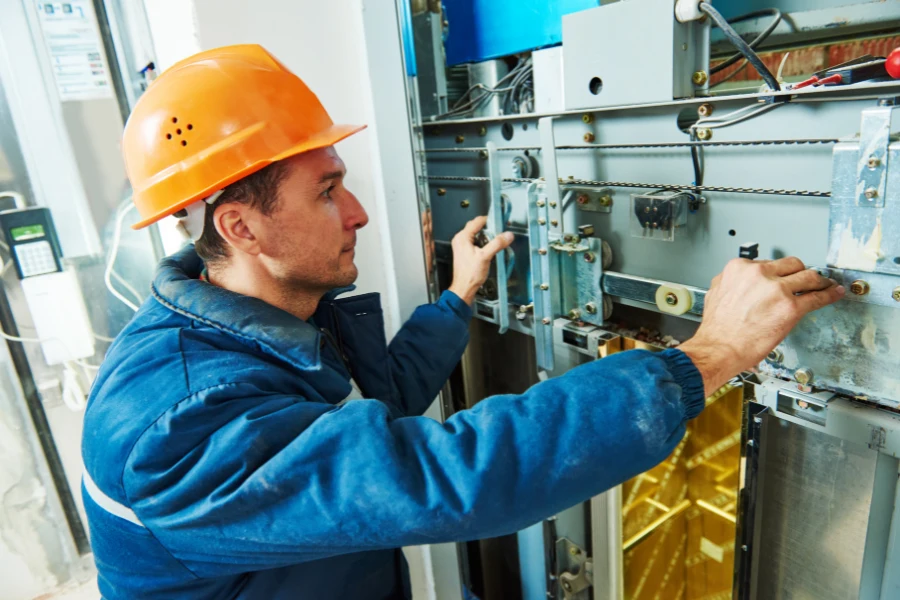
Outdoor elevator maintenance typically includes:
- Corrosion inspections
- Coating condition assessments
- Seal inspections
- Drainage system checks
- Guide rail cleaning
- Fastener inspections
- Electrical enclosure inspections
- Lubrication verification
Facilities located in C4 or C5 corrosion environments often require more frequent inspections than installations in C2 or C3 environments.
Indoor elevators generally experience lower maintenance demands because they operate in protected conditions.
However, regardless of installation location, routine preventive maintenance remains essential for safe operation and long-term reliability.
Service Life and Long-Term Value
A common misconception is that indoor elevators always last longer than outdoor elevators.
The reality is more nuanced.
A well-designed outdoor elevator equipped with corrosion-resistant materials, weatherproof components, effective drainage systems, and a structured maintenance program can achieve a service life comparable to many indoor systems.
Lifecycle performance is often determined by:
- Environmental conditions
- Material quality
- Corrosion protection strategy
- Maintenance consistency
- Installation quality
Rather than focusing solely on initial purchase price, building owners should evaluate total lifecycle cost and long-term operational stability.
How to Choose the Right Solution
An outdoor elevator may be the best choice if:
- Interior space is limited
- The building already exists
- Accessibility upgrades are required
- Major interior renovation is undesirable
- External access between levels is needed
An indoor elevator may be the better option if:
- A new building is being planned
- Architectural integration is a priority
- Environmental exposure is severe
- Reduced maintenance requirements are preferred
- Sufficient shaft space is available
The most effective decision considers building compatibility, environmental conditions, operational requirements, and lifecycle objectives rather than focusing on a single factor.
How EKCNE Supports Outdoor and Indoor Elevator Projects
Every building presents unique challenges.
Some projects require a weather-resistant outdoor elevator capable of operating in coastal or industrial environments. Others require an indoor elevator integrated seamlessly into a residential, commercial, or healthcare facility.
EKCNE supports both outdoor elevator and indoor elevator projects through customized elevator systems, outdoor elevator shaft solutions, accessibility lifts, panoramic elevators, freight elevators, and project-specific engineering support.
By evaluating building layout, traffic demand, environmental exposure, and maintenance requirements, project teams can identify the most suitable vertical transportation solution for long-term performance.












